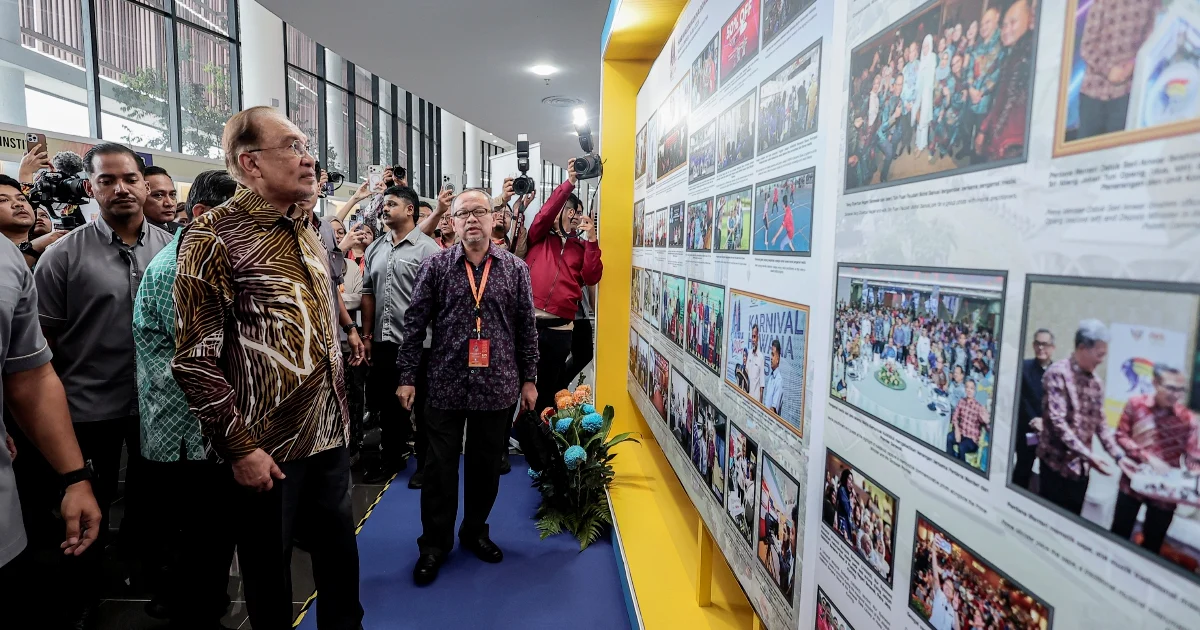
Prime Minister Datuk Seri Anwar Ibrahim has committed RM1 million in government funding to Tabung Kasih@Hawana 2026, a welfare assistance fund for journalists, marking a significant policy focus on the media profession's economic security during a period of industry-wide transition. The announcement, made at a public event in Permatang Pauh, reflects deepening governmental attention to the structural challenges facing Malaysia's news sector, where declining advertising revenues and digital disruption have squeezed journalist salaries and employment stability for over a decade.
The timing of this welfare initiative carries particular significance within Malaysia's current political and economic context. Anwar's administration has positioned itself as committed to reforming institutional relationships and strengthening civil society infrastructure, and the journalist welfare fund aligns with this broader governance philosophy. The allocation demonstrates recognition that media professionals form a crucial pillar of democratic accountability and public discourse, even as the industry grapples with unprecedented commercial pressures that have already decimated newsroom capacity across regional and local outlets.
Tabung Kasih@Hawana 2026 functions as a targeted relief mechanism designed to address immediate hardships among practitioners, particularly those facing unexpected medical emergencies, family crises, or income disruption during sector transitions. Such funds have gained prominence in Southeast Asian media contexts where formal social safety nets for freelancers and contract workers remain fragmented. By channelling resources through dedicated welfare vehicles rather than direct subsidies, the government creates a flexible apparatus capable of responding to individual circumstances while building institutional resilience within the journalism community.
The broader context reveals growing tension between press freedom imperatives and economic viability in Malaysia's media landscape. Newsroom employment has contracted dramatically over the past five years as digital advertising markets favour technology platforms over traditional publishers. This structural squeeze has created ethical concerns about journalistic independence, as outlets increasingly depend on government advertising, charitable supplements, or commercial sponsorship to maintain operations. A journalist welfare fund, while valuable for individuals, also represents tacit acknowledgment that market mechanisms alone cannot sustain a functional fourth estate.
Anwar's statement that the government will continue supporting media transformation initiatives extends beyond the immediate welfare commitment, suggesting a multi-pronged policy approach. This language typically encompasses digital skills training programmes, support for news startups exploring sustainable business models, and infrastructure investments in investigative journalism capacity. Such initiatives prove particularly relevant for Malaysia, where digital literacy among news consumers remains uneven and misinformation patterns have intensified public demand for credible reporting.
The announcement also reflects regional peer pressure and international best practice considerations. Comparable markets throughout Southeast Asia have begun formalising support mechanisms for media professionals, recognising that strong independent journalism produces positive externalities for governance quality, investor confidence, and democratic stability. By articulating commitment to journalist welfare alongside industry transformation, Anwar's government positions Malaysia within a progressive regional conversation about media's social value.
However, the welfare fund alone addresses symptoms rather than underlying systemic fragility. Journalist earnings sustainability ultimately depends on viable business models that generate sufficient revenue while maintaining editorial independence. While the RM1 million injection provides meaningful relief for individuals, long-term sector recovery requires structural interventions around digital revenue development, newsroom productivity, and audience engagement strategies. The government's parallel support for broader transformation initiatives becomes crucial in this light, though implementation details remain less publicly defined than the welfare commitment.
The announcement carries implications for Malaysia's standing within international media freedom rankings and assessments. International observers scrutinise both direct government pressure on editorial decisions and systemic capacity to support independent journalism through voluntary mechanisms. Welfare funding and transformation support can positively influence external perceptions of press environment health, particularly when coupled with clear editorial independence protections. Conversely, observers remain alert to whether welfare mechanisms create subtle dependencies or expectations of favourable coverage.
Within Malaysia's journalist community, the announcement will likely generate mixed reactions. Practitioners struggling financially will welcome direct assistance, particularly if fund distribution mechanisms prove efficient and accessible. However, some voices within the profession may question whether government welfare, while necessary in crisis moments, substitutes for market rates that reflect journalism's genuine social value. This tension between meeting immediate needs and maintaining principled resistance to inadequate compensation structures will shape how the profession receives this initiative.
Looking forward, the sustainability of Tabung Kasih@Hawana 2026 and related initiatives depends partly on government budget priorities and political leadership continuity. Media sector transformation typically requires multi-year commitment rather than episodic allocations. The current announcement establishes momentum, but translating rhetoric into sustained institutional support demands consistent resource allocation and coordination across multiple government agencies and industry stakeholders.
Regionally, Malaysia's journalist welfare initiative may influence policy discussions in neighbouring countries where media sectors face similar disruption patterns. Thailand, Indonesia, and the Philippines all grapple with journalistic precarity amid digital transition, and Malaysia's approach offers a governance model worth studying. Should the initiative demonstrate effectiveness in supporting practitioner wellbeing while maintaining editorial standards, it could serve as a template for broader Southeast Asian media sustainability efforts.
The announcement ultimately reflects understanding that functional democracies depend on economically viable journalism, and that when market mechanisms fail to sustain this public good, targeted government support becomes defensible and necessary. Whether Anwar's commitment translates into transformative change for Malaysia's media landscape will depend on implementation consistency, accompanying structural reforms, and genuine engagement with industry stakeholders in solution-building processes.
%22%2F%3E%3C%2Fpattern%3E%3C%2Fdefs%3E%3Crect%20width%3D%22100%25%22%20height%3D%22100%25%22%20fill%3D%22url(%23ph267lhg)%22%2F%3E%3Crect%20width%3D%22100%25%22%20height%3D%22100%25%22%20fill%3D%22url(%23ph267lhp)%22%2F%3E%3Ctext%20x%3D%2250%25%22%20y%3D%2250%25%22%20text-anchor%3D%22middle%22%20dominant-baseline%3D%22central%22%20fill%3D%22rgba(255%2C255%2C255%2C0.95)%22%20font-family%3D%22Georgia%2C%20'Times%20New%20Roman'%2C%20serif%22%20font-weight%3D%22700%22%20font-size%3D%22170%22%20letter-spacing%3D%22-0.02em%22%3EMalaysia%3C%2Ftext%3E%3C%2Fsvg%3E)
%22%2F%3E%3C%2Fpattern%3E%3C%2Fdefs%3E%3Crect%20width%3D%22100%25%22%20height%3D%22100%25%22%20fill%3D%22url(%23ph458y7g)%22%2F%3E%3Crect%20width%3D%22100%25%22%20height%3D%22100%25%22%20fill%3D%22url(%23ph458y7p)%22%2F%3E%3Ctext%20x%3D%2250%25%22%20y%3D%2250%25%22%20text-anchor%3D%22middle%22%20dominant-baseline%3D%22central%22%20fill%3D%22rgba(255%2C255%2C255%2C0.95)%22%20font-family%3D%22Georgia%2C%20'Times%20New%20Roman'%2C%20serif%22%20font-weight%3D%22700%22%20font-size%3D%22170%22%20letter-spacing%3D%22-0.02em%22%3EMalaysia%3C%2Ftext%3E%3C%2Fsvg%3E)
%22%2F%3E%3C%2Fpattern%3E%3C%2Fdefs%3E%3Crect%20width%3D%22100%25%22%20height%3D%22100%25%22%20fill%3D%22url(%23phyem9g)%22%2F%3E%3Crect%20width%3D%22100%25%22%20height%3D%22100%25%22%20fill%3D%22url(%23phyem9p)%22%2F%3E%3Ctext%20x%3D%2250%25%22%20y%3D%2250%25%22%20text-anchor%3D%22middle%22%20dominant-baseline%3D%22central%22%20fill%3D%22rgba(255%2C255%2C255%2C0.95)%22%20font-family%3D%22Georgia%2C%20'Times%20New%20Roman'%2C%20serif%22%20font-weight%3D%22700%22%20font-size%3D%22136%22%20letter-spacing%3D%22-0.02em%22%3EGovernment%3C%2Ftext%3E%3C%2Fsvg%3E)