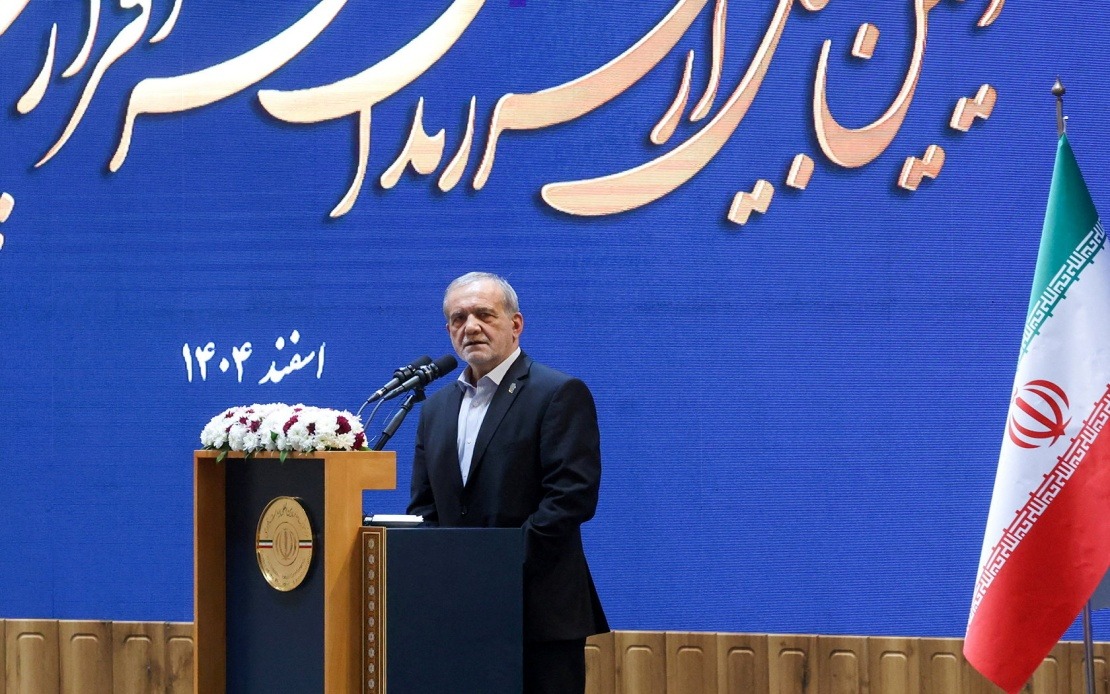
Iranian President Masoud Pezeshkian has signalled a potential breakthrough in the fraught negotiations over his country's nuclear programme, suggesting that Tehran would consider formalising its stated commitment to non-weaponisation through a written declaration. The statement represents a significant diplomatic gesture at a critical juncture in talks between Iranian and American representatives, which resumed this week in Switzerland following the signing of a preliminary memorandum of understanding.
The timing of Pezeshkian's remarks carries particular weight as both nations work within the framework of a 60-day deadline to finalise a comprehensive agreement on Iran's nuclear activities. This deadline, established under the terms of the recently signed framework agreement, creates pressure on negotiators to demonstrate tangible progress. For Malaysia and other Southeast Asian nations watching these developments, the outcome of Iran-US nuclear talks holds implications for regional stability and global supply chain dynamics, particularly given Iran's geopolitical importance and energy resources.
Pezeshkian's willingness to commit to a written statement constitutes a notable softening from Iran's previous posture, though the president did not explicitly confirm whether such a declaration forms part of the current negotiating agenda. His assertion that "if necessary, we can set out in writing that we do not intend to build a nuclear bomb" suggests flexibility in addressing one of the most contentious issues dividing the two nations. The careful phrasing indicates that while Iran remains open to this concession, it may be leveraging it as a bargaining chip in broader negotiations.
The Iranian leadership has consistently maintained, through multiple administrations, that its nuclear programme serves exclusively civilian and medical purposes. Pezeshkian reinforced this narrative by invoking the religious authority of former Supreme Leader Ali Khamenei, who had rejected weapons of mass destruction on theological grounds. This framing attempts to ground Iran's nuclear restraint in deeply held principles rather than external pressure, a rhetorical strategy designed to preserve national dignity in the eyes of the Iranian public while negotiating with Washington.
The broader geopolitical context illuminates why such declarations matter intensely to both parties. The United States has long expressed deep scepticism about Iran's nuclear intentions, viewing the country's technological advancement and enrichment activities with alarm. American policymakers have repeatedly threatened military intervention if they believe Iran is moving toward weaponisation. Conversely, Iran regards its nuclear capability as a deterrent against foreign intervention and a legitimate assertion of national sovereignty, particularly given its experience with foreign-backed conflicts and sanctions regimes.
Financial incentives appear to underpin the current round of diplomacy. Pezeshkian highlighted that the United States could release approximately 6 billion dollars in frozen Iranian assets held in Qatar as an initial confidence-building measure. This substantial sum represents money seized through sanctions mechanisms and would provide Iran's struggling economy meaningful relief. For the Iranian government, which has faced years of economic hardship due to international isolation, such financial repatriation constitutes a tangible benefit that justifies domestic political concessions.
The negotiating process reflects a delicate balance between competing interests and constituencies. Iran must satisfy hardline elements within its own power structure who view nuclear capability as non-negotiable, while simultaneously demonstrating to international observers and potential trading partners that it operates in good faith. The United States, meanwhile, faces pressure from regional allies including Israel to ensure that any agreement genuinely constrains Iranian nuclear ambitions rather than merely providing a temporary respite before covert development resumes.
For Southeast Asian observers, the implications extend beyond nuclear proliferation concerns. A successful Iran-US rapprochement could reshape Middle Eastern geopolitics, potentially reducing regional tensions and military expenditures. This shift could have secondary effects on global energy markets, maritime security in crucial shipping lanes near Iran, and the broader balance of power between Western and non-Western nations. Malaysia, as a major trading nation and chair of the Non-Aligned Movement at various junctures, maintains significant interest in international stability and the development of frameworks that respect national sovereignty while preventing nuclear proliferation.
Pezeshkian's confidence in the negotiating process, reflected in his characterisation of agreements reached so far as "largely in Iran's interests," suggests that the Iranian delegation believes it is securing meaningful concessions. This perception proves crucial for domestic political sustainability of any final agreement. Iranian leaders must present the outcome to their constituents as a victory that protects national interests rather than capitulation to external pressure. The narrative of a written nuclear pledge, framed as formalising Iran's existing policy rather than introducing new restrictions, serves this rhetorical purpose.
The 60-day timeline creates urgency that could accelerate momentum toward a comprehensive agreement or, conversely, reveal fundamental disagreements that prove insurmountable. Historical precedent suggests that nuclear negotiations between adversaries require sustained diplomatic investment and creative problem-solving to overcome entrenched positions. The current willingness expressed by Iranian leadership to consider written commitments indicates that at least one party perceives value in reaching closure on this issue within the specified timeframe.
Looking ahead, the question remains whether such written declarations would prove verifiable and enforceable in practice. International monitoring mechanisms, inspection protocols, and dispute resolution procedures would need to accompany any formal pledge for it to carry meaningful weight. The International Atomic Energy Agency, the UN body charged with nuclear oversight, would likely play a crucial verification role, adding another layer of complexity to negotiations already strained by historical mistrust and competing national interests.
As these high-stakes discussions unfold in Switzerland, regional powers and international observers await concrete details about any emerging agreement. The willingness Pezeshkian has shown on the written declaration issue signals that progress is possible, though significant obstacles likely remain on other components of a comprehensive deal. For Malaysia and the broader Southeast Asian region, these nuclear negotiations underscore the importance of multilateral frameworks that balance sovereignty concerns with non-proliferation imperatives.
%22%2F%3E%3C%2Fpattern%3E%3C%2Fdefs%3E%3Crect%20width%3D%22100%25%22%20height%3D%22100%25%22%20fill%3D%22url(%23phpuesg)%22%2F%3E%3Crect%20width%3D%22100%25%22%20height%3D%22100%25%22%20fill%3D%22url(%23phpuesp)%22%2F%3E%3Ctext%20x%3D%2250%25%22%20y%3D%2250%25%22%20text-anchor%3D%22middle%22%20dominant-baseline%3D%22central%22%20fill%3D%22rgba(255%2C255%2C255%2C0.95)%22%20font-family%3D%22Georgia%2C%20'Times%20New%20Roman'%2C%20serif%22%20font-weight%3D%22700%22%20font-size%3D%22226%22%20letter-spacing%3D%22-0.02em%22%3EHamzah%3C%2Ftext%3E%3C%2Fsvg%3E)
%22%2F%3E%3C%2Fpattern%3E%3C%2Fdefs%3E%3Crect%20width%3D%22100%25%22%20height%3D%22100%25%22%20fill%3D%22url(%23ph2j4hmg)%22%2F%3E%3Crect%20width%3D%22100%25%22%20height%3D%22100%25%22%20fill%3D%22url(%23ph2j4hmp)%22%2F%3E%3Ctext%20x%3D%2250%25%22%20y%3D%2250%25%22%20text-anchor%3D%22middle%22%20dominant-baseline%3D%22central%22%20fill%3D%22rgba(255%2C255%2C255%2C0.95)%22%20font-family%3D%22Georgia%2C%20'Times%20New%20Roman'%2C%20serif%22%20font-weight%3D%22700%22%20font-size%3D%22170%22%20letter-spacing%3D%22-0.02em%22%3ETambirat%3C%2Ftext%3E%3C%2Fsvg%3E)