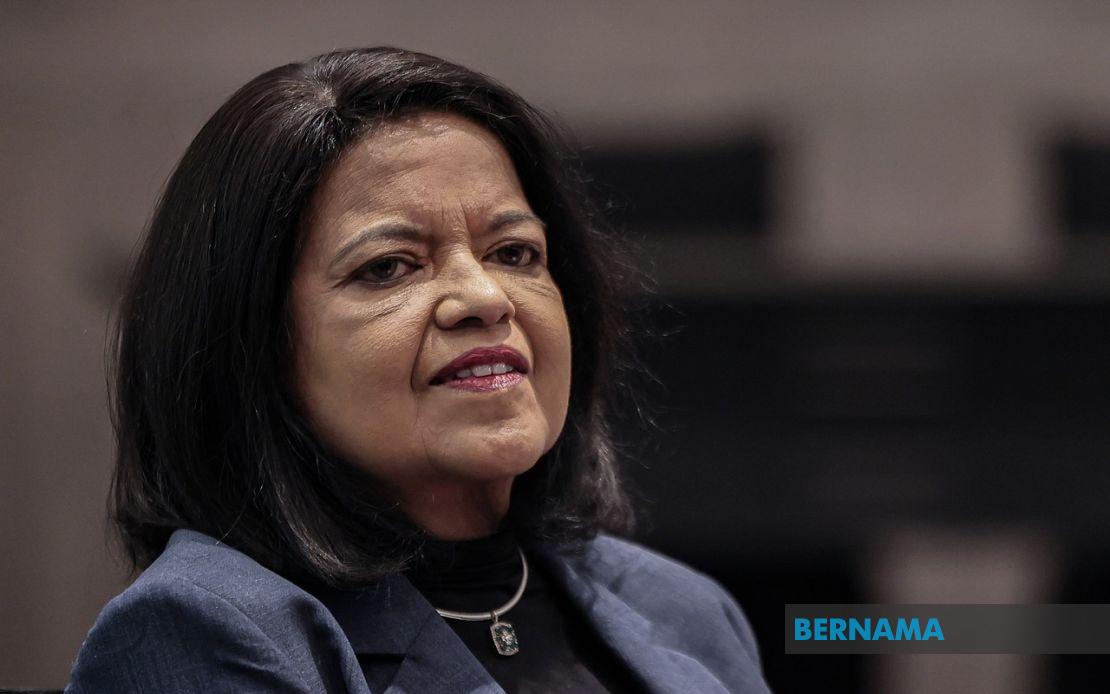
The Malaysian Media Council has identified the back-to-back Johor and Negeri Sembilan state elections as an ideal testing ground for its newly developed mechanism to counter fabricated news and protect electoral integrity. With Johor's polls scheduled for July 11 and Negeri Sembilan following on August 1, the MMC will have a compressed timeframe to deploy, evaluate, and refine its Rapid Response Election Initiative—a coordinated approach that brings together media organisations, government agencies, and digital platforms in real time.
MMC chairperson Tan Sri Nallini Pathmanathan framed the succession of two elections as a strategic advantage during a Media Dialogue Session held alongside the National Journalists' Day celebration. The proximity of the contests allows the council to field-test its mechanisms in the first state before immediately applying lessons learned to the second, creating a practical laboratory for crisis communication and fact-checking under genuine electoral pressure. This rolling deployment model offers insights that a single election campaign could not provide, enabling the MMC to observe how coordinated responses function across different regional media landscapes and voter demographics.
The pilot programme centres on a specific but critical challenge: the rapid proliferation of content falsely attributed to legitimate news organisations. Rather than attempting to adjudicate the truth of campaign claims or political manifestos—a role it deliberately avoids—the MMC focuses on verifying whether news graphics, screenshots, reports, and logos actually originate from the organisations bearing those brands. Forged media identities carry particular potency during elections, as they exploit public trust in established journalistic institutions to spread false claims about candidate withdrawals, procedural changes, or voting irregularities.
The architecture of the initiative distributes responsibility across multiple stakeholders, each playing a defined role within a coordinated framework. The MMC serves as orchestrator and clearing house, but the actual verification of content falls to media organisations themselves, who possess the technical and institutional knowledge to identify whether material genuinely came from their newsrooms. The Election Commission functions as the authoritative source for election procedure questions, while Bernama, Malaysia's national news agency, manages the dissemination of verified information to the broader public. This tiered approach prevents any single institution from controlling the verification process while ensuring that corrections reach voters through trusted channels.
Digital literacy and platform engagement fall under Content Forum Malaysia's purview, recognising that modern misinformation spreads primarily through social media and messaging applications rather than through traditional news outlets. The Department of Community Communications and National Information Dissemination Centres extend verified information into rural and community settings, addressing the reality that not all Malaysian voters receive information through digital platforms. The Malaysian Communications and Multimedia Commission retains its regulatory authority, providing technical assistance and enforcement mechanisms when platform-based responses prove necessary. This ecosystem approach acknowledges that combating election misinformation requires coordination across journalism, technology, government, and civil society rather than reliance on any single actor.
The mechanics of the system become clear through hypothetical scenarios. Should a graphic bearing a major news organisation's logo falsely claim that a candidate has withdrawn from the race, the organisation can verify within minutes whether the content came from its systems. A swift correction and public alert can be distributed before the misinformation achieves viral saturation, drastically reducing its electoral impact. Similarly, claims about voting procedures—such as fictional requirements for documentation or false polling dates—can be referred immediately to the Election Commission for official clarification. Speed matters profoundly in this context; by the time traditional fact-checking articles appear hours after a false claim circulates, millions may have already encountered and shared the fabrication.
The initiative emerges partly in response to emerging technological threats that electoral systems have barely begun to address. Synthetic media and artificial intelligence-generated content can now be produced at scale with minimal human intervention, enabling bad actors to generate plausible-seeming false information far faster than traditional misinformation networks could manage. Deep-faked videos of candidates, AI-generated news broadcasts bearing authentic-looking logos, and synthetic audio recordings all pose challenges that conventional verification methods struggle to counter. The MMC's rapid response model acknowledges that containment and speedy correction may be more realistic goals than prevention in the age of generative artificial intelligence.
Critically, the MMC's framework does not position itself as a censor or arbiter of political speech. The initiative explicitly avoids assessing the factual accuracy of campaign promises, policy proposals, or candidate claims—inherently contestable matters within democratic discourse. Instead, it provides a narrower but more defensible service: verifying whether specific content actually originated from the organisations bearing their logos and brands. This circumscribed scope protects editorial independence while still addressing a genuine threat to information integrity during elections. Voters retain full freedom to debate, criticise, and contest political claims; the initiative simply ensures they do so knowing whether they are engaging with authentic news coverage or fabricated content bearing stolen institutional identities.
Accompanying the verification mechanism, the MMC will launch a public awareness campaign centred on the bilingual slogan "Who Said It? What's The Source?" encouraging voters to pause before sharing information or accepting claims at face value. The campaign intentionally avoids framing media literacy as a demand for silence or uncritical acceptance of official narratives. Instead, it positions critical questioning as a civic virtue, inviting voters to exercise healthy scepticism about the origins and authenticity of information circulating during electoral campaigns. The emphasis on source verification reflects a mature approach to democratic participation—one that respects citizens' right to engage fully while encouraging them to do so as informed, discerning participants rather than passive recipients of whatever content algorithms serve them.
The initiative's significance extends beyond its technical architecture or operational procedures. Malaysia faces a complex media landscape where traditional journalism, digital platforms, messaging applications, and word-of-mouth networks all shape how voters perceive electoral reality. No single correction mechanism can reach every Malaysian across these fragmented channels, yet the MMC's coordinated framework attempts to place rapid, authoritative responses within media organisations and government agencies positioned to reach most citizens. The success or failure of this pilot will likely influence how other Southeast Asian democracies, facing similar challenges with electoral misinformation and synthetic content, structure their own institutional responses to threats against information integrity during critical democratic moments.
%22%2F%3E%3C%2Fpattern%3E%3C%2Fdefs%3E%3Crect%20width%3D%22100%25%22%20height%3D%22100%25%22%20fill%3D%22url(%23ph267lhg)%22%2F%3E%3Crect%20width%3D%22100%25%22%20height%3D%22100%25%22%20fill%3D%22url(%23ph267lhp)%22%2F%3E%3Ctext%20x%3D%2250%25%22%20y%3D%2250%25%22%20text-anchor%3D%22middle%22%20dominant-baseline%3D%22central%22%20fill%3D%22rgba(255%2C255%2C255%2C0.95)%22%20font-family%3D%22Georgia%2C%20'Times%20New%20Roman'%2C%20serif%22%20font-weight%3D%22700%22%20font-size%3D%22170%22%20letter-spacing%3D%22-0.02em%22%3EMalaysia%3C%2Ftext%3E%3C%2Fsvg%3E)
%22%2F%3E%3C%2Fpattern%3E%3C%2Fdefs%3E%3Crect%20width%3D%22100%25%22%20height%3D%22100%25%22%20fill%3D%22url(%23ph458y7g)%22%2F%3E%3Crect%20width%3D%22100%25%22%20height%3D%22100%25%22%20fill%3D%22url(%23ph458y7p)%22%2F%3E%3Ctext%20x%3D%2250%25%22%20y%3D%2250%25%22%20text-anchor%3D%22middle%22%20dominant-baseline%3D%22central%22%20fill%3D%22rgba(255%2C255%2C255%2C0.95)%22%20font-family%3D%22Georgia%2C%20'Times%20New%20Roman'%2C%20serif%22%20font-weight%3D%22700%22%20font-size%3D%22170%22%20letter-spacing%3D%22-0.02em%22%3EMalaysia%3C%2Ftext%3E%3C%2Fsvg%3E)
%22%2F%3E%3C%2Fpattern%3E%3C%2Fdefs%3E%3Crect%20width%3D%22100%25%22%20height%3D%22100%25%22%20fill%3D%22url(%23phyem9g)%22%2F%3E%3Crect%20width%3D%22100%25%22%20height%3D%22100%25%22%20fill%3D%22url(%23phyem9p)%22%2F%3E%3Ctext%20x%3D%2250%25%22%20y%3D%2250%25%22%20text-anchor%3D%22middle%22%20dominant-baseline%3D%22central%22%20fill%3D%22rgba(255%2C255%2C255%2C0.95)%22%20font-family%3D%22Georgia%2C%20'Times%20New%20Roman'%2C%20serif%22%20font-weight%3D%22700%22%20font-size%3D%22136%22%20letter-spacing%3D%22-0.02em%22%3EGovernment%3C%2Ftext%3E%3C%2Fsvg%3E)