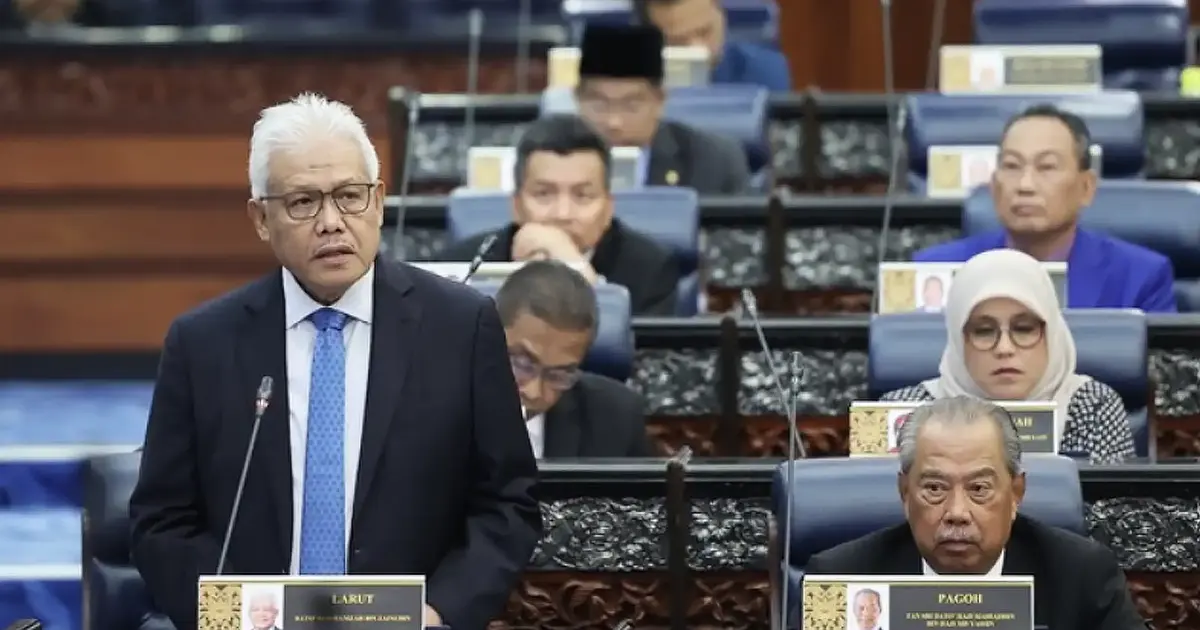
Dewan Rakyat Speaker Johari Abdul has disclosed that former Prime Minister Muhyiddin Yassin approached him requesting a change in parliamentary seating arrangements, a development that underscores ongoing shifts within Malaysia's fractious political landscape. The speaker's revelation comes as parliament navigates a period of realignment following significant changes in coalition configurations and leadership positions, with the seat request suggesting potential reconfiguration of opposition benches or cross-factional arrangements.
Speaker Johari Abdul also confirmed receipt of formal documentation designating Larut MP Hamzah Zainudin as the official opposition leader, cementing a structural change within parliament's recognition of opposition representation. This confirmation through official channels provides clarity on the parliamentary hierarchy and ensures proper protocols are followed in the nation's legislative body, where the opposition leader's role carries specific parliamentary rights and responsibilities including priority in debate scheduling and formal engagement with government ministers.
The request from Muhyiddin regarding seating represents a practical consideration within the Dewan Rakyat, where physical positioning carries symbolic weight in Malaysia's parliamentary tradition. Seat arrangements in parliament are not merely logistical matters but reflect political allegiances, coalition dynamics, and individual circumstances. For a figure of Muhyiddin's stature—having previously served as Prime Minister and maintained significant influence within opposition circles—such a request would likely involve consultation with the speaker's office regarding available alternatives and parliamentary protocols governing seating arrangements.
The timing of these developments reflects the broader political context in Malaysia, where coalition alignments have undergone substantial changes in recent years. The opposition movement encompasses multiple political parties with sometimes competing interests, and the formal designation of a single opposition leader helps establish clear parliamentary procedures for engagement and debate. Hamzah Zainudin's formal appointment as opposition leader comes with specific parliamentary functions, including the right to lead questioning of the government and coordinate opposition positions on major legislation.
For Malaysian readers and regional observers, these procedural matters carry implications beyond mere parliamentary administration. They signal the degree of stability—or instability—within opposition structures, demonstrate how former senior figures navigate contemporary politics, and illustrate the technical frameworks through which Malaysia's parliament operates. The speaker's transparent communication about such matters contributes to public understanding of legislative processes and reinforces the independence of the Dewan Rakyat's administrative functions under neutral leadership.
Muhyiddin's position within parliament has evolved considerably following shifting political fortunes. His request for seating adjustment may reflect various motivations: positioning relative to certain factional groups, practical concerns regarding parliamentary proceedings, or broader strategic considerations about visibility and influence within the chamber. The speaker's willingness to address such requests and communicate publicly about them demonstrates the operational flexibility within parliament's administrative framework while maintaining established rules and protocols.
The formal recognition of Hamzah Zainudin as opposition leader represents institutional clarity at a time when Malaysia's political landscape has experienced considerable turbulence. Having a clearly designated opposition leader simplifies parliamentary procedures, ensures consistent interlocutors for government engagement, and provides voters with transparent understanding of who leads the opposition movement in the legislature. This clarity benefits parliamentary efficiency and contributes to institutional legitimacy regardless of political disagreements between government and opposition.
Speaker Johari Abdul's role in addressing both matters illustrates the important position held by the Dewan Rakyat's administrative leadership. The speaker must balance multiple constituencies—government and opposition members, parliamentary rules, public expectations, and procedural requirements—while maintaining the impartiality essential to the office. By transparently addressing Muhyiddin's request and confirming Hamzah's position, the speaker demonstrates responsive administration while maintaining neutrality.
These developments also reflect how Malaysia's political system continues evolving in response to changing circumstances and new alignments. The fluidity within opposition ranks, the reshuffling of senior figures between different political formations, and the adjustments in parliamentary positioning all indicate an active, dynamic system where political actors continually reassess their strategies and positioning. Such movement, while sometimes appearing chaotic, represents normal democratic processes where coalitions form and reform based on political calculations and changing circumstances.
For Southeast Asian observers monitoring Malaysian politics, these parliamentary-level developments provide insights into how formal institutions manage political change. Malaysia's Dewan Rakyat, despite various challenges and criticisms, continues functioning as a venue where formal procedures regulate political competition. The speaker's documented approach to matters involving prominent political figures suggests institutional consistency and procedural adherence regardless of individual identities, an important characteristic of stable democratic governance.
%22%2F%3E%3C%2Fpattern%3E%3C%2Fdefs%3E%3Crect%20width%3D%22100%25%22%20height%3D%22100%25%22%20fill%3D%22url(%23ph3wr65g)%22%2F%3E%3Crect%20width%3D%22100%25%22%20height%3D%22100%25%22%20fill%3D%22url(%23ph3wr65p)%22%2F%3E%3Ctext%20x%3D%2250%25%22%20y%3D%2250%25%22%20text-anchor%3D%22middle%22%20dominant-baseline%3D%22central%22%20fill%3D%22rgba(255%2C255%2C255%2C0.95)%22%20font-family%3D%22Georgia%2C%20'Times%20New%20Roman'%2C%20serif%22%20font-weight%3D%22700%22%20font-size%3D%22272%22%20letter-spacing%3D%22-0.02em%22%3EAmira%3C%2Ftext%3E%3C%2Fsvg%3E)
%22%2F%3E%3C%2Fpattern%3E%3C%2Fdefs%3E%3Crect%20width%3D%22100%25%22%20height%3D%22100%25%22%20fill%3D%22url(%23ph5jfj1g)%22%2F%3E%3Crect%20width%3D%22100%25%22%20height%3D%22100%25%22%20fill%3D%22url(%23ph5jfj1p)%22%2F%3E%3Ctext%20x%3D%2250%25%22%20y%3D%2250%25%22%20text-anchor%3D%22middle%22%20dominant-baseline%3D%22central%22%20fill%3D%22rgba(255%2C255%2C255%2C0.95)%22%20font-family%3D%22Georgia%2C%20'Times%20New%20Roman'%2C%20serif%22%20font-weight%3D%22700%22%20font-size%3D%22272%22%20letter-spacing%3D%22-0.02em%22%3EHeavy%3C%2Ftext%3E%3C%2Fsvg%3E)