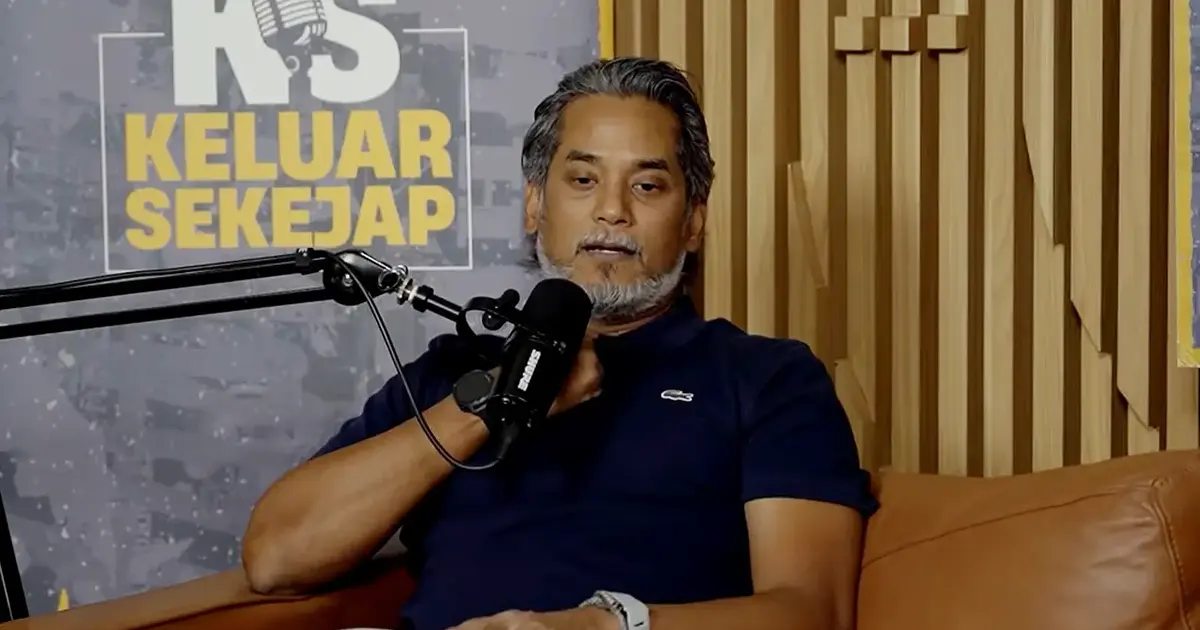
Political analyst and former Umno Youth chief Khairy Jamaluddin has offered a strategic assessment of the Islamist party PAS, suggesting that its current support base has approached natural limits and that electoral expansion now depends on cultivating ties with moderate political forces. This observation provides insight into the structural constraints facing one of Malaysia's largest Islamist movements as it navigates the complex terrain of coalition building and voter consolidation in a rapidly shifting political landscape.
Khairy's analysis zeroes in on the demographic and ideological ceiling that PAS faces within its traditional constituency. Over decades, PAS has built a formidable following among conservative Muslim voters, particularly in rural areas and in the states of Kelantan and Terengganu, where it has governed effectively. However, the party's rigid theological positioning and association with stricter interpretations of Islamic governance have constrained its appeal to centrist Muslim voters and urban constituencies where secular nationalism and moderate religiosity remain influential. This bifurcation reflects a broader tension within Malaysian Islam between traditionalist and progressivist camps, a divide that has only sharpened as urbanisation and education levels rise across the peninsula.
According to Khairy's assessment, PAS has identified Deputy Prime Minister Hamzah Zainudin and the newer Parti Wawasan Negara as potential vehicles for broadening its electoral reach. Hamzah, who has carved out a distinctive political persona distinct from both Umno's mainstream conservatism and PAS's ideological rigidity, represents a bridge figure capable of appealing to pragmatic, economically-minded voters who might otherwise dismiss PAS as too doctrinaire. Parti Wawasan Negara, still a relatively young political entity, carries no historical baggage and may provide PAS with a palatable conduit for entering into conversations with voters sceptical of the Islamic party's historical record.
The strategic logic underlying this coalition approach reflects an understanding that Malaysia's Muslim-majority electorate is far from monolithic. While PAS commands genuine allegiance among millions of voters, a substantial proportion of Muslim Malaysians prioritise economic stability, meritocratic governance, and religious pluralism over the maximalist Islamic agenda that PAS champions. These moderate Muslim voters—educated, middle-class, and concentrated in urban areas—represent untapped electoral potential for PAS, but they are unlikely to be swayed by PAS's conventional messaging or unilateral leadership. A partnership with a figure like Hamzah or an entity like Parti Wawasan Negara could signal flexibility and pragmatism, thereby lowering barriers to PAS engagement among sceptical constituencies.
For Malaysia's broader political system, this dynamic carries significant implications. PAS's evolution from a narrowly-based religious movement to a nationally-competitive force has reshaped electoral mathematics repeatedly since the 1990s. Should PAS successfully engineer a coalition breakthrough with moderate partners, it could substantially alter the balance of power in parliament and restructure the Malay-Muslim political bloc that has historically orbited Umno. Conversely, if PAS remains confined to its traditional base, other coalition partners may grow frustrated with a partner whose electoral ceiling appears fixed, potentially leading to realignments that could either strengthen or weaken the party depending on circumstances.
The timing of Khairy's intervention is noteworthy given his own political trajectory. Having lost his seat in the 2022 elections and subsequently been sidelined within Umno, Khairy has positioned himself as an elder statesman and strategic commentator on Malaysian politics. His observations about PAS's structural limitations carry weight because they reflect the kind of granular political analysis that emerges from years at the highest levels of party machinery. In highlighting the symbiosis between PAS and figures like Hamzah, Khairy is essentially mapping out a potential future configuration of Malaysian politics—one in which Umno's traditional dominance continues to fragment and newer hybrid political identities emerge to capture voters dissatisfied with conventional party offerings.
The reference to Hamzah Zainudin is particularly intriguing given his background as a long-serving Umno politician who has navigated multiple political crises and internal party upheavals. Hamzah represents a strand of Umno thinking that emphasises pragmatic Islamism and economic nationalism rather than religious purism, making him a natural ideological bridge between Umno's business-oriented conservatism and PAS's religious base. Should PAS-aligned forces formally align with Hamzah's political vehicle, it would signal a deliberate strategy to rebrand PAS as economically competent and socially inclusive, rather than as a party fixated on religious law and Islamic symbolism.
Parti Wawasan Negara, being newer and less encumbered by historical associations, could function as a strategic asset for PAS in a different way—as a platform for experimenting with new messaging and voter outreach without jeopardising PAS's core identity. This separation of functions allows PAS to maintain its ideological coherence while simultaneously testing whether moderate messaging frameworks can attract sufficient new voters to compensate for any erosion of its traditional base. It is a sophisticated approach to coalition politics that acknowledges the necessity of growth while respecting the party's foundational character and supporter expectations.
From a Southeast Asian perspective, PAS's predicament is not entirely unique. Religious and traditionalist parties across the region—from the Philippines to Indonesia—face similar pressures to expand beyond sectarian bases while maintaining organisational coherence and ideological consistency. How PAS navigates this tension will reverberate throughout Asean's largest Muslim-majority nations, where the question of how Islamist movements can productively participate in plural democracies remains contested and evolving. Malaysia's experience in managing PAS's integration into a competitive democratic system offers lessons—both cautionary and encouraging—for other countries wrestling with similar questions.
Moving forward, the success of any PAS strategy hinges on whether moderate coalition partners genuinely believe in shared governance and can credibly represent Muslim interests without subordinating other constituencies. History suggests that such alliances often prove fragile when tested by governance challenges, resource distribution disputes, or sudden shifts in electoral sentiment. Nevertheless, Khairy's analysis highlights a fundamental truth: PAS cannot indefinitely rely on its traditional base, and any serious bid for national power must involve building bridges to constituencies that do not naturally gravitate toward the Islamic party. Whether Hamzah Zainudin and Parti Wawasan Negara constitute the right bridges remains to be demonstrated through political outcomes.
%22%2F%3E%3C%2Fpattern%3E%3C%2Fdefs%3E%3Crect%20width%3D%22100%25%22%20height%3D%22100%25%22%20fill%3D%22url(%23ph4ydocg)%22%2F%3E%3Crect%20width%3D%22100%25%22%20height%3D%22100%25%22%20fill%3D%22url(%23ph4ydocp)%22%2F%3E%3Ctext%20x%3D%2250%25%22%20y%3D%2250%25%22%20text-anchor%3D%22middle%22%20dominant-baseline%3D%22central%22%20fill%3D%22rgba(255%2C255%2C255%2C0.95)%22%20font-family%3D%22Georgia%2C%20'Times%20New%20Roman'%2C%20serif%22%20font-weight%3D%22700%22%20font-size%3D%22320%22%20letter-spacing%3D%22-0.02em%22%3EPKR%3C%2Ftext%3E%3C%2Fsvg%3E)
%22%2F%3E%3C%2Fpattern%3E%3C%2Fdefs%3E%3Crect%20width%3D%22100%25%22%20height%3D%22100%25%22%20fill%3D%22url(%23ph6cu2g)%22%2F%3E%3Crect%20width%3D%22100%25%22%20height%3D%22100%25%22%20fill%3D%22url(%23ph6cu2p)%22%2F%3E%3Ctext%20x%3D%2250%25%22%20y%3D%2250%25%22%20text-anchor%3D%22middle%22%20dominant-baseline%3D%22central%22%20fill%3D%22rgba(255%2C255%2C255%2C0.95)%22%20font-family%3D%22Georgia%2C%20'Times%20New%20Roman'%2C%20serif%22%20font-weight%3D%22700%22%20font-size%3D%22320%22%20letter-spacing%3D%22-0.02em%22%3EUS%3C%2Ftext%3E%3C%2Fsvg%3E)
%22%2F%3E%3C%2Fpattern%3E%3C%2Fdefs%3E%3Crect%20width%3D%22100%25%22%20height%3D%22100%25%22%20fill%3D%22url(%23phnr15g)%22%2F%3E%3Crect%20width%3D%22100%25%22%20height%3D%22100%25%22%20fill%3D%22url(%23phnr15p)%22%2F%3E%3Ctext%20x%3D%2250%25%22%20y%3D%2250%25%22%20text-anchor%3D%22middle%22%20dominant-baseline%3D%22central%22%20fill%3D%22rgba(255%2C255%2C255%2C0.95)%22%20font-family%3D%22Georgia%2C%20'Times%20New%20Roman'%2C%20serif%22%20font-weight%3D%22700%22%20font-size%3D%22320%22%20letter-spacing%3D%22-0.02em%22%3EPAS%3C%2Ftext%3E%3C%2Fsvg%3E)