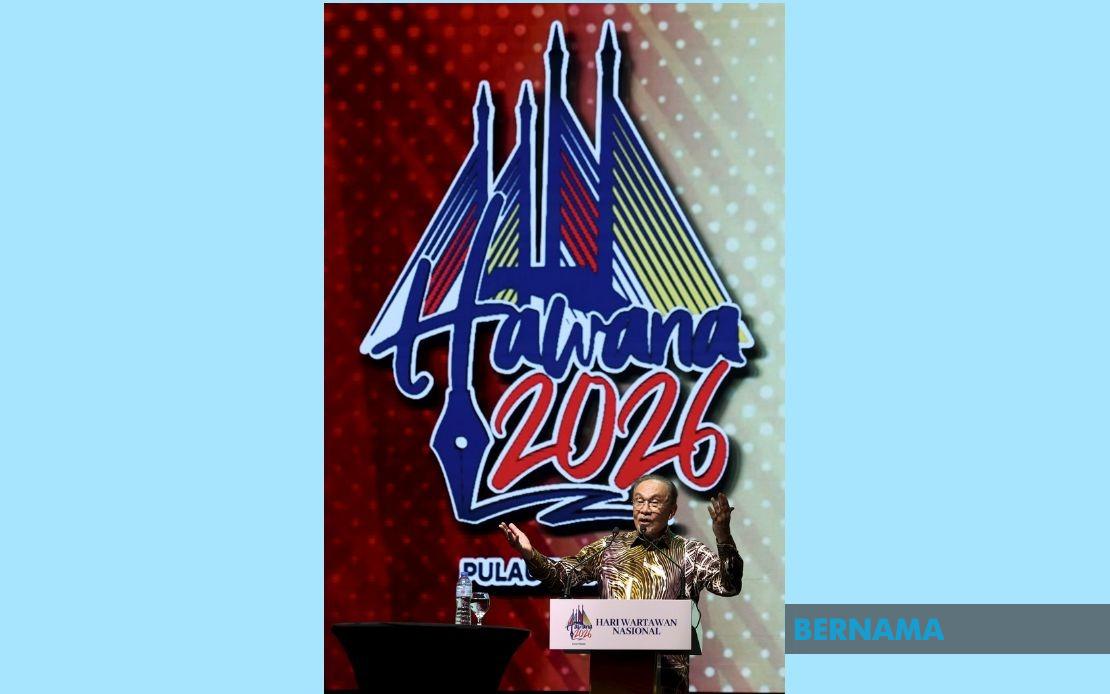
Prime Minister Datuk Seri Anwar Ibrahim has committed an additional RM1 million to support media practitioners facing financial difficulties, reinforcing the government's pledge to safeguard the welfare of Malaysia's journalism workforce. The announcement came at the National Journalists' Day (HAWANA) 2026 main event in Butterworth on June 20, where Anwar, who also holds the Finance Minister portfolio, formally unveiled the fresh allocation for this year. The commitment underscores the administration's recognition that financial strain among media professionals can undermine editorial independence and journalistic integrity across the nation.
Since its inception during HAWANA 2023, the Tabung Kasih@HAWANA has demonstrated tangible impact on the journalism community. The fund has channelled assistance to 773 media practitioners nationwide, distributing a cumulative RM2.26 million in financial support. This outreach spans multiple forms of aid, including direct cash assistance for those facing acute hardship, subsidies for medical treatment and hospital expenses, family welfare support packages, and emergency relief for practitioners affected by personal crises. The scheme's multifaceted approach reflects understanding that journalists often operate with limited safety nets and face vulnerabilities beyond typical employment benefits.
The additional RM1 million allocation signals sustained governmental commitment to the welfare architecture supporting Malaysia's fourth estate. For media practitioners accustomed to financial precarity—particularly those working in smaller outlets, freelance arrangements, or regional publications—such interventions provide critical buffers against destitution. The fund's existence also carries symbolic weight, acknowledging the profession's societal value during an era when journalism globally faces economic pressures from digital disruption and advertising revenue decline. Anwar's framing of the allocation within a "spirit of compassion and care" positions media support as a moral obligation rather than mere administrative expenditure.
The HAWANA 2026 gathering itself reflected the scale and diversity of Malaysia's media landscape. Held at PICCA Convention Centre@Butterworth Arena, the main event attracted over 1,000 media practitioners from Malaysia alongside international delegates, with representation from neighbouring nations including Timor-Leste, Cambodia, and Laos. This cross-border attendance underscores journalism's transnational dimensions and suggests growing regional dialogue on professional standards and welfare frameworks. The event's overarching theme, "Media Integrity Strengthens Credibility," positioned the welfare initiative within broader conversations about sustaining institutional trust in news organisations.
Several senior government and industry figures graced the occasion, reflecting official prioritisation of the media welfare agenda. Penang Chief Minister Chow Kon Yeow and Communications Minister Datuk Fahmi Fadzil attended alongside Communications Ministry secretary-general Datuk Abdul Halim Hamzah and deputy secretary-general Datuk Bahria Mohd Tamil. Malaysian National News Agency (Bernama) leadership was prominently represented, including chairman Datuk Seri Wong Chun Wai, chief executive officer Datin Paduka Nur-ul Afida Kamaludin, and editor-in-chief Arul Rajoo Durar Raj. This constellation of attendees suggests coordinated policy emphasis on sustaining professional journalism through institutional support mechanisms.
For Malaysian readers monitoring press freedom and state-media relations, the welfare fund represents one dimension of the government's broader engagement with the journalism profession. While financial assistance addresses immediate hardship, the initiative must be contextualised within wider conversations about editorial autonomy, regulatory frameworks, and the structural conditions enabling independent reporting. The scheme's existence does not resolve systemic challenges facing Malaysian newsrooms—from advertiser pressure to labour precarity—but it addresses one tangible consequence of those pressures by providing emergency relief.
The timing of the additional allocation carries analytical significance given Malaysia's evolving media landscape. Digital transformation has disrupted traditional revenue models, forcing many publications to downsize editorial teams or shift towards subscription-based models. Simultaneously, misinformation proliferation and social media competition have heightened pressure on professional journalists to maintain credibility and accuracy. In this context, supporting practitioners through welfare provisions indirectly promotes the investigative and careful reporting that distinguishes professional journalism from online rumour mills.
The fund's structure—targeting former as well as active practitioners—acknowledges journalism's occupational reality where career trajectories often prove unpredictable. Journalists transitioning between organisations, facing redundancy, or retiring with inadequate provisions constitute a vulnerable cohort. By extending eligibility to former practitioners, the Tabung Kasih@HAWANA recognises journalism as a profession with cumulative social contribution deserving post-career support.
Regionally, Malaysia's institutionalised welfare approach to journalism contrasts with practices in some neighbouring jurisdictions where media support remains ad hoc or absent. The fund's expansion signals potential soft power messaging: that democratic governance requires substantive investment in professional information infrastructure. This distinction may influence how regional media organisations regard Malaysia's commitment to supporting journalism as a distinct sector worthy of targeted policy attention.
Moving forward, monitoring the fund's implementation will be instructive for policymakers across Southeast Asia evaluating similar mechanisms. Questions surrounding fund accessibility, criteria for determining assistance levels, and integration with broader media development strategies will shape the initiative's ultimate effectiveness. The RM1 million addition, while substantial, remains modest relative to the scale of financial precarity affecting Malaysia's journalism workforce, suggesting that larger structural reforms addressing newsroom economics and employment stability remain necessary complements to welfare provision.
Anwar's announcement ultimately reflects pragmatic recognition that professional journalism requires deliberate support infrastructure. By coupling welfare commitment with high-profile public acknowledgment at a major industry gathering, the government positions media practitioner support as a legitimate policy priority rather than peripheral charity. Whether this commitment translates into sustained funding and expanded scope over coming years will substantially influence journalism's institutional viability across Malaysia.
%22%2F%3E%3C%2Fpattern%3E%3C%2Fdefs%3E%3Crect%20width%3D%22100%25%22%20height%3D%22100%25%22%20fill%3D%22url(%23ph31oomg)%22%2F%3E%3Crect%20width%3D%22100%25%22%20height%3D%22100%25%22%20fill%3D%22url(%23ph31oomp)%22%2F%3E%3Ctext%20x%3D%2250%25%22%20y%3D%2250%25%22%20text-anchor%3D%22middle%22%20dominant-baseline%3D%22central%22%20fill%3D%22rgba(255%2C255%2C255%2C0.95)%22%20font-family%3D%22Georgia%2C%20'Times%20New%20Roman'%2C%20serif%22%20font-weight%3D%22700%22%20font-size%3D%22320%22%20letter-spacing%3D%22-0.02em%22%3EPM%3C%2Ftext%3E%3C%2Fsvg%3E)
%22%2F%3E%3C%2Fpattern%3E%3C%2Fdefs%3E%3Crect%20width%3D%22100%25%22%20height%3D%22100%25%22%20fill%3D%22url(%23ph15p9hg)%22%2F%3E%3Crect%20width%3D%22100%25%22%20height%3D%22100%25%22%20fill%3D%22url(%23ph15p9hp)%22%2F%3E%3Ctext%20x%3D%2250%25%22%20y%3D%2250%25%22%20text-anchor%3D%22middle%22%20dominant-baseline%3D%22central%22%20fill%3D%22rgba(255%2C255%2C255%2C0.95)%22%20font-family%3D%22Georgia%2C%20'Times%20New%20Roman'%2C%20serif%22%20font-weight%3D%22700%22%20font-size%3D%22320%22%20letter-spacing%3D%22-0.02em%22%3ETV3%3C%2Ftext%3E%3C%2Fsvg%3E)
%22%2F%3E%3C%2Fpattern%3E%3C%2Fdefs%3E%3Crect%20width%3D%22100%25%22%20height%3D%22100%25%22%20fill%3D%22url(%23ph2pvjyg)%22%2F%3E%3Crect%20width%3D%22100%25%22%20height%3D%22100%25%22%20fill%3D%22url(%23ph2pvjyp)%22%2F%3E%3Ctext%20x%3D%2250%25%22%20y%3D%2250%25%22%20text-anchor%3D%22middle%22%20dominant-baseline%3D%22central%22%20fill%3D%22rgba(255%2C255%2C255%2C0.95)%22%20font-family%3D%22Georgia%2C%20'Times%20New%20Roman'%2C%20serif%22%20font-weight%3D%22700%22%20font-size%3D%22170%22%20letter-spacing%3D%22-0.02em%22%3EJudicial%3C%2Ftext%3E%3C%2Fsvg%3E)