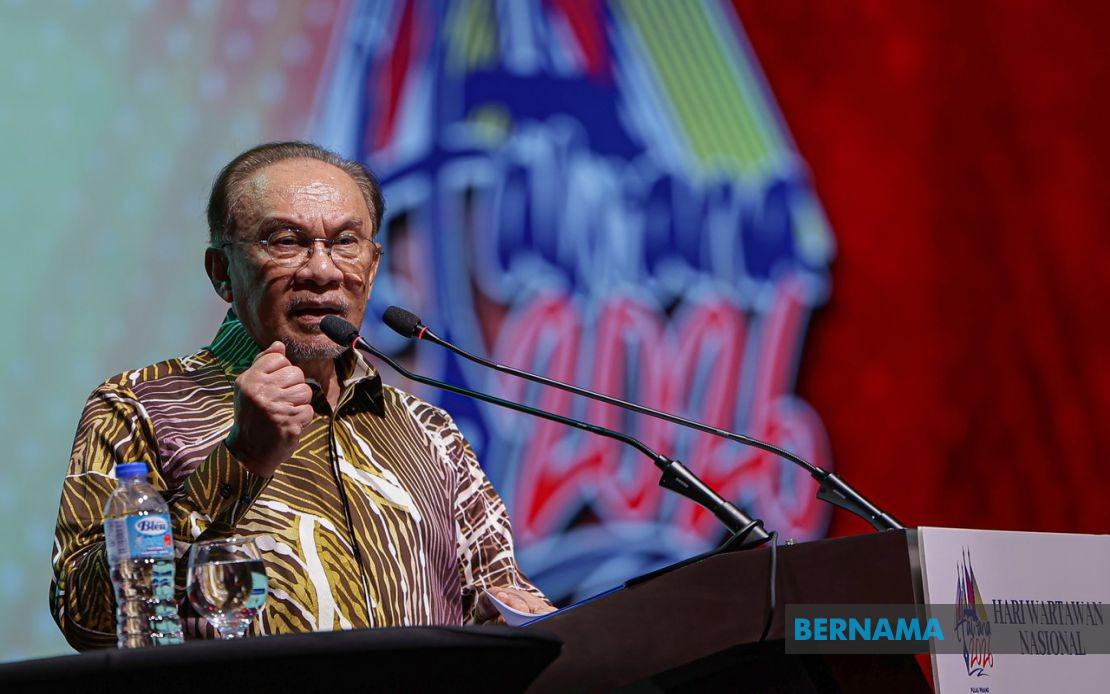
Prime Minister Datuk Seri Anwar Ibrahim has publicly backed the appointment of former Federal Court judge Tan Sri Nallini Pathmanathan as chairman of the Malaysian Media Council, viewing her selection as a watershed moment for an institution tasked with safeguarding journalistic standards across the nation. Speaking at the National Journalists' Day (HAWANA) 2026 celebration in Butterworth on June 20, Anwar underscored that Nallini's impeccable judicial credentials and established record of integrity would fundamentally reshape how the council is perceived by both the media industry and the broader public.
The Prime Minister's vocal endorsement carries particular weight given the MMC's pivotal role within Malaysia's media ecosystem. Since its formal establishment under the Malaysian Media Council Act 2025, the body has operated as a self-regulatory mechanism designed to uphold professional standards, investigate public complaints against media outlets, and advocate for ethical journalism. By positioning Nallini's appointment as an enhancement to the council's image, Anwar signalled that his administration views institutional credibility as essential to the council's capacity to fulfill its mandate effectively.
Nallini's background as a Federal Court judge provides the kind of judicial gravitas that lends weight to regulatory decisions. Her selection was not made hastily; rather, it followed careful deliberation that weighed her distinguished career on the bench, her documented integrity, and her potential to command respect within journalistic circles. The MMC board itself validated this assessment, with members unanimously endorsing her appointment during a formal meeting held on May 26. This consensus among board members suggests internal agreement that she represents the calibre of leadership the council requires at a critical juncture.
The timing of Nallini's appointment reflects broader concerns about media trust in Malaysia and across the Asia-Pacific region. Public confidence in news organisations has faced sustained pressure globally, exacerbated by challenges ranging from misinformation to perceived editorial bias. A media council led by someone with Nallini's unquestionable credentials can serve as a counterweight to such scepticism, offering audiences assurance that complaints will be handled impartially and that professional standards are being actively monitored. This is particularly important in Malaysia's politically charged environment, where media independence and fairness remain contested issues.
Communications Minister Datuk Fahmi Fadzil and Penang Chief Minister Chow Kon Yeow's presence at the HAWANA 2026 event reflected broader government backing for the initiative. The attendance of senior Communications Ministry officials, including secretary-general Datuk Abdul Halim Hamzah and deputy secretary-general Datuk Bahria Mohd Tamil, demonstrated that Nallini's leadership enjoys cross-governmental support. This alignment between executive leadership and the council's governance structure enhances the MMC's standing as an institution capable of operating independently while remaining responsive to national priorities.
The Malaysian Media Council's mandate encompasses several interconnected functions that Nallini will oversee. Beyond handling complaints, the MMC works to strengthen journalistic standards—a task requiring both technical expertise and cultural sensitivity. The council must balance its advocacy for media freedom, a foundational democratic principle, with its responsibility to ensure that news organisations meet professional benchmarks. Nallini's judicial experience equips her to navigate these nuanced terrain, particularly where conflicts arise between different stakeholders' interests.
For Malaysia's journalism community, Nallini's appointment carries reassuring symbolism. The selection of a woman with her professional stature sends a signal that the council is serious about appointing leaders capable of commanding respect across gender and professional divides. Her judicial background also means she brings familiarity with evidentiary standards, procedural fairness, and the kind of measured reasoning that should inform regulatory decision-making. These qualities are essential when the council adjudicates disputes that may generate considerable public attention and controversy.
The establishment of the MMC under statutory legislation represents a maturation of Malaysia's approach to media self-regulation. Rather than relying exclusively on voluntary industry codes, the council now operates within a formal legal framework—the Malaysian Media Council Act 2025—that defines its powers, responsibilities, and oversight mechanisms. Within this structured environment, leadership quality becomes paramount. A chairperson of Nallini's standing can lend legitimacy to the council's determinations and bolster confidence among both media organisations and the public that decisions are rendered impartially.
Regionally, Malaysia's investment in institutional frameworks for media governance reflects broader Southeast Asian trends toward professionalising media regulation. Countries across the region grapple with similar challenges: maintaining media freedom while combating misinformation, ensuring ethical journalism while respecting editorial autonomy, and building public trust in news institutions while preserving their independence from political manipulation. The Malaysian Media Council, under Nallini's leadership, has the potential to emerge as a model worthy of regional attention—demonstrating how an independent, credible regulatory body can operate effectively within democratic societies.
Anwar's public congratulations to Nallini and his framing of her appointment as strategically important suggest that the government views media governance as integral to national democratic health. By backing Nallini explicitly, the Prime Minister has staked government credibility on the council's success. This implicit covenant carries mutual obligations: the government must afford the council genuine operational independence, while the council must justify that confidence through demonstrable fairness and professional rigour in its determinations. The extent to which these mutual expectations are fulfilled will significantly influence how Malaysians and international observers evaluate both the council's effectiveness and the government's commitment to media freedom principles.
%22%2F%3E%3C%2Fpattern%3E%3C%2Fdefs%3E%3Crect%20width%3D%22100%25%22%20height%3D%22100%25%22%20fill%3D%22url(%23ph31oomg)%22%2F%3E%3Crect%20width%3D%22100%25%22%20height%3D%22100%25%22%20fill%3D%22url(%23ph31oomp)%22%2F%3E%3Ctext%20x%3D%2250%25%22%20y%3D%2250%25%22%20text-anchor%3D%22middle%22%20dominant-baseline%3D%22central%22%20fill%3D%22rgba(255%2C255%2C255%2C0.95)%22%20font-family%3D%22Georgia%2C%20'Times%20New%20Roman'%2C%20serif%22%20font-weight%3D%22700%22%20font-size%3D%22320%22%20letter-spacing%3D%22-0.02em%22%3EPM%3C%2Ftext%3E%3C%2Fsvg%3E)
%22%2F%3E%3C%2Fpattern%3E%3C%2Fdefs%3E%3Crect%20width%3D%22100%25%22%20height%3D%22100%25%22%20fill%3D%22url(%23ph15p9hg)%22%2F%3E%3Crect%20width%3D%22100%25%22%20height%3D%22100%25%22%20fill%3D%22url(%23ph15p9hp)%22%2F%3E%3Ctext%20x%3D%2250%25%22%20y%3D%2250%25%22%20text-anchor%3D%22middle%22%20dominant-baseline%3D%22central%22%20fill%3D%22rgba(255%2C255%2C255%2C0.95)%22%20font-family%3D%22Georgia%2C%20'Times%20New%20Roman'%2C%20serif%22%20font-weight%3D%22700%22%20font-size%3D%22320%22%20letter-spacing%3D%22-0.02em%22%3ETV3%3C%2Ftext%3E%3C%2Fsvg%3E)
%22%2F%3E%3C%2Fpattern%3E%3C%2Fdefs%3E%3Crect%20width%3D%22100%25%22%20height%3D%22100%25%22%20fill%3D%22url(%23ph2pvjyg)%22%2F%3E%3Crect%20width%3D%22100%25%22%20height%3D%22100%25%22%20fill%3D%22url(%23ph2pvjyp)%22%2F%3E%3Ctext%20x%3D%2250%25%22%20y%3D%2250%25%22%20text-anchor%3D%22middle%22%20dominant-baseline%3D%22central%22%20fill%3D%22rgba(255%2C255%2C255%2C0.95)%22%20font-family%3D%22Georgia%2C%20'Times%20New%20Roman'%2C%20serif%22%20font-weight%3D%22700%22%20font-size%3D%22170%22%20letter-spacing%3D%22-0.02em%22%3EJudicial%3C%2Ftext%3E%3C%2Fsvg%3E)