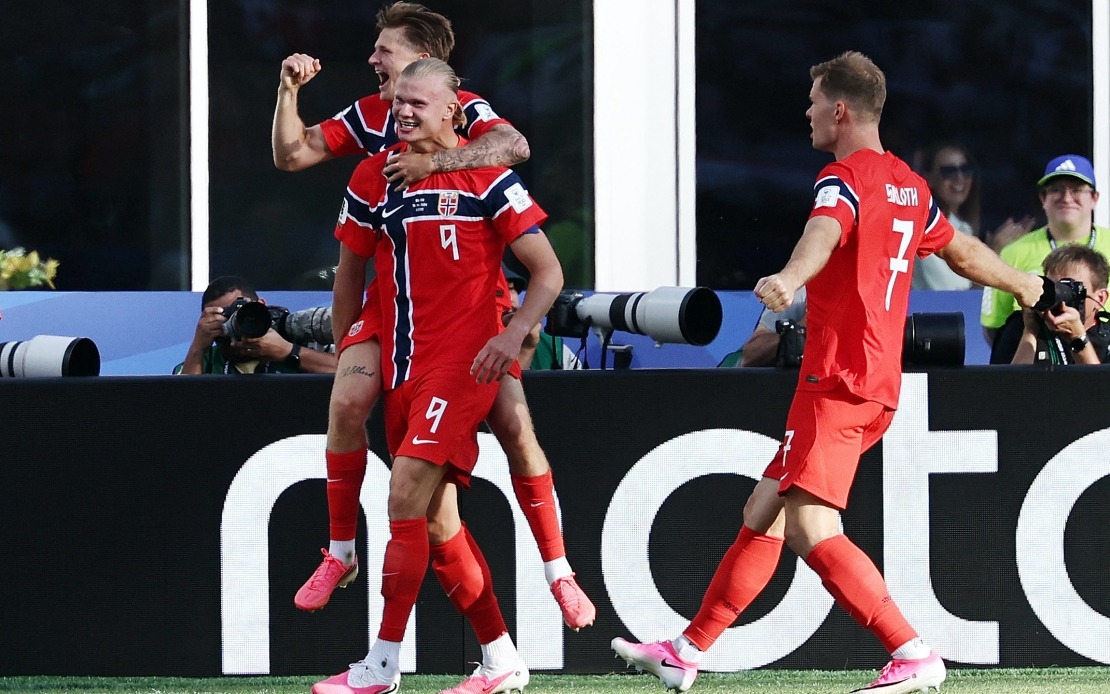
The Norwegian national football team carries an unusual burden into their World Cup campaign—the unfinished business of their predecessors. Three of the squad's key players, Erling Haaland, Alexander Sørloth, and Kristian Thorstvedt, are the sons of footballers who represented Norway at the 1994 World Cup in the United States, where the team was eliminated in the group stage. This generational connection adds emotional weight to their tournament ambitions, transforming what would ordinarily be a sporting contest into a family narrative spanning three decades.
Norway opened their campaign impressively, demolishing Iraq 4-1 in their opening match—a commanding performance that immediately signalled their intent to progress beyond the group stage, something their fathers' generation failed to achieve. The result provided early vindication for the squad's preparations and offered genuine hope that this iteration of Norwegian football could accomplish what eluded Alf-Inge Haaland, Gøran Sørloth, and Erik Thorstvedt three decades ago. For the younger generation, that opening victory represented both a tactical success and an emotional milestone, establishing the foundation upon which redemption could be built.
Erling Haaland stands as Norway's marquee talent and the most prominent representative of this father-son dynamic. The Manchester City striker has already become a global sporting icon through his prolific scoring record in club football, and his presence in the team elevates Norwegian expectations considerably. When shown archival photographs of his father from the 1994 tournament, Haaland reacted with the amusement of someone viewing their parent through an unfamiliar lens. "He looks so young. I have never seen him with such long hair," the younger Haaland remarked, highlighting how the passage of time transforms not only careers but also physical appearance and the narrative surrounding sporting achievement. This lighter moment masks the deeper resonance of following a parent's professional path, particularly in a sport where genetic and developmental advantages often run through families.
Beyond Haaland's star power, Alexander Sørloth provides crucial depth to Norway's attacking options. The Atletico Madrid forward has spoken eloquently about the privilege of competing in a World Cup as his father did, describing it as "simply great." More significantly, Sørloth has acknowledged his father's foundational role in his footballing education, stating that "he has taught me everything I know about football." This transmission of knowledge across generations—the tactical understanding, mental resilience, and professional discipline required at the highest level—represents an intangible advantage that financial investment and modern coaching methodologies alone cannot replicate.
Sørloth's earliest World Cup memory originates not from direct experience but from family context. He recalls watching the 2002 tournament in Japan and South Korea while the family holidayed in Denmark, vividly remembering the excitement of observing the competition alongside his father. These formative moments shape a footballer's relationship with the sport's grandest stage, creating psychological investment that extends beyond mere professional aspiration. For Sørloth, competing in the World Cup himself transforms those childhood memories of spectatorship into active participation in the same arena, fulfilling an implicit generational progression.
Kristian Thorstvedt completes this trio of players carrying paternal expectations into the tournament. Though less prominent in contemporary football discourse than Haaland or Sørloth, Thorstvedt's participation represents the broader phenomenon of Norwegian football families attempting to elevate their standing on the international stage. The presence of three players simultaneously bridging their fathers' era and their own creates a unique psychological dynamic within the squad—a collective sense that this generation possesses an opportunity to rewrite history and deliver success where the previous generation could not.
Norway's immediate challenge comes against Senegal, a fixture that could determine whether they progress from the group stage. A victory would effectively secure their passage to the knockout rounds, moving them materially closer to surpassing their fathers' achievement of group stage elimination. The mathematics are straightforward, but the emotional weight transcends simple calculations. Progression would represent tangible generational advancement—a statement that Norwegian football has evolved, developed, and matured in the intervening decades since 1994.
The tournament's structure places France in Norway's final group encounter, presenting both a significant hurdle and a narratively fitting climax to their group stage journey. France, as perennial tournament contenders, would ordinarily represent a formidable obstacle, but Norway enters that fixture with potential momentum from their matches against Iraq and Senegal. The sporting script unfolds with compelling drama: opening victory, potential group stage qualification, and a final examination against elite competition.
The Norwegian public has embraced this generational narrative with characteristic enthusiasm. The nation's parliament witnessed cross-party participation in displays of support for the national team, demonstrating how football transcends ordinary political divisions. Crown Prince Haakon's children, hereditary Princess Ingrid Alexandra and Prince Sverre Magnus, are expected to attend Norway's match against Senegal in New Jersey, providing royal endorsement to the squad's ambitions. This high-level interest reflects how deeply the sport is woven into Norwegian national identity and how the younger generation's World Cup participation resonates across society.
The broader significance of Norway's tournament extends beyond individual player narratives or qualification mechanics. The participation of Haaland, Sørloth, and Thorstvedt represents a maturing of Norwegian football infrastructure and development. These players have benefited from improved coaching, better facilities, and more comprehensive international experience than their fathers enjoyed. Their presence at the World Cup reflects decades of investment in youth development and systematic football progression. Whether they achieve more than their fathers ultimately matters less than the fact that Norway has successfully produced world-class footballers capable of competing at sport's highest level—a benchmark of national football maturity.
As Norway progresses through their group stage matches, the generational narrative will inevitably dominate coverage and commentary. Yet beneath the compelling human interest angle lies a straightforward sporting question: can this Norwegian squad perform at the level their opening victory suggested? Success would vindicate not only individual career trajectories but also three decades of national football development. For Haaland, Sørloth, and Thorstvedt, the opportunity to exceed their fathers' accomplishment drives motivation beyond ordinary professional ambition. They carry expectations of an entire generation of Norwegian football supporters who view this tournament as the stage where national redemption and personal legacy intertwine.
%22%2F%3E%3C%2Fpattern%3E%3C%2Fdefs%3E%3Crect%20width%3D%22100%25%22%20height%3D%22100%25%22%20fill%3D%22url(%23ph180wag)%22%2F%3E%3Crect%20width%3D%22100%25%22%20height%3D%22100%25%22%20fill%3D%22url(%23ph180wap)%22%2F%3E%3Ctext%20x%3D%2250%25%22%20y%3D%2250%25%22%20text-anchor%3D%22middle%22%20dominant-baseline%3D%22central%22%20fill%3D%22rgba(255%2C255%2C255%2C0.95)%22%20font-family%3D%22Georgia%2C%20'Times%20New%20Roman'%2C%20serif%22%20font-weight%3D%22700%22%20font-size%3D%22170%22%20letter-spacing%3D%22-0.02em%22%3EMalaysia%3C%2Ftext%3E%3C%2Fsvg%3E)