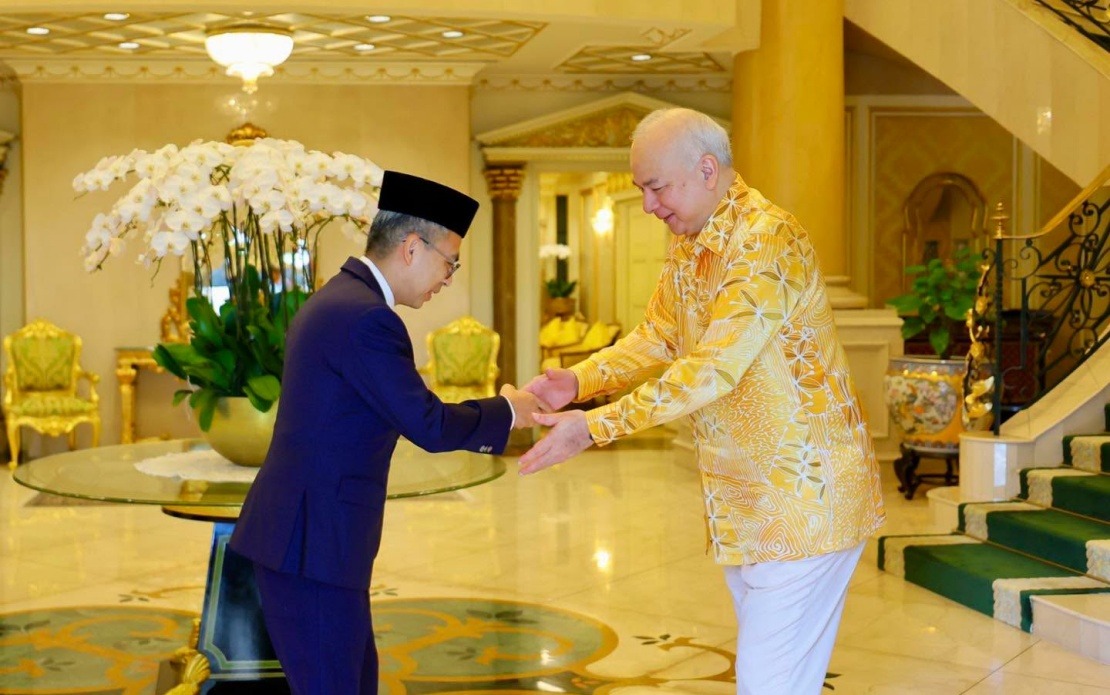
The Sultan of Perak, Sultan Nazrin Shah, has received a comprehensive update on the government's push to modernise communication infrastructure and broaden service accessibility throughout the state, according to Communications Minister Datuk Fahmi Fadzil. The briefing took place during a formal audience on June 18, where the minister outlined the progress and strategic direction of ongoing digital development projects aimed at ensuring equitable connectivity across Perak's diverse geography.
During the audience, discussions extended beyond basic infrastructure expansion to encompass the critical issue of online safety, which the Sultan identified as a matter requiring sustained attention and resources. This focus reflects growing concerns across Malaysia regarding digital security and the protection of citizens navigating an increasingly complex online environment. The inclusion of online safety in high-level discussions underscores recognition among both policymakers and the royal institution of how integral digital literacy and protective measures have become to modern governance.
Fahmi's visit to brief the Perak ruler represents a coordinated approach to state-level infrastructure development that involves consulting with local leadership and garnering royal patronage for national digital initiatives. Such engagements serve multiple purposes within Malaysia's governance framework: they ensure regional leaders understand federal development priorities, facilitate alignment between state and national objectives, and lend institutional weight to public sector projects seeking to improve citizen services.
For Perak specifically, enhanced communication infrastructure carries particular significance given the state's diverse topography, which includes densely populated urban centres like Ipoh alongside rural and semi-rural communities where connectivity remains inconsistent. The state has historically faced challenges in achieving uniform service coverage, making coordinated infrastructure investment essential for bridging digital divides that constrain economic opportunity and access to government services.
The emphasis on expanding service coverage reflects a broader national agenda to position Malaysia competitively within Southeast Asia's digital economy. As regional neighbours invest heavily in 5G networks, broadband infrastructure, and digital services, maintaining pace with technological advancement becomes economically imperative. States like Perak, which contribute significantly to Malaysia's manufacturing and agricultural sectors, require robust digital connectivity to support industry 4.0 initiatives and modern supply chain management.
Online safety emerged as a co-equal priority alongside infrastructure in the briefing, indicating recognition that simply expanding digital access without simultaneously building protective frameworks creates new vulnerabilities. Cybersecurity threats, digital fraud, and online exploitation have grown proportionally with internet penetration across Malaysia, particularly affecting elderly citizens and those with limited digital literacy. Government efforts to integrate safety messaging into infrastructure development projects suggest a more holistic approach to digital transformation than connectivity alone.
The formal nature of the audience, conducted through Malaysia's traditional protocols of deference to royal institutions, underscores how communications infrastructure development has ascended to matters of state importance warranting briefings at the highest institutional levels. This reflects the fundamental role digital connectivity now plays in governance effectiveness, economic competitiveness, and social cohesion across all Malaysian states.
Fahmi's respectful invocation of blessings for the Sultan and royal family in his public statement following the audience maintains the ceremonial protocols expected of ministers engaging with state rulers while simultaneously communicating the professional importance attached to infrastructure discussions. Such formalities, while often overlooked in casual news coverage, represent important cultural touchstones within Malaysia's constitutional monarchy framework.
The timing of this briefing coincides with broader Malaysian government initiatives to accelerate digital transformation across all states, suggesting Perak forms part of a coordinated national rollout rather than an isolated development project. This systematic approach increases likelihood of sustainable progress while enabling knowledge-sharing and resource optimisation across state boundaries, ultimately benefiting Malaysian citizens through more efficient service delivery and enhanced connectivity standards.
%22%2F%3E%3C%2Fpattern%3E%3C%2Fdefs%3E%3Crect%20width%3D%22100%25%22%20height%3D%22100%25%22%20fill%3D%22url(%23ph2q7d8g)%22%2F%3E%3Crect%20width%3D%22100%25%22%20height%3D%22100%25%22%20fill%3D%22url(%23ph2q7d8p)%22%2F%3E%3Ctext%20x%3D%2250%25%22%20y%3D%2250%25%22%20text-anchor%3D%22middle%22%20dominant-baseline%3D%22central%22%20fill%3D%22rgba(255%2C255%2C255%2C0.95)%22%20font-family%3D%22Georgia%2C%20'Times%20New%20Roman'%2C%20serif%22%20font-weight%3D%22700%22%20font-size%3D%22226%22%20letter-spacing%3D%22-0.02em%22%3EPolice%3C%2Ftext%3E%3C%2Fsvg%3E)
%22%2F%3E%3C%2Fpattern%3E%3C%2Fdefs%3E%3Crect%20width%3D%22100%25%22%20height%3D%22100%25%22%20fill%3D%22url(%23ph44ngzg)%22%2F%3E%3Crect%20width%3D%22100%25%22%20height%3D%22100%25%22%20fill%3D%22url(%23ph44ngzp)%22%2F%3E%3Ctext%20x%3D%2250%25%22%20y%3D%2250%25%22%20text-anchor%3D%22middle%22%20dominant-baseline%3D%22central%22%20fill%3D%22rgba(255%2C255%2C255%2C0.95)%22%20font-family%3D%22Georgia%2C%20'Times%20New%20Roman'%2C%20serif%22%20font-weight%3D%22700%22%20font-size%3D%22226%22%20letter-spacing%3D%22-0.02em%22%3ETengku%3C%2Ftext%3E%3C%2Fsvg%3E)
%22%2F%3E%3C%2Fpattern%3E%3C%2Fdefs%3E%3Crect%20width%3D%22100%25%22%20height%3D%22100%25%22%20fill%3D%22url(%23ph1f5wfg)%22%2F%3E%3Crect%20width%3D%22100%25%22%20height%3D%22100%25%22%20fill%3D%22url(%23ph1f5wfp)%22%2F%3E%3Ctext%20x%3D%2250%25%22%20y%3D%2250%25%22%20text-anchor%3D%22middle%22%20dominant-baseline%3D%22central%22%20fill%3D%22rgba(255%2C255%2C255%2C0.95)%22%20font-family%3D%22Georgia%2C%20'Times%20New%20Roman'%2C%20serif%22%20font-weight%3D%22700%22%20font-size%3D%22194%22%20letter-spacing%3D%22-0.02em%22%3ECabinet%3C%2Ftext%3E%3C%2Fsvg%3E)