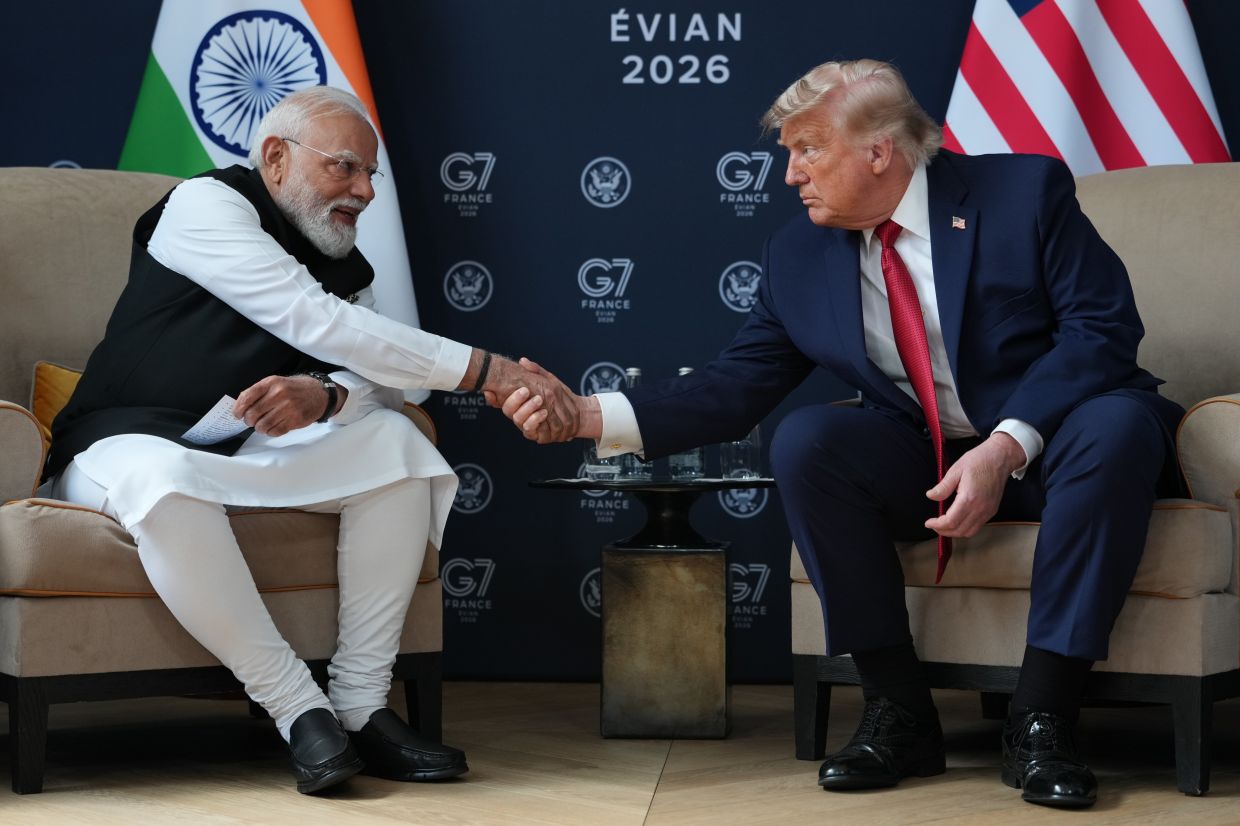
Donald Trump has shown little sympathy for the deaths of three Indian sailors whose commercial vessel was struck by American missiles in the Strait of Hormuz, instead characterising maritime work as an inherently hazardous profession during his first bilateral meeting with Indian Prime Minister Narendra Modi in 16 months. When questioned about the incident aboard the Palau-flagged MT Settebello, Trump acknowledged awareness of the deaths but offered no condolences, stating only that "this has been happening throughout time" before pivoting to assert that Washington and New Delhi "work together" on such matters.
The incident that triggered the dismissive remarks occurred when US Central Command forces attacked the MT Settebello and two other commercial vessels carrying Indian crew members, citing violations of an American blockade on Iranian ports. The strike on the MT Settebello proved fatal, resulting in the deaths of three Indian nationals who were carrying cargo that US authorities claimed constituted illicit Iranian oil transport. This military action marked a significant escalation in American enforcement of its sanctions regime in the strategically critical waterway, where tensions between Washington and Tehran have remained elevated.
India's External Affairs Minister S. Jaishankar registered what he characterised as a "strong protest" in a subsequent telephone conversation with his American counterpart, yet the official State Department readout of their discussion revealed fundamental disagreement on the incident. The American statement emphasised that "violations of the US blockade and the illicit transport of Iranian oil will not be tolerated," effectively justifying the military action rather than acknowledging Indian concerns about the loss of life. This divergence between India's framing and America's response illustrated the underlying tension between the two nations despite their purported strategic alignment.
The incident provoked unexpected public backlash within India, challenging the typically positive political narrative surrounding the US-India relationship. Videos circulated showing autorickshaw drivers in Delhi removing promotional posters featuring Trump's image that had been distributed by the US embassy as part of a birthday campaign for the United States. The grassroots opposition signalled that ordinary Indians perceived the sailors' deaths and Trump's apparent indifference as emblematic of American disregard for Indian lives and interests, resonating beyond diplomatic circles into public consciousness.
Opposition politicians in India seized on what many viewed as Prime Minister Modi's muted response to the incident, with Congress leader Rahul Gandhi launching pointed criticism on social media. Gandhi characterised Modi as "compromised" and accused the government of functioning as an "obedient servant" to American interests, contrasting this perceived subservience with how "a free country" would typically respond to the deaths of its nationals at foreign hands. The allegation struck at a sensitive political nerve, suggesting that India's strategic partnership with Washington came at the cost of national dignity and autonomous decision-making.
Trump's public statements at the press conference sought to downplay tensions by emphasising the depth of the relationship between himself and Modi personally, framing their rapport as the foundation for broader bilateral ties. He stated that the two nations "cannot be closer" and that the relationship "really starts with the two of us," suggesting that personal chemistry could transcend policy disagreements. Trump additionally praised Modi as both a "tough trader" and "great guy," language designed to convey respect while subtly asserting that India conducts hard-nosed negotiations, which could be interpreted as acknowledging potential friction in ongoing discussions.
The bilateral meeting occurred against the backdrop of substantial economic negotiations between the two countries. Trump and Modi had previously met in February 2025 in Washington, where they initiated discussions toward finalising a comprehensive bilateral trade agreement, positioning India among the first nations to enter formal trade negotiations with the new American administration. These talks remained ongoing at the time of the sailors' deaths, with US Trade Representative involvement in efforts to reach an interim deal. The commercial relationship thus hung in the balance even as diplomatic tensions mounted over the military incident.
Secretary of State Marco Rubio had separately travelled to India following the incident, characterising the country as one of America's "most important strategic partners" in remarks that appeared designed to smooth relations and reinforce America's commitment to the partnership despite the maritime tragedy. Rubio's visit and diplomatic language suggested that the American administration viewed the relationship as too strategically valuable to allow a single incident—however grave—to derail broader cooperation. This messaging, however, failed to fully address Indian domestic sentiment that perceived an imbalance in how the two nations valued each other's citizens and interests.
Trump indicated during the press conference that he would visit India in the future, though no specific timeline was provided, suggesting a commitment to deepening engagement despite current friction. He avoided detailed discussion of the Quad, the informal grouping of the United States, India, Japan, and Australia designed to advance shared interests in the Indo-Pacific region, instead keeping remarks focused on bilateral dynamics. This rhetorical choice reflected broader American attention to managing the India relationship as a bilateral matter rather than embedding it within broader regional architecture that might complicate relations with other partners or constrain American flexibility.
The episode exposed fundamental tensions within the India-US relationship that extend beyond the immediate tragedy. While both nations have strong incentives for strategic alignment—India seeks technological partnerships and security reassurance against China, while America seeks to deepen its Indo-Pacific presence—the foundation of the relationship rests on unequal power dynamics that occasionally surface dramatically. Trump's cavalier dismissal of Indian deaths aboard a merchant vessel, coupled with what many in India perceived as Modi's muted response, underscored how commercial and security interests can overshadow humanitarian concerns in great power relations. The incident served as a reminder that despite high-level diplomatic cordiality, fundamental disagreements about obligations to protect citizens and respect for national autonomy remain unresolved.
%22%2F%3E%3C%2Fpattern%3E%3C%2Fdefs%3E%3Crect%20width%3D%22100%25%22%20height%3D%22100%25%22%20fill%3D%22url(%23ph267lhg)%22%2F%3E%3Crect%20width%3D%22100%25%22%20height%3D%22100%25%22%20fill%3D%22url(%23ph267lhp)%22%2F%3E%3Ctext%20x%3D%2250%25%22%20y%3D%2250%25%22%20text-anchor%3D%22middle%22%20dominant-baseline%3D%22central%22%20fill%3D%22rgba(255%2C255%2C255%2C0.95)%22%20font-family%3D%22Georgia%2C%20'Times%20New%20Roman'%2C%20serif%22%20font-weight%3D%22700%22%20font-size%3D%22170%22%20letter-spacing%3D%22-0.02em%22%3EMalaysia%3C%2Ftext%3E%3C%2Fsvg%3E)
%22%2F%3E%3C%2Fpattern%3E%3C%2Fdefs%3E%3Crect%20width%3D%22100%25%22%20height%3D%22100%25%22%20fill%3D%22url(%23ph458y7g)%22%2F%3E%3Crect%20width%3D%22100%25%22%20height%3D%22100%25%22%20fill%3D%22url(%23ph458y7p)%22%2F%3E%3Ctext%20x%3D%2250%25%22%20y%3D%2250%25%22%20text-anchor%3D%22middle%22%20dominant-baseline%3D%22central%22%20fill%3D%22rgba(255%2C255%2C255%2C0.95)%22%20font-family%3D%22Georgia%2C%20'Times%20New%20Roman'%2C%20serif%22%20font-weight%3D%22700%22%20font-size%3D%22170%22%20letter-spacing%3D%22-0.02em%22%3EMalaysia%3C%2Ftext%3E%3C%2Fsvg%3E)
%22%2F%3E%3C%2Fpattern%3E%3C%2Fdefs%3E%3Crect%20width%3D%22100%25%22%20height%3D%22100%25%22%20fill%3D%22url(%23phyem9g)%22%2F%3E%3Crect%20width%3D%22100%25%22%20height%3D%22100%25%22%20fill%3D%22url(%23phyem9p)%22%2F%3E%3Ctext%20x%3D%2250%25%22%20y%3D%2250%25%22%20text-anchor%3D%22middle%22%20dominant-baseline%3D%22central%22%20fill%3D%22rgba(255%2C255%2C255%2C0.95)%22%20font-family%3D%22Georgia%2C%20'Times%20New%20Roman'%2C%20serif%22%20font-weight%3D%22700%22%20font-size%3D%22136%22%20letter-spacing%3D%22-0.02em%22%3EGovernment%3C%2Ftext%3E%3C%2Fsvg%3E)