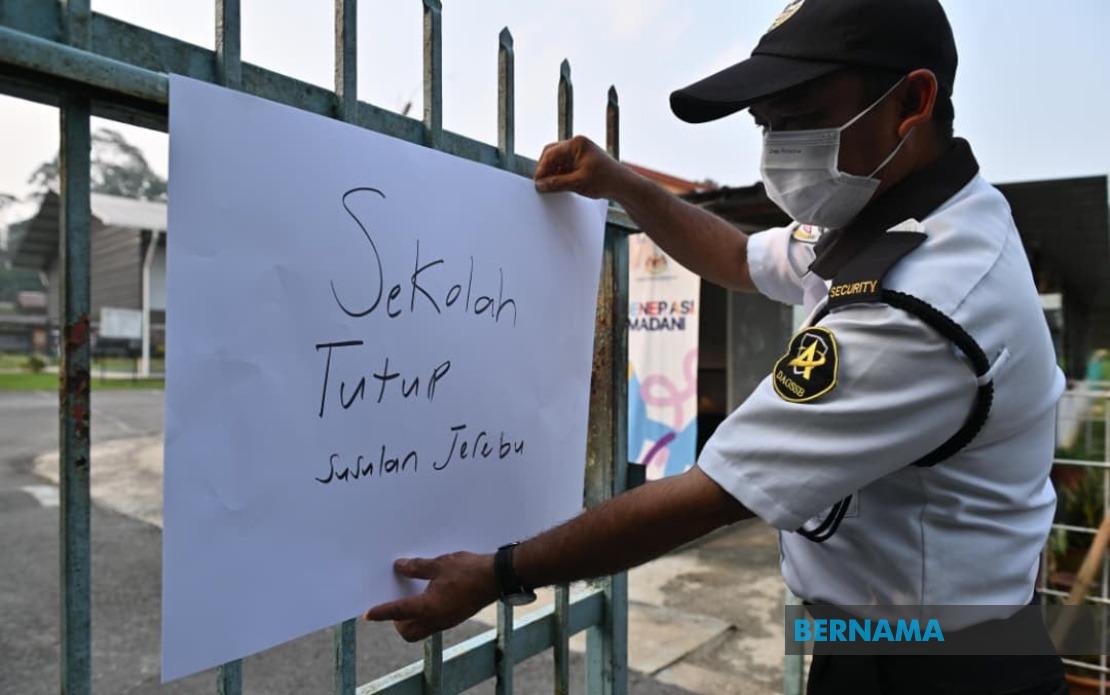
Educational disruptions across Sarawak intensified on August 12 as authorities moved to close 108 schools throughout the Serian district following dangerous spikes in air pollution. The Sarawak State Disaster Management Committee (JPBN) implemented the closures after Air Pollutant Index readings climbed into territory classified as very unhealthy, a precautionary escalation aimed at shielding students and educators from respiratory and health hazards posed by the deteriorating atmospheric conditions sweeping the state.
The decision to shut schools reflects established protocols embedded in the National Haze Action Plan, which grants discretionary authority to the Sarawak State Education Department director to immediately suspend operations at educational institutions once API measurements reach 200. This threshold represents a critical boundary beyond which prolonged exposure becomes medically concerning for vulnerable populations, particularly those with pre-existing respiratory conditions or cardiovascular complications. The closure mechanism operates as an automatic trigger rather than a discretionary judgment call, ensuring rapid protective action when air quality degrades to specified danger levels.
To mitigate educational loss during the shutdown period, the Sarawak JPBN confirmed that Home-Based Teaching and Learning (PdPR) arrangements would activate across affected institutions, enabling classroom instruction to transition to remote platforms. This continuity measure aims to preserve pedagogical momentum and prevent students from falling behind in their academic schedules despite the enforced physical closure. The shift underscores evolving administrative capacity to maintain educational delivery through digital channels, a capability substantially enhanced since pandemic-driven distance learning became commonplace across Malaysian schools.
The API scale provides standardized reference points for public understanding of air quality severity. Readings between zero and 50 denote good conditions suitable for all outdoor activities, while the 51 to 100 band indicates moderate quality with minor health implications for sensitive groups. The unhealthy classification spanning 101 to 200 warrants precautions and activity restrictions, whereas the very unhealthy category between 201 and 300 demands substantial behavioral modifications and vulnerable population protections. Hazardous conditions, defined as readings exceeding 300, represent emergency-level deterioration requiring maximum intervention and public advisories.
Across Sarawak on August 12, atmospheric degradation had become geographically dispersed, with measurements indicating variable contamination patterns. Two districts—Tebedu and Serian—registered API readings in the very unhealthy range at 212 and 202 respectively, justifying the school closures. Simultaneously, eleven additional administrative areas recorded unhealthy-level readings, including major urban centers such as Kuching and Sibu alongside smaller towns including Lundu, Lawas, and Lubok Antu. This broad territorial spread demonstrated that haze impacts transcended localized pockets, suggesting large-scale atmospheric circulation patterns delivering pollutants across diverse regions.
The deterioration had accumulated progressively since August 1, with the Sarawak JPBN documenting an upward trend in API measurements over the preceding fortnight. This gradual escalation pattern typically indicates either intensifying source emissions or meteorological conditions favoring pollutant accumulation rather than dispersal. In Sarawak's equatorial climate context, wind patterns, atmospheric pressure systems, and moisture conditions influence whether pollutants stagnate or dissipate, making seasonal haze episodes a recurring phenomenon linked to transboundary burning activities in neighboring regions.
Public health authorities issued comprehensive guidance addressing behavioral adaptations during hazardous air episodes. General population recommendations emphasized curtailing outdoor engagement, particularly during periods when API readings breached the unhealthy threshold. Children, elderly citizens, pregnant women, and individuals managing chronic respiratory or cardiac conditions received specific advisories to minimize atmospheric exposure, acknowledging that these demographics experience disproportionate physiological impacts from polluted air. Prolonged inhalation of particulate matter triggers inflammatory responses in airways, elevates cardiovascular strain, and exacerbates pre-existing conditions, necessitating protective measures among susceptible cohorts.
The Sarawak JPBN explicitly cautioned against public speculation and misinformation propagation regarding haze situations, directing residents toward official government information channels as authoritative sources. This directive reflects awareness that unverified claims and secondhand accounts can amplify public anxiety, undermine confidence in official responses, and potentially motivate counterproductive individual actions. In an information environment increasingly fragmented by social media circulation, institutional reminders about verified source reliance carry particular significance for maintaining informed decision-making during environmental crises.
The school closures in Serian exemplify how transnational environmental challenges impose immediate domestic consequences affecting institutional operations and family routines across Malaysia. Haze episodes originating from agricultural burning in neighboring jurisdictions create urgent health management imperatives, forcing rapid administrative responses that cascade through educational systems and affect thousands of students and families. For Malaysian policymakers, such incidents underline the limitations of purely domestic environmental controls and the necessity for regional cooperation mechanisms addressing shared atmospheric commons, an increasingly salient consideration as Southeast Asia navigates competing development pressures and environmental protection imperatives.

