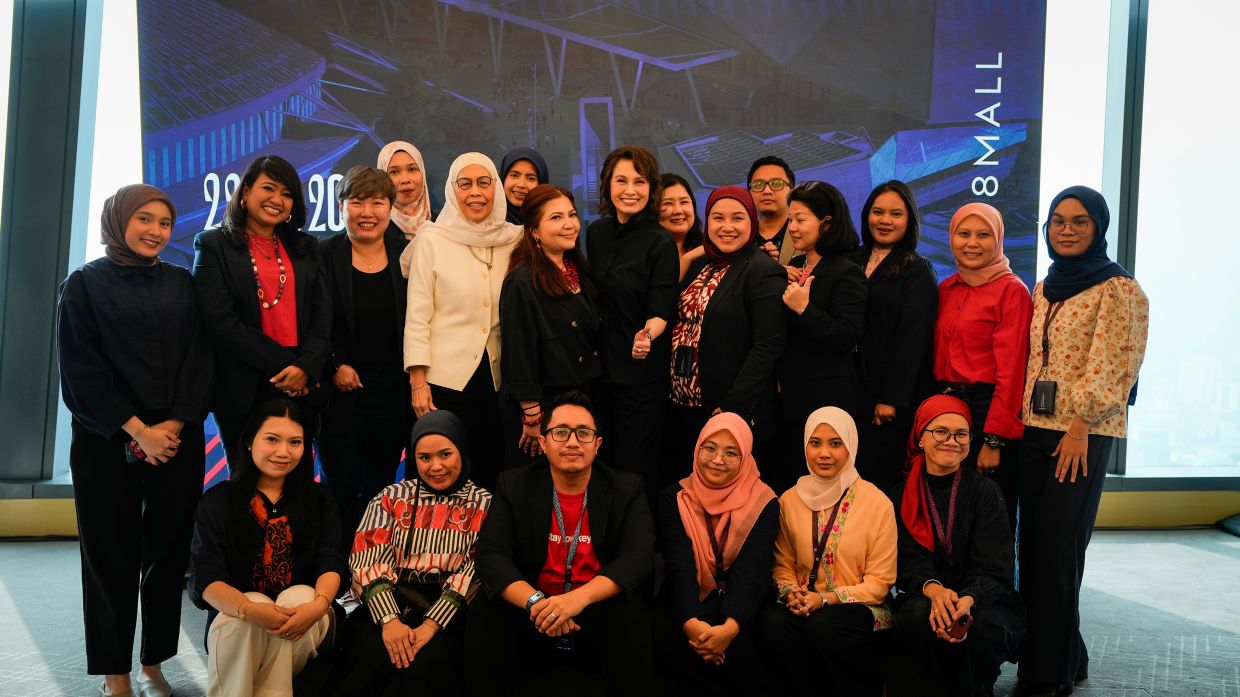
The seven-storey 118 Mall has brought together over 200 retail partners for its inaugural Retailers' Get-Together, marking a significant milestone in the countdown to the shopping centre's November 2026 debut in Kuala Lumpur. Held at Park Hyatt Kuala Lumpur, the event served as a platform for PNB Merdeka Ventures Sdn Bhd to communicate the operational vision and commercial strategy behind the mall, while providing retailers with direct access to management and fellow tenants ahead of the much-anticipated opening.
The gathering showcased the diverse tenant mix that will define 118 Mall's retail ecosystem. Anchoring the lineup are established international brands spanning fashion, footwear, and accessories—adidas, ALDO, Converse, Foot Locker, Guess, and Lacoste—alongside speciality retailers and dining concepts including Village Grocer, Makanism Foodhall, Best Denki, and BookXcess. Notably, the mall has reserved dedicated space for Malaysian Artisan District brands, a homegrown initiative designed to elevate local designers and artisans on a competitive stage alongside multinational players. This curation reflects a deliberate strategy to balance global appeal with domestic cultural authenticity, a formula increasingly favoured by premium shopping destinations across Southeast Asia seeking to differentiate themselves in an increasingly crowded retail landscape.
The mall is positioned not as a standalone retail asset but as an integral component of the larger Merdeka 118 precinct, a mixed-use development that weaves together hospitality, tourism, heritage and commercial infrastructure. This integrated ecosystem approach carries significant strategic implications for tenant performance. Datuk Ir. Ts. Izwan Ibrahim, chief executive officer of PNB Merdeka Ventures Sdn Bhd, emphasised this distinction, noting that 118 Mall's competitive advantage derives from its place within a broader destination. Rather than competing solely on retail attractions, the precinct promises to funnel a heterogeneous visitor base through the mall—luxury hotel guests descending from attached accommodation, corporate professionals visiting office towers, heritage tourism visitors exploring Malaysia's historical narrative, and neighbourhood residents conducting routine shopping.
This diversified foot traffic model represents a departure from traditional regional shopping mall dependencies, which typically rely heavily on direct consumer discretionary spending. By capturing hotel guests, office workers, and cultural tourists as incidental shoppers, 118 Mall creates multiple conversion opportunities across different consumer segments and spending patterns. The precinct-wide approach also provides retailers with enhanced visibility and activation opportunities across multiple zones, reducing reliance on traditional mall advertising and promotional spend.
Management has projected that 118 Mall will welcome approximately 22 million visitors during its inaugural operational year, an ambitious target that underscores confidence in both the tenant roster and the broader precinct's drawing power. To contextualise this projection: it suggests the mall is positioning itself among Malaysia's highest-traffic retail destinations from day one, a claim that would require the precinct to function seamlessly as an integrated tourist and commercial hub. For Malaysian retailers accustomed to competing in mature shopping centre markets—where foot traffic patterns are established and visitor acquisition costs are incremental—this represents an unusually favourable opening environment.
Sue Wang, head of retail for the project, indicated that the mall will accommodate more than 300 retail outlets once fully operational, making it a substantial mixed-use retail environment. The breadth of this tenant base—spanning fashion, accessories, groceries, dining, beauty, books, and children's retail—suggests a comprehensive lifestyle destination rather than a specialists' mall. This inclusive approach appeals to anchor retailers seeking market share across multiple categories, while reducing the risk of tenant vacancy or category clustering that can undermine overall mall performance.
Beyond the tenant roster, management has begun structuring the promotional and marketing framework that will drive consumer engagement post-opening. Retailers were briefed on the mall's digital display infrastructure and event spaces, positioning these as platforms for brand activations and seasonal campaigns. In Malaysia's retail environment, where experiential activations and digital integration increasingly drive foot traffic and dwell time, this emphasis on contemporary marketing infrastructure is essential. The availability of branded event spaces and sophisticated digital signage enables tenants to stage collaborative campaigns, reducing individual marketing costs while amplifying reach across the visitor base.
The timing of the retailers' gathering reflects standard pre-opening protocols for major shopping destinations, allowing management to align tenant expectations around operational procedures, marketing calendars, and facility features before construction concludes. However, the decision to convene partners 18 months ahead of the opening signals particularly robust planning and stakeholder engagement. This extended lead time provides retailers with sufficient runway to finalise store design, train staff, and plan pre-opening inventory, reducing operational friction during the critical opening phase.
For Malaysia's retail sector, 118 Mall's development carries broader implications. The integration of heritage and tourism dimensions into a commercial shopping environment reflects the nation's evolving approach to retail development, moving beyond purely consumptive spaces towards experiential destinations that blend shopping, culture, and leisure. This model has proven successful in other regional markets, where heritage precincts with integrated retail generate higher visitor volume and dwell time than conventional malls. If 118 Mall successfully executes this hybrid model, it may influence future retail development strategy across Klang Valley and beyond.
The Malaysian Artisan District component merits particular attention as a competitive differentiator. As regional shopping centres increasingly offer similar international brands, local artisan programmes provide opportunities for malls to claim cultural authenticity and support domestic creative industries simultaneously. For participating Malaysian brands, the elevated retail environment at 118 Mall—within a precinct positioned as a destination rather than a routine shopping stop—offers exposure to affluent and international visitor segments otherwise difficult to access through conventional retail channels.
The precinct's proximity to Merdeka 118, the nation's tallest structure, adds symbolic weight to the development. The pairing of commerce and iconic architecture creates a recognisable destination marker, particularly valuable for international tourism marketing. Visitors ascending Merdeka 118 for observation decks and dining experiences will be naturally funnelled towards 118 Mall, a circulation pattern absent from conventional suburban shopping centres.
With the November 2026 opening approaching, the retailers' gathering represents the transition from planning to mobilisation. The success of this inaugural event—measured by tenant commitment, excitement, and participation quality—will significantly influence 118 Mall's trajectory. The diversity and calibre of the assembled tenant base suggests that the precinct has attracted serious retail players betting on the Merdeka 118 ecosystem's ability to deliver the promised visitor volumes and commercial performance.
As Malaysia's retail landscape becomes increasingly fragmented across digital and physical channels, integrated destination developments like Merdeka 118 offer a compelling proposition: a place where shopping is one activity within a broader experience. For PNB Merdeka Ventures and its retail partners, the wager is that visitors will come for the heritage, architecture, and hospitality, and remain to shop.

