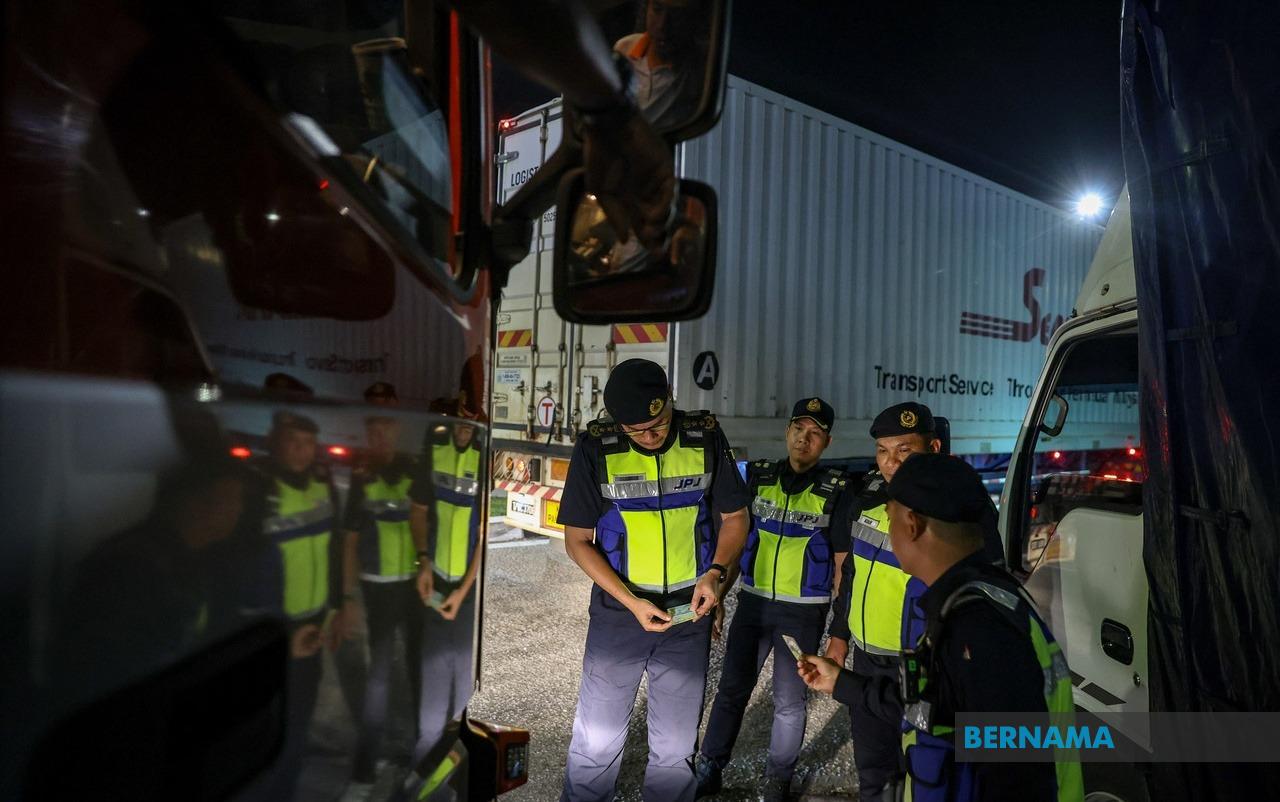
Authorities in Johor have intensified their crackdown on impaired driving following a comprehensive drug-screening operation that ensnared 16 drivers across the state. The operation, conducted by the Johor Road Transport Department (JPJ) in coordination with the Royal Malaysia Police (PDRM), the National Anti-Drug Agency (NADA) and highway operator PLUS Malaysia Berhad, ran from July 1 through July 10, targeting commercial and public transport operators at critical checkpoints throughout the region.
Johor JPJ director Zulkarnain Yasin revealed that the operation screened 164 drivers at strategically chosen locations, including a highway rest and service area at Pagoh (southbound), outside the JPJ Enforcement Station, and at the bus terminal. Of those tested through mandatory urine screening, 16 returned positive results for controlled substances. The breakdown showed 10 drivers tested positive for methamphetamine, three for crystal methamphetamine (commonly referred to as "ice"), two for cannabis (ganja), and one for morphine, painting a concerning picture of drug use among operators entrusted with public safety.
The presence of psychoactive stimulants among commercial drivers represents a significant traffic safety risk, as methamphetamine and crystal meth are known to impair judgment, reduce reaction time, and increase aggressive driving behaviour. The involvement of cannabis in multiple cases further underscores a systemic issue with substance abuse within the commercial driving sector. Morphine, typically encountered in trafficking contexts involving heroin derivatives, suggests that some drivers may be struggling with opioid dependency while still operating vehicles for commercial purposes.
Beyond the drug-related findings, the operation uncovered an alarming breadth of regulatory violations that suggest widespread non-compliance with road safety standards. JPJ recorded 707 instances of drivers operating without valid driving licences, alongside 626 vehicles carrying expired road tax certificates and 574 with lapsed insurance coverage. Such violations indicate that enforcement gaps may enable dangerously unqualified or uninsured operators to remain active on Malaysian highways, creating cascading liability and safety concerns.
The technical violations discovered during the blitz further expose maintenance and safety deficiencies. JPJ identified 39 cases of unauthorized vehicle modifications, 30 instances of tyres failing to meet specification requirements, and 928 additional technical breaches. These findings suggest that some commercial vehicles operating on Johor's roads may have been compromised in fundamental ways—altered suspension systems, inappropriate tyres, or other modifications that could impair braking performance, handling, or stability, particularly under load.
Goods vehicle licensing proved another area of significant non-compliance, with 128 drivers operating without valid Goods Vehicle Licences (GDL) and a further 14 possessing expired GDL credentials. Additionally, 113 vehicles were found to be operating while overloaded, a violation that increases stopping distances, reduces vehicle control, and accelerates wear on critical components. The discovery of 51 expired PUSPAKOM (vehicle inspection body) discs suggests that some operators had not undergone mandatory roadworthiness testing.
The regulatory framework underpinning these enforcement actions derives from the Road Transport Act 1987, the Land Public Transport Act 2010, and associated subsidiary legislation. Under Section 56(4) of the Road Transport Act 1987, JPJ has the authority to suspend or revoke the vocational driving licences of drivers testing positive for drugs—a mechanism that addresses the immediate safety threat by removing impaired operators from commercial service. Zulkarnain stated that such administrative sanctions would be applied to all 16 drivers who tested positive, effectively barring them from professional driving roles pending any legal proceedings.
For Malaysian readers and regional transport stakeholders, this operation underscores several critical issues. First, drug abuse among commercial drivers remains a real and measurable problem requiring sustained, intelligence-led enforcement. Second, the volume of basic compliance failures—expired documents, missing licences, uninsured vehicles—suggests that regulatory oversight mechanisms may be under-resourced or insufficiently coordinated between agencies. Third, the involvement of multiple agencies (JPJ, PDRM, NADA, PLUS) indicates that authorities recognize the need for inter-agency cooperation, yet the continued discovery of violations suggests such operations remain episodic rather than continuous.
The implications for passenger and freight transport safety are substantial. Commercial drivers represent a concentrated risk category, as a single impaired or non-compliant operator can endanger dozens of passengers or cause accidents affecting other road users. The data from this operation—16 positive drug tests among 164 screened—suggests a positivity rate exceeding 9 per cent, which if representative of the broader commercial driving population, would indicate a significant embedded problem requiring strategic, long-term intervention rather than one-off enforcement campaigns.
Moving forward, authorities may need to consider whether existing licensing renewal cycles, medical fitness requirements, and drug-testing protocols adequately screen out high-risk operators before they obtain or renew vocational credentials. The prevalence of expired documents and missing licences raises questions about the efficiency of the licensing and renewal administration system itself. Regional transport operators and industry associations may also need to establish internal compliance programmes that exceed minimum legal requirements, particularly given the reputational and liability risks posed by non-compliant vehicles or drivers.
The Johor operation also reflects broader Southeast Asian challenges with enforcing transport regulations in a context of rapid economic activity, cross-border trade, and limited inspection capacity. Malaysia's position as a regional logistics hub means that transport regulation standards here influence practices across the region. Success in sustainably reducing compliance violations and substance abuse among commercial drivers could serve as a model for other ASEAN nations grappling with similar enforcement challenges.
For commuters and freight shippers relying on Johor's transport corridors, the operation offers a mixed signal: authorities have demonstrated commitment to enforcement, yet the sheer volume of violations uncovered also suggests that many non-compliant operators likely evade detection. Sustained, visible enforcement at multiple locations, combined with modernized inspection and licensing systems, will be necessary to shift operator behaviour and improve road safety outcomes across the state.

