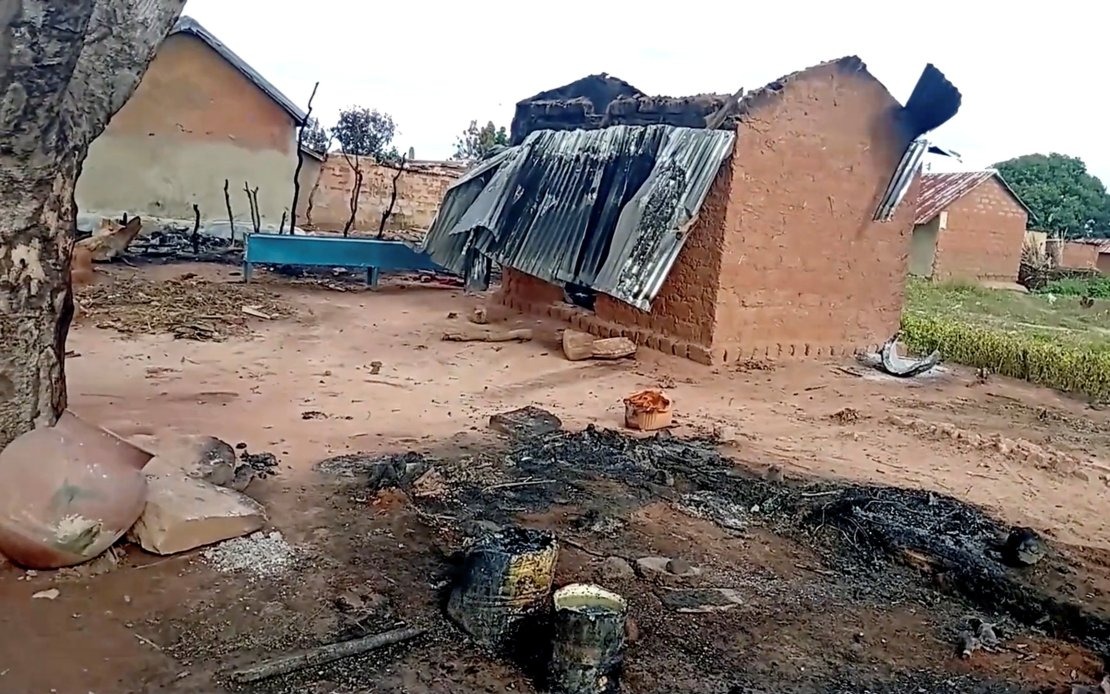
A devastating assault on Nigerien military personnel in the country's troubled western sector has underscored the escalating security crisis gripping the Sahel. On Sunday, at least 16 soldiers serving with Niger's Defence and Security Forces were killed and 23 sustained injuries when armed militants struck a military detachment stationed in the Tera locality within the Tillabery region. The attack represents another significant loss for Niger's military as it grapples with sustained pressure from jihadist groups operating across the broader tri-border area.
The Tillabery region has become a crucible of regional instability, positioned precariously near the frontiers shared with Mali and Burkina Faso—territories themselves ravaged by organised militant activity. This geographic positioning transforms the zone into a permeable staging ground where extremist networks operate with relative freedom, launching cross-border raids and consolidating territorial control. The assault on the Tera detachment reflects this grim reality: militant groups possess sufficient organisation and firepower to conduct coordinated strikes against established military positions, demonstrating both tactical capability and an alarming degree of operational freedom.
The Defence Ministry's account indicates that Niger's armed forces mounted an immediate and vigorous counter-response. According to official statements, the military response proved sufficiently forceful to dislodge the attacking force and compel withdrawal. The engagement resulted in the elimination of fifteen attackers, while security personnel recovered five motorcycles used in the assault and destroyed four others—suggesting the militants operated with modest but functional transportation assets. This tactical success in repelling the assault and inflicting casualties on the attacking force provides some modest relief, yet the fundamental vulnerability exposed remains troubling.
What distinguishes this incident from routine militant activity is the scale and apparent coordination of the attack. The simultaneous wounding of nearly two dozen soldiers indicates the assault involved meaningful force concentration rather than opportunistic ambushes. The involvement of aerial support in the response—referenced in the Defence Ministry statement—demonstrates that Niger's military possesses some mechanised capability, though questions persist regarding the adequacy of such resources to maintain sustained defensive operations across the sprawling region.
For Malaysia and Southeast Asian observers monitoring global security developments, the Sahel crisis warrants attention as a cautionary example of how ungoverned spaces and weak state authority create conditions enabling militant networks to flourish unchecked. The persistent violence in Niger, Mali, and Burkina Faso reflects patterns of state fragility, competing external influences, and the regional diffusion of jihadist ideology that resonate with broader geopolitical security concerns. The tri-border region has become synonymous with humanitarian catastrophe and displacement crises that draw international humanitarian intervention.
Niger faces compounded challenges stemming from the interconnected nature of Sahel militancy. Jihadist organisations operate fluidly across borders, exploiting porous frontiers and limited inter-state coordination to evade military pressure. Groups affiliated with broader networks such as Al-Qaeda and the Islamic State have established substantial presence in the region, converting ungoverned territories into operational bases from which they extend influence and launch attacks. The military detachment's vulnerability reflects this asymmetric challenge: fixed installations present identifiable targets, whereas militant forces maintain mobility and initiative.
The ongoing search and security operations mentioned in official statements indicate that Niger's military has initiated sustained counter-operations seeking to deny the attackers sanctuary and prevent regrouping. However, the cyclical pattern of attacks and counter-responses suggests that tactical military successes have not translated into strategic stability. Without addressing underlying conditions—including governance deficits, economic marginalisation, and the appeal of militant ideology to displaced populations—military operations alone remain insufficient to suppress the insurgency fundamentally.
The international dimension compounds Niger's predicament. External actors including France, the United States, and regional organisations provide military support and intelligence assistance, yet sustained external involvement has failed to reverse deteriorating security trajectories. The withdrawal of Western military contingents from Mali, coupled with shifting geopolitical alignments favouring Russian and Chinese influence, creates uncertainty regarding the trajectory of international support arrangements essential to Niger's military capacity.
For regional security analysts, the incident illuminates how Sahel instability creates cascading effects extending far beyond the immediate zone. Refugee movements, transnational criminal networks, and the proliferation of small arms generate security implications resonating across West Africa and beyond. The attack's occurrence during a period of domestic political transition in Niger adds an additional layer of complexity, potentially complicating military command structures and decision-making capacity at critical moments.

