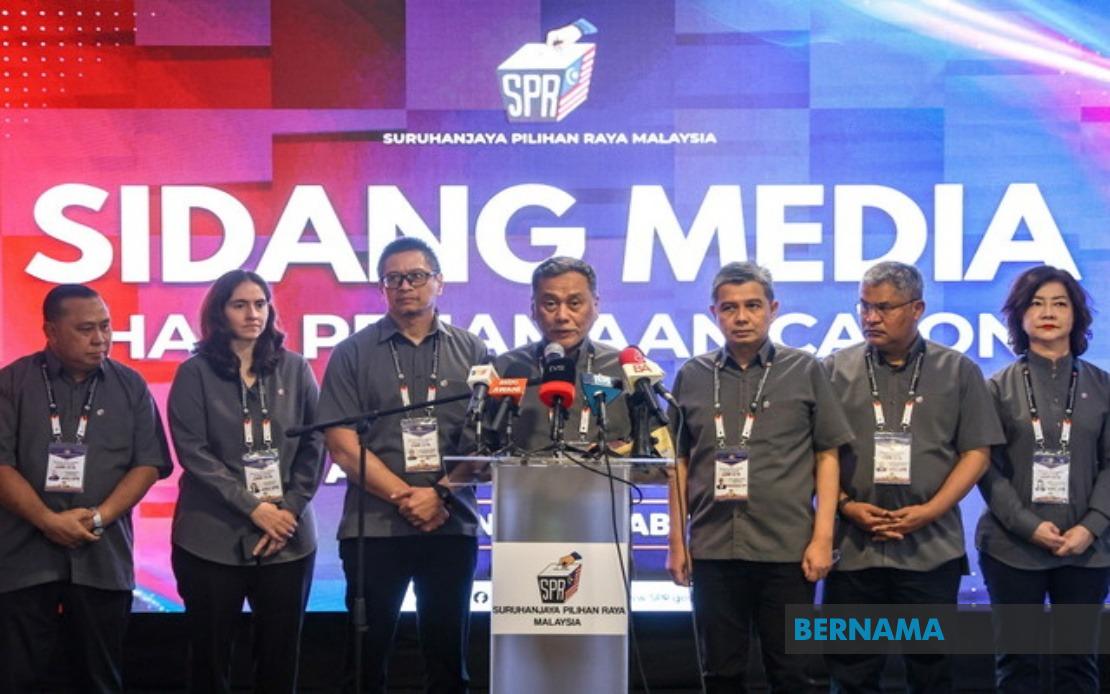
The 16th Johor state election will proceed with 172 candidates competing for 56 seats after the Election Commission completed its nomination process across all 56 nomination centres on June 27. EC chairman Datuk Seri Ramlan Harun announced that every nomination paper submitted had been accepted without disqualification, confirming the formal candidate list as the campaign heads towards polling day. The accepted candidacy figures reveal the broad political participation in one of Malaysia's most pivotal state contests, with representation spanning major coalitions and smaller political movements vying for influence in the southern state.
The gender composition of the candidate field indicates ongoing patterns in Malaysian electoral participation, with 138 male candidates substantially outnumbering 34 female candidates across all registered entries. This disparity reflects broader questions about women's political representation in state-level contests and may draw scrutiny from civil society observers tracking gender diversity in electoral processes. The female candidate proportion represents approximately 20 percent of the total field, suggesting that despite efforts by various parties to promote women's participation, significant gender imbalances persist in formal candidacy rates at the state level.
Barisan Nasional and Pakatan Harapan have fielded identical contingents of 56 candidates each, effectively demonstrating equivalent organisational capacity and resolve to contest every available seat. This symmetrical approach by Malaysia's two major political coalitions underscores the competitive intensity of the Johor election and suggests both camps are committed to maximising their representation across the state's electoral geography. The equal fielding reflects strategic calculations that neither bloc is ceding ground, establishing conditions for a closely contested election where ground-level performance and voter sentiment will determine outcomes rather than candidate availability.
Perikatan Nasional, the Malay-Muslim oriented coalition that secured significant state representation in recent years, has fielded 33 candidates, representing a substantial but notably reduced presence compared to the two major coalitions. This positioning suggests PN is targeting specific seats and demographic strongholds rather than attempting comprehensive coverage, a strategic choice that may reflect resource constraints or calculated priorities regarding competitive viability. The reduced scale compared to BN and PH nevertheless demonstrates PN's continued relevance in Johor's political landscape and its ambitions to maintain or expand the parliamentary footprint the coalition has developed in recent election cycles.
Smaller and niche political movements have secured representation through the nomination process, with Parti Bersama Malaysia fielding 15 candidates, followed by MUDA with four, and single candidates each from Parti Orang Asli Malaysia and Parti Sosialis Malaysia. These parties occupy distinct ideological and demographic positions within Malaysia's fragmented political ecosystem, with MUDA particularly positioning itself as a youth-oriented movement, while PSM represents socialist perspectives typically marginalised in mainstream Malaysian politics. The presence of these smaller contenders adds depth to the electoral contest and provides voters with choices beyond the major coalition frameworks, though their realistic prospects of winning individual seats remain constrained by resource limitations and voter recognition.
Six independent candidates have also entered the competition, reflecting the right of individual contenders to contest without formal party affiliation. Independents in Malaysian state elections typically face significant organisational disadvantages compared to party-backed nominees, lacking campaign infrastructure and party resources, yet their participation in Johor suggests personal candidate-specific factors or local grievances motivating individual candidacies outside established party structures. The independent presence, though numerically modest, reinforces the openness of the electoral framework to diverse candidacy pathways and personal political entrepreneurship.
The projected contest structure reveals considerable fragmentation across multiple constituencies, with only 14 seats anticipated as straight fights between two candidates. This narrow category represents genuine two-cornered competition and highlights Johor's political complexity, where straight contests are exceptional rather than typical. The preponderance of multi-candidate contests—27 three-cornered races, 12 four-candidate contests, and three five-candidate elections—fundamentally alters campaign dynamics and vote-splitting mechanics, potentially rewarding candidates with strong local bases or specific demographic appeal while fragmenting opposition support.
Three-cornered contests, comprising nearly half the electoral landscape at 27 seats, historically create unpredictable outcomes where the candidate with the broadest coalition of support may win despite failing to achieve absolute vote majorities. These contests frequently determine election outcomes in Malaysia, as vote splitting between similarly-positioned candidates prevents either from accumulating decisive margins. The prevalence of three-cornered races in Johor's 56-seat configuration suggests intense inter-party competition and multiple credible contenders across much of the state, complicating traditional binary coalition frameworks and potentially rewarding tactical voting patterns among the electorate.
The four-candidate and five-candidate contests, though affecting only 15 of 56 seats, represent extreme fragmentation scenarios where victory becomes possible with substantially reduced vote percentages. These hypercompetitive environments arise when multiple coalitions and independent candidates all contest aggressively, potentially resulting in winning candidates receiving 25 percent or less of total votes. Such scenarios raise questions about electoral legitimacy from voter perspective and may influence campaign strategies, with candidates focusing intensively on specific voter constituencies while competitors diffuse efforts across broader electorates.
Johor's electoral significance within Malaysia's broader political framework cannot be underestimated, as the state's 56 seats constitute a meaningful proportion of the 222 state assembly seats across Malaysia's 13 states and three federal territories. The state has traditionally served as a kingmaker in Malaysian politics, with outcomes in Johor frequently influencing national political calculations and coalition dynamics at the federal level. The diversity of candidacy and complex contest structures across Johor's seats therefore possess implications extending well beyond state boundaries, potentially affecting stability and coalition viability at national governmental levels.
The nomination process completion marks the formal commencement of the campaign period, with all registered candidates now entitled to deploy resources, conduct rallies, and pursue voter outreach according to election regulations. The 172-candidate field represents the legitimate competition pool, and their distribution across various coalition and independent frameworks establishes the parameters within which Johor voters will exercise their democratic choice. The coming campaign will test whether the organisational advantages of major coalitions or the niche appeal of smaller movements proves decisive in determining electoral outcomes across this politically complex southern state.

