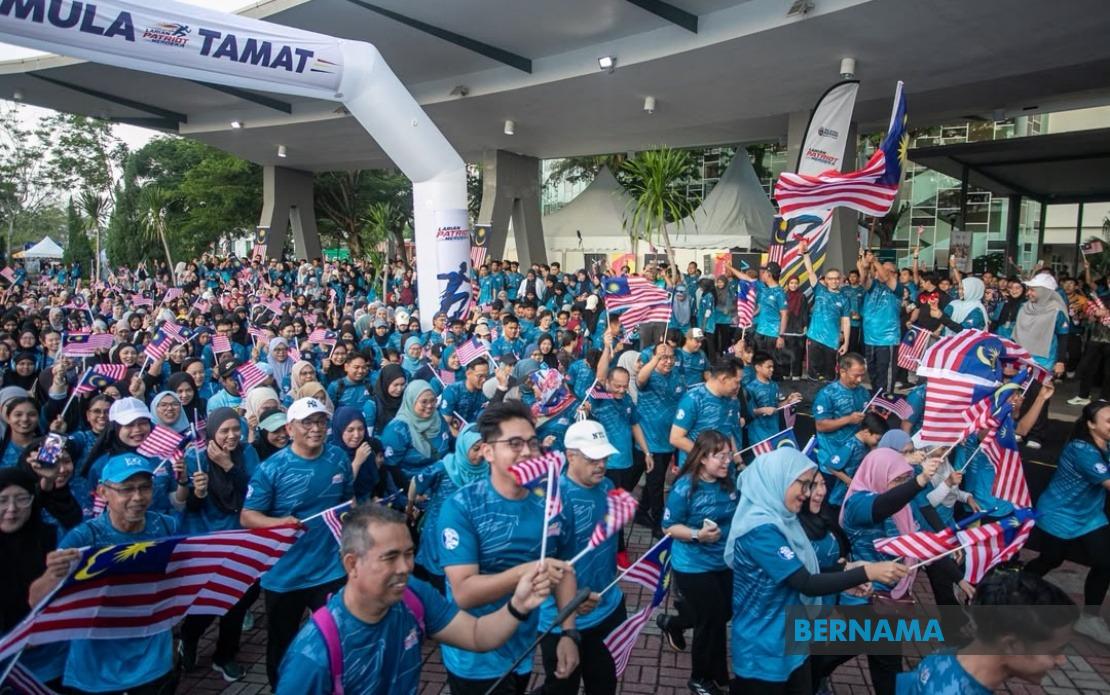
More than two thousand Malaysians of all ages gathered at the Sultan Azlan Shah Ministry of Health Training Institute in Ipoh before dawn on Friday to participate in a patriotic morning run, signalling the start of the nation's 2026 National Month festivities and the Fly the Jalur Gemilang Campaign. The early-morning turnout, which saw participants and their families arriving well before the 7 am start, underscored public enthusiasm for commemorative events that blend fitness with national pride. The gathering represented diverse communities coming together at a single venue, a demonstration the organisers viewed as emblematic of Malaysia's multicultural cohesion.
The event atmosphere crackled with energy as families and individuals prepared for the occasion. Well before the official flagoff, attendees engaged in a mass aerobics session, setting an upbeat tone for the proceedings and encouraging physical wellness across all demographics. The Jalur Gemilang flag featured prominently throughout the grounds and would be displayed continuously along the designated running route, transforming the 2.5-kilometre course into a corridor of national symbols. Organisers choreographed the distribution of flags and patriotic attire to maximise visual impact, creating an environment where citizenship and community engagement became visible and tangible.
Communications Ministry secretary-general Datuk Abdul Halim Hamzah officially initiated the fun run at 7.30 am, triggering the movement of thousands of participants along the carefully prepared route through Ipoh. The run itself was deliberately designed as a recreational endeavour rather than a competitive event, welcoming participants regardless of fitness level or age. Young children accompanied by parents, middle-aged adults, and elderly participants all moved together at their own pace, creating scenes of intergenerational participation that reinforced the event's inclusive messaging. The physical setting, with flags waving at regular intervals and enthusiastic encouragement exchanged between runners, generated momentum that extended beyond the purely athletic dimension.
The visual spectacle of the run conveyed multiple meanings simultaneously. Parents shepherding small children through the course demonstrated how patriotism transmits across generations through family participation. Participants wearing clothing and accessories in the red, white, blue, and yellow of the Jalur Gemilang created a moving display of national colours, transforming the ordinary city streets into a celebratory promenade. The cheers and camaraderie between runners, many of whom had never met before, illustrated how shared national purpose could temporarily dissolve social boundaries and create momentary fellowship among strangers united by common citizenship.
Organisers positioned the Patriot Merdeka Run as serving dual purposes within Malaysia's broader civic calendar. On one level, the event contributed to national health objectives by encouraging community members to engage in physical activity and adopt healthier lifestyles through participation in a festive, low-pressure setting. The morning format, cool temperatures, and recreational rather than competitive framework removed barriers that might otherwise prevent certain demographics from joining organised running events. On another level, the exercise functioned as a mechanism for cultivating patriotic sentiment and deepening public understanding of what national independence signifies. By linking physical activity with flag-waving and collective celebration, organisers created conditions where patriotism became associated with pleasure, community, and wellbeing rather than abstract duty.
The Patriot Merdeka Run represented merely the opening salvo in a series of events planned to mark both National Day and Malaysia Day in 2026. The sequential scheduling of activities, beginning with this community-focused fun run and culminating in Prime Minister Datuk Seri Anwar Ibrahim's official launch ceremony scheduled for 10 am the same day, reflected a deliberate strategy to build momentum and public engagement around the upcoming commemorations. By initiating proceedings with grassroots participation before transitioning to high-level official ceremonies, organisers signalled that national celebrations derived legitimacy and meaning from citizen involvement rather than top-down pronouncements.
For Malaysian policymakers and event planners, the strong turnout and positive public response to the Patriot Merdeka Run provided evidence that citizens retain appetite for occasions that combine physical activity, family participation, and patriotic expression. The diversity of participants suggested that national commemorations need not alienate any demographic provided they are framed inclusively and organised accessibly. The success of this particular event may encourage similar initiatives in other states and municipalities throughout Malaysia, potentially establishing the Patriot Merdeka Run as an annual fixture in the national calendar alongside other established commemorative activities. The replicable format and relatively modest logistical requirements mean that communities across the country could potentially adopt similar models.
The 2026 National Month campaign itself carries particular significance as Malaysia approaches another milestone in its post-independence journey. The selection of the Fly the Jalur Gemilang theme emphasises visual symbols of national identity at a moment when Malaysian society navigates questions about social cohesion and shared values. Events like the Patriot Merdeka Run translate abstract concepts of unity and patriotism into concrete experiences where families participate together and neighbours engage as fellow citizens. The Ipoh gathering, with its spontaneous atmosphere of goodwill and its visual prominence of national symbols, demonstrated how civic celebrations could simultaneously entertain, energise, and educate participants about the significance of their shared national identity.

