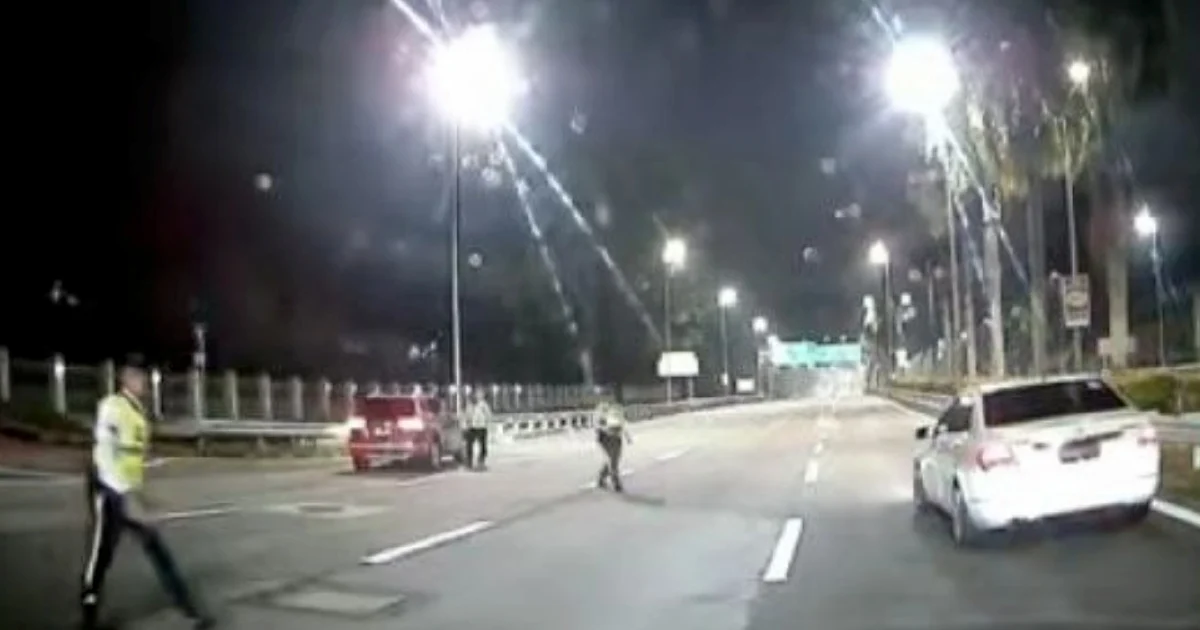
A 20-year-old motorist is in custody assisting investigations after his white Mercedes rammed through a police roadblock positioned on Sprint Expressway close to the National Institute of Public Administration (Intan) in Kuala Lumpur, before the vehicle accelerated away from the scene. The incident, which gained traction on social media platforms, has raised fresh concerns about safety protocols at traffic enforcement checkpoints and the risks officers face during routine operations.
The circumstances surrounding the collision underscore an escalating pattern of motorists ignoring police instructions at roadblocks, putting both enforcement personnel and the public at potential hazard. The decision by the driver to plough through rather than comply with lawful instructions compounds the severity of the matter, transforming what might have been a routine traffic stop into a serious breach of road regulations and a direct challenge to law enforcement authority.
Speed-related enforcement operations have become increasingly critical along express highways in the Klang Valley, as traffic volumes surge and congestion management remains a persistent challenge. The Sprint Expressway, which connects key commercial and administrative zones across the federal capital, has been a focal point for road safety initiatives. Roadblocks serve multiple purposes beyond speed detection: they provide intelligence on stolen vehicles, uninsured drivers, and other traffic violations that contribute to the broader public safety framework.
The viral nature of this incident reflects public appetite for dramatic road footage and raises questions about how rapidly information spreads through digital channels. While such visibility can sometimes aid investigations and enforcement efforts, it also creates pressure on authorities to respond swiftly and demonstrate consequences for dangerous driving behaviour. The involvement of a relatively young driver, at just 20 years old, aligns with statistical trends showing elevated accident and violation rates among drivers in their late teens and early twenties.
Police roadblocks serve as critical infrastructure in Malaysia's road safety ecosystem, yet they remain contentious among some motorists who view them as intrusive or inconvenient. Training and positioning of personnel at these checkpoints is designed to minimise risk, but incidents like this expose the vulnerability of officers who must work in close proximity to moving vehicles. The deliberate breach of a roadblock carries implications beyond standard traffic violation penalties, potentially involving charges related to evading police and reckless endangerment.
The detention of the suspect signals that investigations will likely explore multiple angles: whether the driver was impaired, what motivated the decision to accelerate through rather than stop, and whether the vehicle itself was involved in other incidents or had outstanding legal issues. Authorities will examine dashcam footage from police vehicles, any CCTV coverage along the expressway corridor, and witness statements from roadblock personnel to construct a comprehensive account of events.
Regional context matters here: Malaysia has implemented various initiatives to curb reckless driving, including enhanced penalties for serious traffic violations and public awareness campaigns targeting young drivers. The Roads, Transport and Bridges Ministry alongside enforcement agencies continues to grapple with balancing safety objectives against public perception of excessive policing. This incident provides real-world data on the effectiveness of current deterrents and whether additional measures are required.
For commuters and businesses relying on Sprint Expressway, disruptions caused by investigations and heightened enforcement activity are an added operational cost. Traffic management teams must coordinate response procedures when incidents occur, ensuring minimal spillover congestion whilst preserving evidence and supporting investigation teams. The expressway's importance to the wider Klang Valley transport network means incidents here attract significant attention from transport planners and policymakers.
The detention of the driver represents a starting point rather than a conclusion. Subsequent phases will involve formal charging decisions by the Public Prosecutor's office, likely producing court proceedings that establish legal precedent for similar offences. Depending on the severity determination, penalties could range from substantial fines to licence suspension or imprisonment, with potential additional civil liability if vehicles or infrastructure sustained significant damage during the incident.
This event also highlights the importance of driver education and attitude toward law enforcement. Road safety culture in Malaysia continues evolving, with younger drivers increasingly exposed to social media narratives that sometimes glorify high-speed driving or evasion of authorities. Addressing this cultural dimension requires sustained effort from multiple stakeholders including insurance companies, driving schools, civil society organisations, and media outlets that influence public attitudes toward responsible motoring behaviour.

