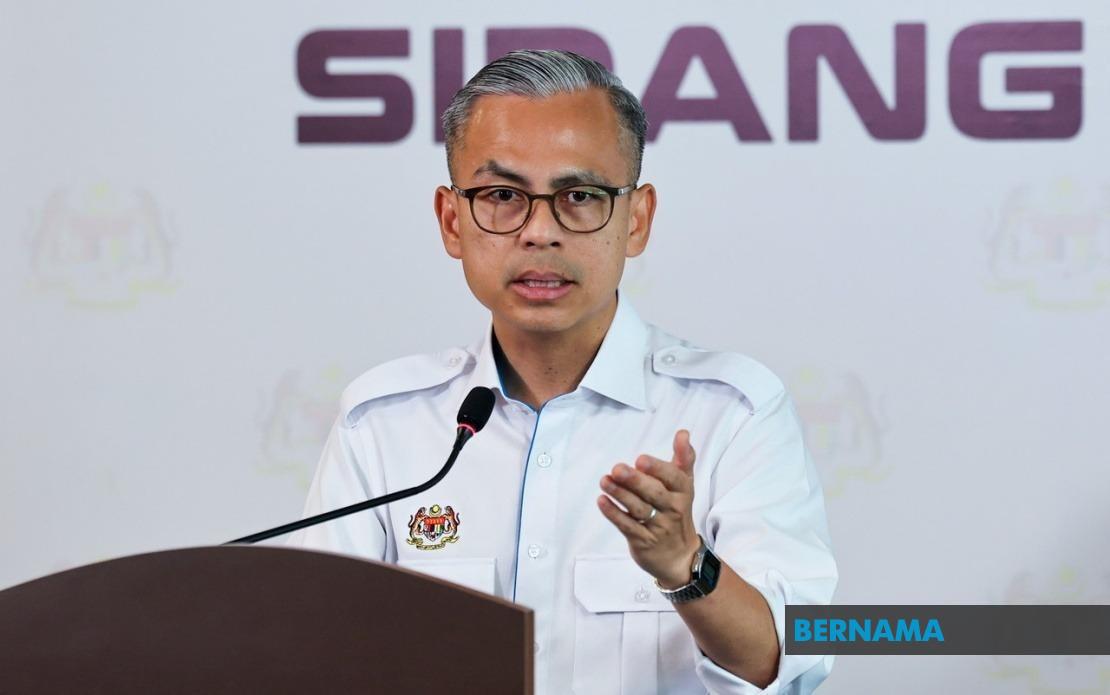
Malaysia's grand 2026 National Day and Malaysia Day celebration is on the cusp of full readiness. Communications Minister Datuk Seri Fahmi Fadzil declared after conducting an inspection at Dataran Putrajaya that organisers expect to achieve nearly complete preparation status by tomorrow's comprehensive dress rehearsal, leaving only small refinements to be addressed before the nation commemorates its milestone.
The meticulous coordination required for such a significant state occasion has centred on achieving visual precision and logistical seamlessness. Fahmi explained that the current focus involves tightening the spacing between different contingent groups marching in formation. Several participating units currently maintain distances from their preceding groups that organisers consider excessive, and rectifying these gaps will enhance the overall aesthetic flow and create a more compact, disciplined presentation befitting the occasion's importance.
Weather conditions during today's rehearsal proved considerably favourable, creating optimal circumstances for testing procedures and formations. More significantly, the enthusiasm demonstrated by all participants—from uniformed security personnel to school students representing three states who will perform the human graphics display—reflected the commitment across all stakeholder groups. This positive morale has been instrumental in maintaining momentum as the celebration date approaches.
The 2026 edition introduces several components that distinguish it from previous iterations. Most notably, the Johor Military Force will make its inaugural appearance in the national parade, marking an expanded security presence. Additionally, organisers have incorporated a maritime asset featuring the Ibrahim-class boat, a vessel specifically designed under the direction of His Majesty Sultan Ibrahim, King of Malaysia. These additions underscore efforts to refresh the celebration while maintaining its ceremonial dignity.
The human graphics performance has generated considerable attention, with 1,500 students organised into a multi-level structure formation. Fahmi provided reassurance regarding structural safety, noting that Putrajaya Corporation has conducted thorough assessments. The slight movement observable in the structure falls within engineering tolerance specifications designed to accommodate the rhythmic movements of participating students. He emphasised this represents the structure's third deployment without incident, establishing a track record of reliable performance.
Concerns about the structure's positioning relative to the parade ground have been addressed through technical explanation. Fahmi clarified that the asymmetrical appearance results from misalignment between the parade route and the PPj building, combined with this year's decision to reduce the human graphics contingent from 2,000 to 1,500 students. While acknowledging these factors created a particular aesthetic, he indicated that future celebrations would benefit from refined technical arrangements to eliminate any perception issues, demonstrating organisational receptiveness to public feedback.
The scale of this undertaking extends across multiple government agencies and civilian participants, reflecting the ceremonial importance Malaysia attaches to its founding anniversary. The involvement of students from three different states highlights the nationwide character of the celebration, ensuring representation across the federation. This geographic distribution also underscores the logistics challenge of coordinating movements and timings for thousands of participants across diverse backgrounds and preparation levels.
Fahmi chairs the 2026 HKHM Main Committee, placing him in a position to monitor preparations across all dimensions. His confidence that near-total completion will be achieved by tomorrow's rehearsal suggests the project remains substantially on track despite the complexity involved. The dress rehearsal itself serves as a critical validation mechanism, allowing organisers to identify any remaining issues requiring correction before the actual ceremony.
The integration of contemporary elements alongside traditional ceremonial components reflects how Malaysia balances continuity with innovation in state occasions. The inclusion of designs reflecting the current Sultan's vision, such as the Ibrahim-class boat, personalises the celebration while maintaining its formal character. Similarly, expanding military representation through the Johor Military Force's participation underscores evolving security and civic frameworks.
From a regional perspective, Malaysia's investment in meticulously choreographed national celebrations demonstrates the importance placed on projecting stability and national pride. Southeast Asian nations often view such ceremonies as opportunities to reinforce social cohesion and display organisational capability. The thoroughness evident in these preparations, despite being relatively routine for an established democracy, reflects standards expected of a developed nation within the ASEAN context.
The weather cooperation experienced during today's rehearsal cannot be overlooked as a factor in the timeline's viability. National celebrations frequently face weather-related disruptions in Malaysia's tropical climate, making clear conditions during the rehearsal phase particularly valuable for identifying and resolving issues. Organisers can now address any weather-related logistical concerns identified during today's dry run.
As Putrajaya prepares to host this significant national occasion, the interplay between ceremonial tradition and contemporary innovation becomes evident. The careful attention to detail in spacing, structure safety, and participant morale reflects the broader Filipino commitment to excellence in public events. With final rehearsals imminent and preparations nearing completion, the stage is set for a celebration that promises to honour Malaysia's heritage while showcasing its forward momentum.

