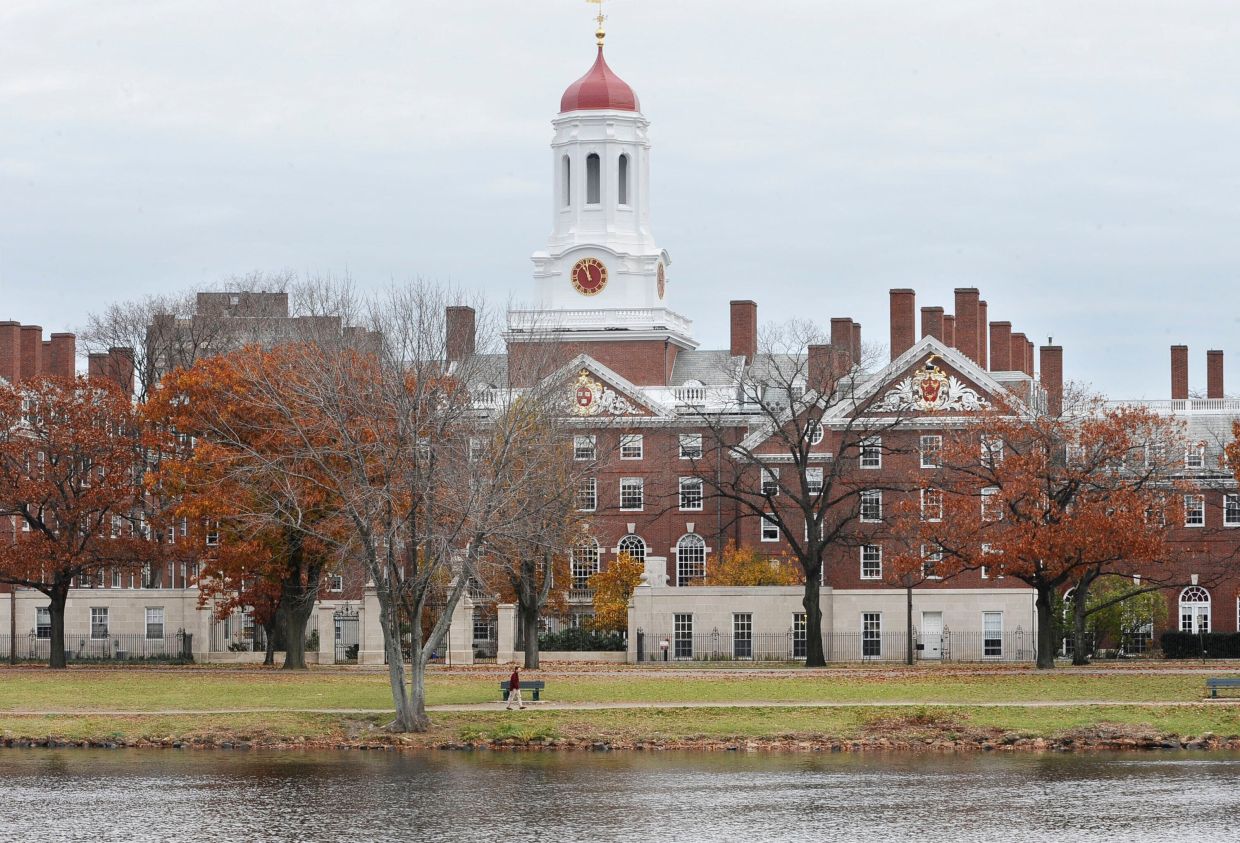
The Pentagon has issued audit orders to thirty of America's most prestigious universities, signalling an intensification of Washington's efforts to scrutinise academic collaboration with China. Among the institutions receiving the directive are household names in global research: Harvard University, the Massachusetts Institute of Technology, Johns Hopkins University, and the University of California campuses at Berkeley, Los Angeles and San Diego. The move reflects deepening concern within the US government over the potential vulnerability of sensitive research funded by American taxpayers.
The comprehensive scope of the review demands that universities scrutinise their academic partnerships, financial entanglements and research collaborations involving entities Washington has designated as presenting national security concerns. Institutions have until August 31 to complete detailed audits assessing whether any sensitive or export-controlled research may have been exposed, and to implement protective measures that could range from strengthening oversight to severing partnerships altogether. The stakes are considerable: universities that fail to demonstrate compliance face potential exclusion from future federal research grants, a consequence that could fundamentally reshape their research operations and financial stability.
The Pentagon's initiative draws from provisions established under Section 1286 of the 2019 National Defence Authorisation Act, which created mechanisms for identifying foreign academic institutions deemed to pose research security risks. The department has also expanded its focus to encompass organisations it characterises as rebranded iterations of Confucius Institutes, the cultural and educational programmes established by the Chinese government. An updated list under this section released recently identified approximately 130 academic and research institutions worldwide, though the Pentagon has not disclosed which specific foreign entities triggered the audits of the thirty American universities.
The department has not publicly clarified its selection methodology, leaving unresolved whether audits were triggered by concrete evidence of technology transfer, intellectual property violations or unauthorised sharing of sensitive information, or simply by the existence of institutional relationships with entities on the restricted list. This ambiguity has proven contentious among academic leaders. Sarah Spreitzer, vice-president of the American Council on Education, which represents university and college presidents nationally, expressed frustration with what she characterised as an implicit accusation of wrongdoing. She noted that the council had actively participated in developing the original Pentagon restrictions list and had consistently cooperated with federal authorities on national security matters, yet universities now faced potential liability for collaborations that predated the restrictions themselves.
Congressional scrutiny has intensified the pressure. Representative John Moolenaar's House select committee on strategic competition with China indicated that many of the thirty universities had featured prominently in its prior research security investigations. Those probes had focused on American universities' partnerships with Chinese military-connected institutions, participation in programmes funded by the China Scholarship Council, and collaborative research involving federally funded projects with Chinese researchers. Notably, the committee did not specify which of the thirty universities appeared in its previous investigations, nor did it quantify how many it considered "many". The vagueness mirrors the Pentagon's own lack of transparency regarding the evidentiary basis for its audit orders.
Harvard University has drawn particular congressional attention. A report released jointly by Moolenaar's committee and the House Education and Workforce Committee last week alleged that Harvard researchers had co-authored more than 140 academic papers in collaboration with researchers affiliated with Chinese military institutions. The investigation suggested inadequate institutional oversight of these partnerships, especially regarding entities connected to China's military and defence-industrial sectors. However, no formal accusation of legal violation has been levied against Harvard, and the committee's findings represent its own assessment rather than an adjudication of wrongdoing. Harvard has not publicly responded to inquiries regarding these allegations.
The Chinese government has responded critically to the Pentagon's actions. A spokesperson for the Chinese embassy in Washington characterised the audits as manifestations of Cold War thinking and an overextension of national security concepts into domains that should remain open to legitimate scientific exchange. The official position asserts that scientific progress and academic advancement inherently depend upon international cooperation, and that restrictions on research collaboration ultimately harm all parties, including American researchers and institutions themselves. Beijing argued that the United States should instead cultivate an environment characterised by openness, fairness and non-discrimination in educational and scientific exchanges between the two nations.
Republican members of Congress have pushed back against such characterisations. Congressional figures have framed research partnerships involving Chinese military-connected entities as presenting what they describe as undeniable national security risks, though they have not provided detailed public evidence of specific harms or vulnerabilities resulting from existing collaborations. This rhetorical positioning reflects a broader shift in US policy circles toward treating all Chinese institutional engagement as inherently suspect unless proven otherwise, a considerable departure from earlier approaches that attempted to distinguish between benign academic exchange and potentially problematic technology transfer.
The thirty universities named for audit represent a cross-section of American higher education, from Ivy League institutions to major state systems and specialised research centres. Beyond Harvard, MIT and Johns Hopkins, the list includes Cornell University, Duke University, Georgetown University, New York University, the University of Texas at Austin, Emory University, Penn State University, Virginia Tech, the University of Southern California, and numerous others. Several prominent research universities with particularly strong engineering and science programmes feature on the list, institutions that historically have maintained robust international research collaborations as part of their academic mission.
The practical implications for Malaysian and Southeast Asian researchers warrant consideration. Many scientists from this region collaborate with or study at American universities, and any restrictions on international research partnerships could reduce opportunities for academic mobility and collaborative projects. Malaysian and Southeast Asian researchers working at these thirty institutions may find themselves subject to additional scrutiny or administrative burdens, even if their own research involves no sensitive technology. The broader trend toward compartmentalising international research partnerships could reshape the landscape of academic opportunity across the region.
The Pentagon's decision to withhold the list's identities while providing only two weeks' advance notice before imposing the August 31 audit deadline has drawn criticism for its procedural fairness implications. Universities received notifications confirming they were among the thirty, yet the public rationale for their inclusion remained opaque. This opacity makes it difficult for academic institutions to mount informed defences or to understand precisely what aspects of their international research portfolios triggered concern. The approach reflects a shift toward what critics characterise as administrative penalty based on institutional relationships rather than demonstrated misconduct.
The broader context involves increasing US government scepticism toward China-related research partnerships across the federal system. Alongside Pentagon actions, other agencies including the National Institutes of Health have tightened disclosure requirements and monitoring of international collaborations. The cumulative effect is creating institutional pressure on American universities to reduce international partnerships, particularly with China, even where such partnerships involve basic research with no apparent security implications. Universities face a difficult calculus between maintaining their international research competitiveness and satisfying federal authorities.
For regional observers, the audit initiative signals the durability of strategic competition between the United States and China as a defining framework for policy decisions affecting academic freedom and international scientific cooperation. The outcome will likely influence how other nations approach research security, international partnerships and academic independence in coming years. The fundamental tension between national security imperatives and the open scientific enterprise that characterises modern research remains unresolved, with universities caught between competing pressures and incomplete information about how to navigate an increasingly restricted environment.

