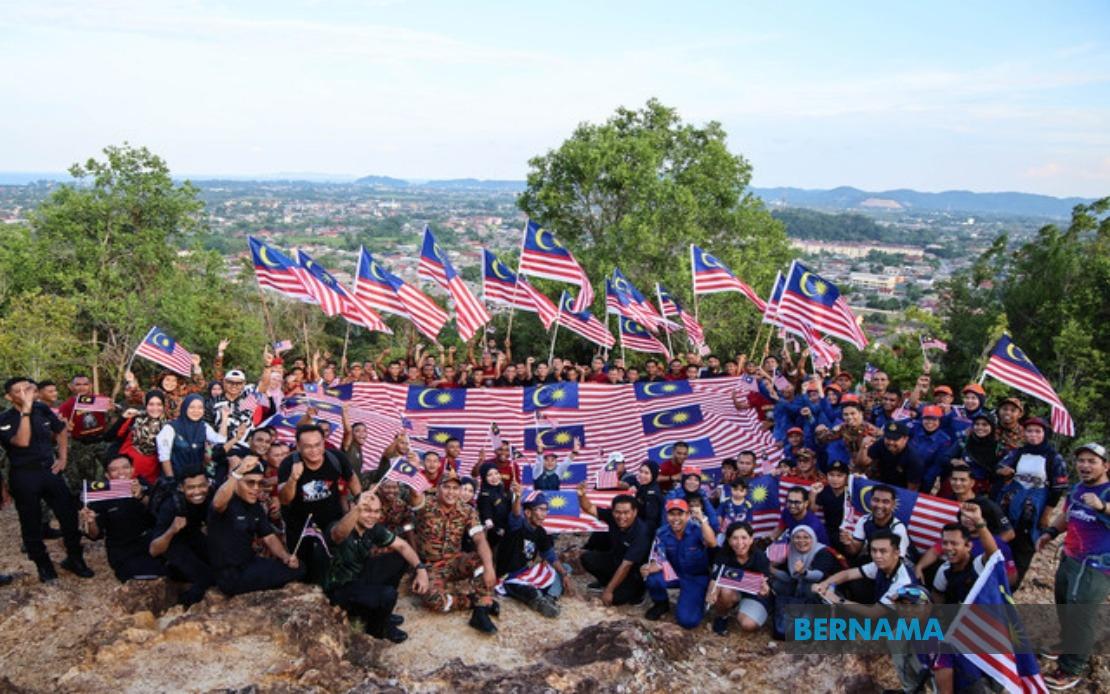
Three hundred participants from across Terengganu's security and civil service community gathered for an inaugural summit hike in Kuala Terengganu on August 21, marking a collaborative effort to commemorate the country's National Month. The gathering brought together uniformed personnel, government agency representatives and media practitioners in what organisers described as a novel approach to expressing national pride and strengthening bonds across the public sector.
The Media Terengganu Association (METRA) spearheaded the event, with club president Mohd Zaid Mohd Noor highlighting the initiative as a platform to unite disparate government bodies around shared patriotic values. Participating agencies included the Terengganu Fire and Rescue Department, Malaysian Armed Forces, Road Transport Department, Malaysian Anti-Corruption Commission, the state branch of the Ministry of Domestic Trade and Cost of Living, Royal Malaysian Customs Department and Malaysia Civil Defence Force. This cross-sectional representation underscored the organisers' intent to build solidarity within Terengganu's administrative and security establishment.
Mohd Zaid articulated the media's distinctive role in championing national sentiment, positioning journalists as custodians of patriotic messaging across multiple communication channels. He emphasised that METRA recognised its obligation to amplify messages of national pride and civic responsibility beyond traditional reporting, translating this commitment into concrete action by orchestrating an event that physically assembled the very institutions responsible for national security and governance. The summit ascent served as metaphor and practice simultaneously—a shared challenge ascending toward a common destination while carrying the symbols and values of statehood.
The organisers incorporated a symbolic element into the proceedings, planning to unfurl a large national flag at the summit, creating a visual representation of unified commitment to Malaysia's identity. This gesture, while ceremonial, reflected broader ambitions to transform a physically demanding activity into a meaningful expression of collective purpose. For the assembled personnel—accustomed to their respective institutional roles and hierarchies—the hike represented an unusual context for professional interaction, one stripped of bureaucratic formality and structured around shared exertion and accomplishment.
Beyond ceremonial patriotism, METRA positioned the event as a mechanism for enhancing operational relationships between agencies that frequently interact on matters of national importance. Regular coordination between security forces, customs, anti-corruption authorities and emergency services forms the backbone of Malaysia's governance infrastructure, yet these interactions often occur within formal institutional channels. A summit hike offered an alternative venue for building rapport and understanding across these sector boundaries, potentially strengthening informal networks that facilitate inter-agency cooperation when immediate crises or coordination challenges emerge.
The emphasis on promoting healthy lifestyle practices alongside patriotic values reflected contemporary concerns about public sector wellness in Malaysia. Government employees and security personnel across Southeast Asia increasingly face occupational stress and sedentary working conditions, despite roles demanding physical readiness. By framing a physically demanding activity as patriotic duty rather than mere exercise, METRA transformed wellness promotion into something aligned with national service, potentially increasing participation and institutional support for such initiatives.
The timing of the event within Terengganu's National Month celebrations positioned media practitioners in a creative leadership role within festive programming. Rather than limiting their contribution to coverage and reporting of official commemorations, METRA took ownership of event creation and execution, demonstrating how the media sector could translate institutional visibility into tangible community engagement. This approach may establish precedent within Malaysian media associations for moving beyond passive observation toward active civic participation in national observances.
For Terengganu specifically, the gathering represented a demonstration of cohesive state administration during a period of heightened national consciousness. The state government's various branches—represented through participating agencies—collectively affirmed commitment to institutional cooperation and shared purpose. Such visible unity within regional governance structures carries particular significance in Malaysian politics, where state-level administration and inter-agency relations often become subjects of public scrutiny and political commentary.
The inaugural nature of the event suggests organisers view it as establishing a potential annual tradition, with implications for how Terengganu commemorates future National Months. Should the summit hike continue and expand, it could become recognisable as a distinctive Terengganu contribution to national celebrations, potentially inspiring similar cross-sectoral initiatives in other states. The model of bringing together security forces, civil service and media around a shared physical challenge offers replicability across Malaysia's various state capitals and administrative centres.

