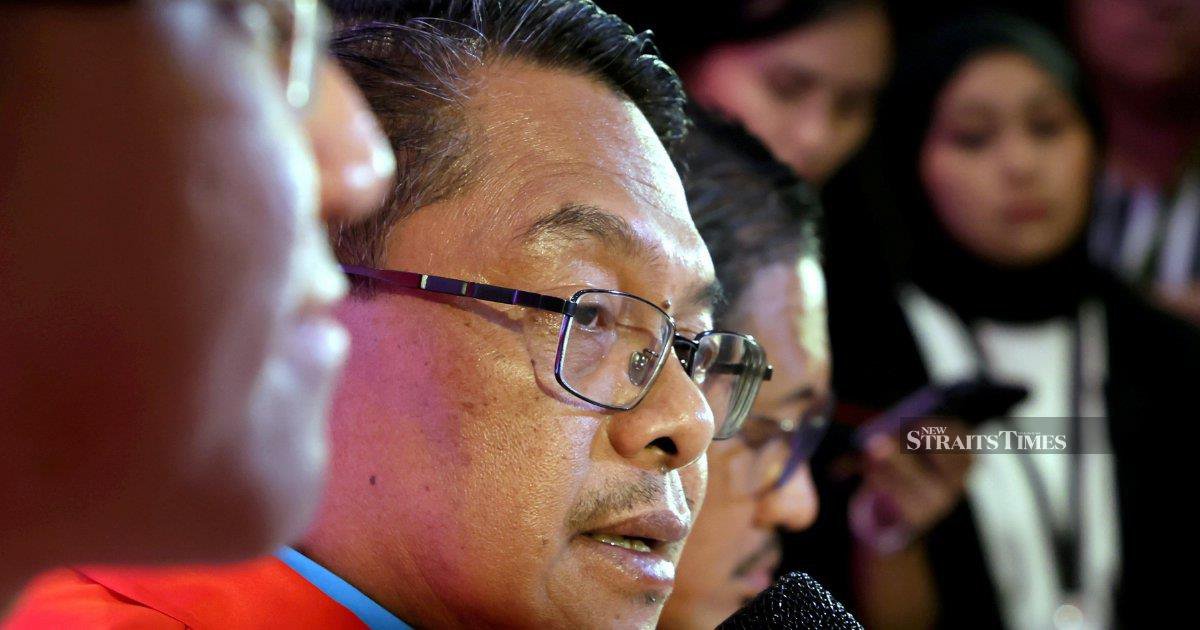
The federal government remains engaged in active dialogue regarding a significant proposal to expand the parliamentary voice of Malaysia's two largest East Malaysian states, Sabah and Sarawak, according to Datuk Mustapha Sakmud, the Minister in the Prime Minister's Department responsible for affairs concerning both territories.
The proposal centres on increasing their collective share of parliamentary seats to 35 per cent, a substantial adjustment that would fundamentally reshape the composition of the Dewan Rakyat. This initiative forms part of the broader Malaysia Agreement 1963 (MA63) discussions, the foundational constitutional framework that brought Sabah and Sarawak into the Malaysian federation some six decades ago. The MA63 has long been a critical touchstone in federal-state relations between Kuala Lumpur and the East Malaysian governments, serving as the legal and political bedrock for understanding their respective roles within the federation.
The ongoing talks underscore the persistent tension between Kuala Lumpur's federal authority and the constitutional positions historically held by Sabah and Sarawak. These two states, which together form roughly 40 per cent of Malaysia's total geographical area and house approximately one-fifth of its population, have historically advocated for greater say in national decision-making proportional to their land mass and strategic importance. The push for enhanced parliamentary representation reflects this longstanding asymmetry, particularly given that their combined population would typically justify stronger representation under conventional democratic principles of proportional representation.
Understanding the significance of this proposal requires examining Malaysia's unique federal structure. Unlike many other federations, Malaysia's parliamentary system concentrates considerable power in the national legislature, making the proportion of seats held by any region highly consequential for policy outcomes affecting that region. For Sabah and Sarawak, increased parliamentary seats would translate into greater ability to influence national legislation, budget allocations, and federal policies affecting their jurisdictions, from resource management to infrastructure development.
The MA63 framework itself represents a carefully negotiated constitutional compromise struck at Malaysia's founding in 1963. It delineates specific powers reserved to Sabah and Sarawak, certain matters requiring their consent, and their guaranteed representation mechanisms. Recent years have witnessed intensified scrutiny of how thoroughly the federal government has honoured these constitutional protections, with East Malaysian political leaders repeatedly raising concerns about perceived encroachments on state autonomy and inadequate recognition of their constitutional status. The current parliamentary representation proposal thus reflects a broader re-examination of the MA63's implementation and modern relevance.
For Malaysian readers, the implications of this ongoing negotiation extend beyond East Malaysian concerns. Should the proposal succeed, it would necessitate constitutional amendments and potentially reshape the entire electoral landscape, affecting the political calculations of all major parties contesting national elections. The additional seats would come from somewhere within the existing parliamentary structure, either through redistribution of existing constituencies or creation of new ones, with consequential effects on voter-to-representative ratios across different regions.
The timing of these discussions also warrants attention. Sabah and Sarawak have historically wielded considerable leverage during periods of tight parliamentary majorities at the federal level, as occurred following the 2022 general election. Political parties seeking stable government coalitions must accommodate the demands of these states, whose representatives can prove decisive in close votes. The negotiations around the 35 per cent proposal thus reflect not merely abstract constitutional questions but real political power dynamics shaping Malaysia's governance structure.
From a Southeast Asian perspective, this Malaysian discussion connects to broader regional patterns of federalism and autonomy claims. Similar tensions between central governments and geographically dispersed constituent territories challenge federal arrangements throughout the region, whether in Indonesia, the Philippines, or Myanmar. How Malaysia addresses the Sabah-Sarawak representation question may provide instructive lessons for managing centre-periphery relations in diverse, archipelagic nations.
The economic dimensions deserve consideration as well. Sabah and Sarawak control significant natural resources, including timber, oil and gas, and agricultural land. Greater parliamentary representation could translate into enhanced ability to protect these economic interests against federal policies they deem unfavourable, or to secure larger shares of resource revenues and development funding. This economic angle makes the representation question matter to investors and businesses operating across Malaysia.
Minister Mustapha's statement that discussions remain ongoing, rather than concluded, suggests the negotiation process faces substantive obstacles or requires more time for consensus-building among federal stakeholders. Whether these talks will culminate in formal legislative change, voluntary federal concessions short of constitutional amendment, or continued dialogue remains uncertain. Nevertheless, the persistence of these discussions confirms that questions of East Malaysian representation and autonomy remain live constitutional issues within the Malaysian federation, unlikely to fade from the political agenda in the foreseeable future.

