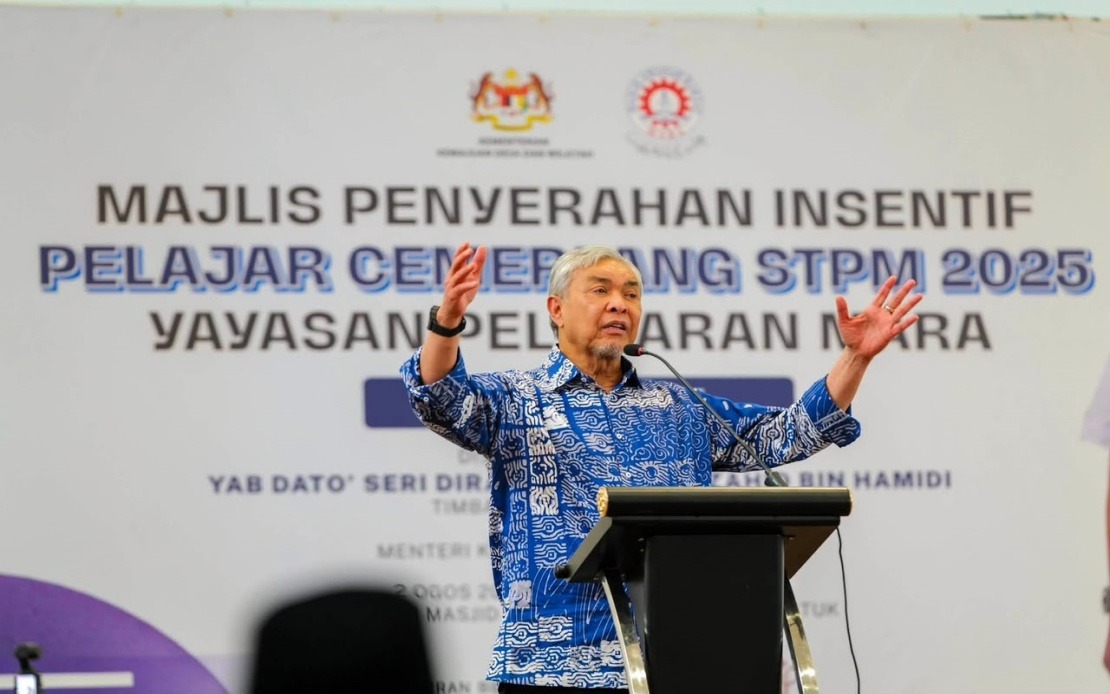
The Yayasan Pelajaran MARA (YPM) has awarded the 2025 STPM Excellence Incentive to 38 students from two secondary schools in Bagan Datuk, honouring their exceptional results in the Sijil Tinggi Pelajaran Malaysia examination. The recognition, announced in Ipoh on August 2, underscores the strong academic performance emerging from Sekolah Menengah Kebangsaan Khir Johari and Sekolah Menengah Kebangsaan Tun Abdul Razak, institutions that serve the Perak constituency.
Deputy Prime Minister Datuk Seri Dr Ahmad Zahid Hamidi, who represents Bagan Datuk in Parliament, highlighted the broader significance of this achievement beyond examination scores alone. His remarks emphasised that the excellence demonstrated by these students reflects the potential that exists within the district when young people receive adequate opportunities, proper guidance, and meaningful support from both educational institutions and their families. This framing positions academic success not as an isolated outcome but as evidence of systemic factors that enable young Malaysians to thrive.
Beyond the STPM recognition, the Bagan Datuk constituency has witnessed additional educational milestones that extend the success narrative. Three young people from the district have gained admission to Al-Azhar University in Egypt, one of the Islamic world's most prestigious institutions, to specialise in Islamic Syariah and Usuluddin studies. This international educational pathway represents a significant achievement and demonstrates that Bagan Datuk's talented youth are competitive at the regional and global level, not merely domestically. Meanwhile, 23 students in the broader cohort have benefited from the YPM Education Compassionate Fund, a programme designed to support academically promising students facing financial constraints.
The Deputy Prime Minister's comments reflect a philosophical stance on education's role in national development. He characterised learning as the most valuable investment available for changing individual lives and shaping a community's future trajectory. For Malaysian policymakers and educators, this perspective aligns with longstanding national education policy, which positions schooling and higher learning as fundamental to social mobility and economic progress. The recognition of achievement at the STPM level is particularly significant, as this qualification traditionally serves as a critical gateway to university study and professional advancement in Malaysia.
The composition of the awards programme—combining excellence incentives with compassionate funding—reflects a holistic approach to educational support. While the excellence category rewards top academic performance and encourages further aspiration, the compassionate fund addresses the reality that financial barriers can prevent capable students from pursuing tertiary education. This dual structure acknowledges that merit and access are interconnected; identifying talented students means little if economic hardship prevents them from building on that foundation. For a regional audience, this model offers lessons about sustainable approaches to educational equity.
Bagan Datuk's educational outcomes merit attention within the broader context of Malaysian secondary education. The district, located in Perak, has historically competed for resources and attention alongside more urbanised and economically developed areas. The emergence of strong STPM cohorts from two major schools suggests that effective school management, quality teaching, and supportive community engagement can produce excellent results even outside major metropolitan centres. This has implications for how educational quality is measured and distributed across Malaysia's diverse geography.
The Deputy Prime Minister expressed hope that families in the district would continue serving as anchors of encouragement for their children's educational journeys. Parental involvement and community support for learning are widely recognised as crucial factors in student success, often outweighing resource disparities. By publicly acknowledging the role of families alongside institutional efforts, Dr Ahmad Zahid Hamidi addressed a dimension of educational success that statistics alone cannot capture. For Malaysian parents and educators, this recognition validates the importance of creating supportive home environments for study and intellectual growth.
Looking ahead, the statement expressed aspiration that more Bagan Datuk youth would pursue higher education both domestically and internationally, with the expectation that they would eventually return to contribute to their district's development. This articulation of a brain-gain model—where investment in education is expected to generate long-term community benefit—reflects confidence in the district's future. It also implicitly acknowledges concerns about talent migration, where highly educated individuals leave less developed areas for economic opportunities elsewhere. The Deputy Prime Minister's framing suggests a strategy of education-driven development rooted in local commitment.
The YPM, as Malaysia's primary agency for merit-based educational scholarships and support, plays a crucial role in this landscape. The foundation identifies and funds talented students regardless of economic background, making excellence accessible based on demonstrated ability rather than family wealth. The 2025 awards represent one visible manifestation of this work, though the full scope of YPM's impact extends to thousands of students annually across Malaysia. For Southeast Asian readers, Malaysia's approach to identifying and supporting academic talent through dedicated foundations offers a model worth examining, particularly for nations seeking to develop human capital in competitive global markets.
The achievement of these 38 students, alongside their peers securing international placements and accessing compassionate funding, demonstrates that educational excellence in Malaysia remains robust across diverse constituencies and school types. Their success also reflects the cumulative investment of teachers, administrators, families, and policy institutions in creating pathways for young Malaysians to develop their capabilities. As the nation continues to compete in global education rankings and seek to build a knowledge economy, recognition of such achievements at the regional level reinforces the value placed on academic distinction and intellectual development.

