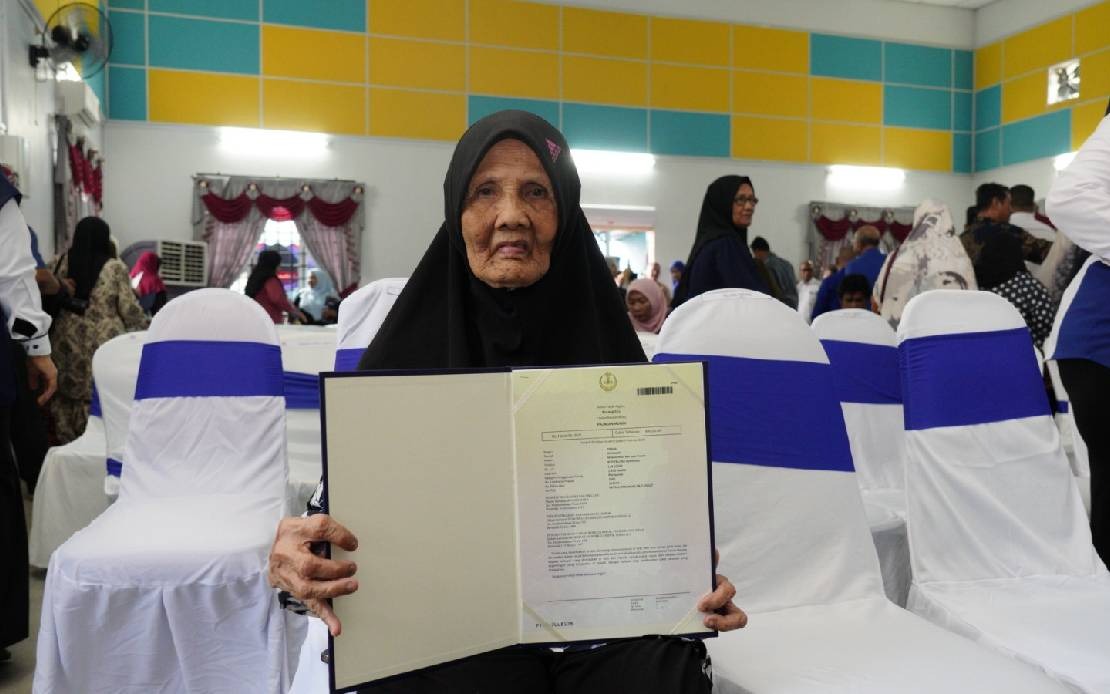
Forty-seven beneficiaries of the FELCRA Berhad Seri Gala Area Village Rearrangement Programme have formally received land ownership grants in a ceremony that underscores the state government's commitment to transforming rural livelihoods through structured property transfer. The grants, awarded at an official handover event in Ipoh on July 14, represent tangible progress in a developmental initiative that aims to stabilise farming communities and create lasting economic foundations for their families.
Perak Menteri Besar Datuk Seri Saarani Mohamad characterised the FELCRA Consolidation and Rehabilitation Programme as a standout example of rural transformation, distinguishing it from conventional agricultural schemes. He emphasised that the initiative transcends typical land allocation exercises by focusing on dignity, security, and intergenerational wealth building. The grants, in his assessment, constitute far more than administrative transactions; they represent systemic efforts to restore confidence in rural enterprise and ensure that smallholder farmers and their descendants possess recognised, marketable assets that can anchor their economic futures.
The Menteri Besar outlined how the consolidation model has revitalised previously dormant or underutilised agricultural land by applying modern farming practices, economies of scale, and coordinated management. By aggregating scattered plots and introducing systematic cultivation methods, the programme has simultaneously reduced production costs and increased yields, thereby improving returns to individual participants. This approach has generated employment opportunities throughout the value chain—from cultivation to processing and marketing—creating multiplier effects that extend beyond farming into local commerce and services.
Central to the programme's philosophy is the recognition that rural development requires more than infrastructure investment. According to Zainal Abidin Alias, FELCRA Berhad's director of participant affairs, contemporary rural advancement must encompass human capital enhancement, economic resilience, and community agency. He referenced remarks made by Deputy Prime Minister Datuk Seri Dr Ahmad Zahid Hamidi during the World Rural Development Day 2026 celebrations in Jengka, Pahang, which stressed that modern rural policy must move beyond bricks-and-mortar thinking to embrace holistic community empowerment. This reorientation acknowledges that sustainable rural progress depends on strengthening local entrepreneurship, improving living standards, and equipping rural populations with the autonomy to chart their own development trajectories.
The FELCRA Berhad organisation has now consolidated nearly 32,000 hectares across its operational network, serving approximately 20,000 participants nationwide. Perak hosts the second-largest concentration of these participants, second only to Pahang, positioning the state as a significant hub for federal rural consolidation efforts. This geographical footprint demonstrates the scale at which the organisation operates and the reach of its land-granting mechanism across the country's farming belt.
The Seri Gala programme exemplifies how structured land consolidation can counter the fragmentation that has historically plagued Malaysian smallholder agriculture. When farming families inherit land across generations, plots become increasingly subdivided, rendering them economically unviable at individual scales. By pooling resources and coordinating cultivation at a consolidated level, FELCRA allows each participant to retain formal ownership while benefiting from collective efficiency. This hybrid model preserves property rights while enabling economies impossible at the individual farm level.
For Perak specifically, the initiative carries strategic importance. The state's agricultural sector has faced chronic underperformance owing to land fragmentation, ageing farmer demographics, and limited access to modern technology and markets. The consolidation programme addresses these constraints by creating institutional frameworks through which smallholders can access credit, inputs, training, and market channels collectively. Participants gain the legitimacy of formal land title, which banks recognise as collateral, thereby unlocking credit for farm improvements and family enterprises.
The ceremony also inaugurated the FELCRA Berhad Seri Gala PPSK Grand Hall, a community infrastructure investment signalling long-term commitment to the area. Such facilities typically serve as centres for extension services, social gatherings, and economic coordination, reinforcing the institutional character of the consolidation scheme and providing physical infrastructure for collective learning and decision-making.
Beyond immediate economic metrics, the land-granting process addresses a deeper aspiration within rural Malaysia. For smallholder farmers, formal property ownership represents recognition from the state, social mobility, and the ability to pass secured assets to heirs. This psychological and social dimension underpins rural development success as much as production increases. By formalising ownership among 47 families in Seri Gala and tens of thousands nationally, FELCRA signals that rural populations are valued stakeholders in the national economy, not peripheral populations requiring charity but legitimate property owners deserving institutional support.
The programme's emphasis on economic security reflects broader Malaysian policy priorities around inclusive growth and balanced regional development. Urban-rural disparities remain pronounced in income, infrastructure, and opportunity, with rural communities historically marginalised from national prosperity narratives. Initiatives like FELCRA attempt to reintegrate rural areas into growth narratives by demonstrating that farming, when properly consolidated and managed, generates sustainable wealth and employment. This reframing is essential for retaining rural populations, preventing wholesale urbanisation, and maintaining agricultural self-sufficiency.
Looking forward, the scaling of such programmes will depend on continued government investment, participant training, and market linkages. While FELCRA has demonstrated technical capacity to consolidate land, sustaining participant livelihoods requires stable commodity prices, reliable input supplies, and fair market access—factors beyond the programme's direct control. Success also hinges on generational renewal, as younger Malaysians increasingly migrate from agriculture unless presented with modernised, profitable farm models.
The Seri Gala grants represent a milestone in Perak's rural economy, but they also exemplify the broader challenge facing Malaysian agricultural policy: transforming smallholder farming from a subsistence activity into a dignified, profitable livelihood capable of competing globally. By combining property rights, institutional coordination, and technological support, consolidation programmes offer a demonstrable pathway toward this objective, though full realisation requires sustained commitment across multiple policy domains and market conditions.

