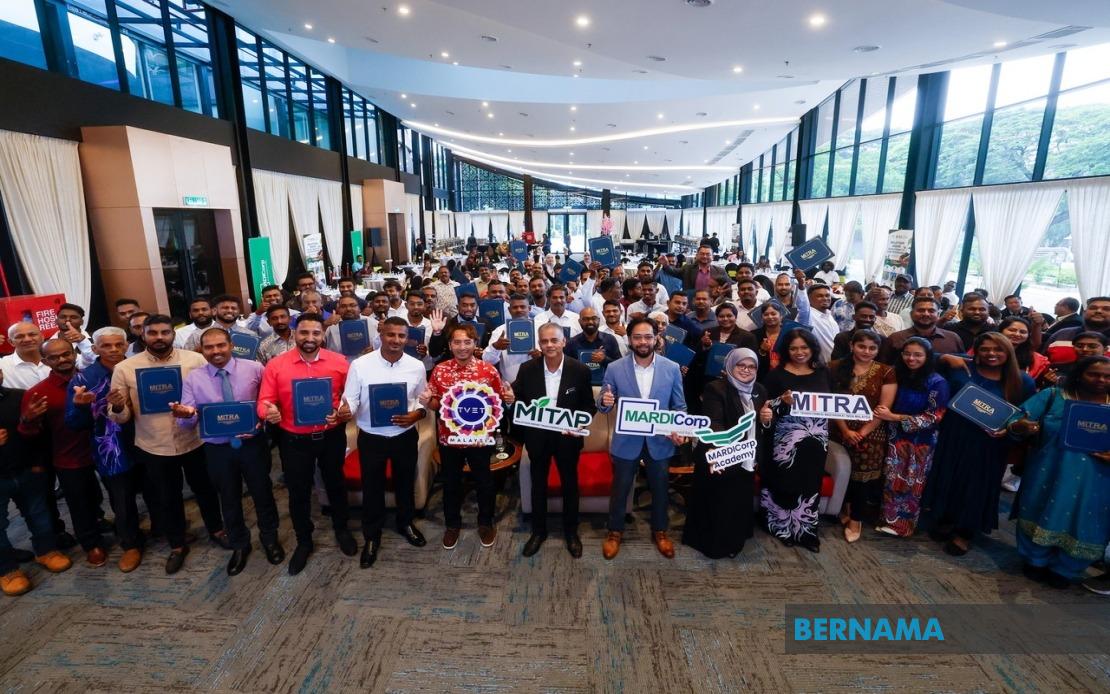
The Malaysian Indian Community Transformation Unit (MITRA) has distributed nearly RM2.05 million in Agricultural Transformation Grants (GTP) to 68 young agropreneurs, marking a significant push to increase the participation of Indian Malaysians in the nation's agricultural sector. The grant awards, presented at a ceremony in Putrajaya, form part of the Malaysian Indian Transformative Agri Programme (MITAP), a collaborative effort between MITRA and MARDICorp operating under the broader Indian Community Socioeconomic Development Programme.
The initiative arrives at a critical juncture for Malaysian agriculture, which faces persistent challenges in attracting younger generations to farming and agribusiness. By targeting youth within the Indian community specifically, the programme seeks to address both generational decline in agricultural participation and socioeconomic disparities that have historically limited opportunities in this sector. The RM30,000 per recipient represents a meaningful entry point for aspiring farmers to acquire equipment, establish operations, or develop their ventures without the immediate burden of substantial debt.
MITAP operates through two distinct but complementary pathways. The QuickWin MITRA stream, which has funded the 68 grant recipients, focuses on direct capital support for young entrepreneurs ready to launch or expand agricultural operations immediately. In parallel, the Young Agropreneur Programme (PUM) offers a more intensive, structured approach through a 10-month training curriculum that combines theoretical knowledge with practical skills development. Eight participants have completed this comprehensive programme to date, with expectations that numbers will grow as the initiative gains traction and awareness within the target community.
The scope of supported agricultural activities demonstrates a deliberate diversification strategy rather than concentration in any single farming sector. Supported enterprises span food crop production, dairy cattle management, beekeeping operations, oyster mushroom cultivation, freshwater fish farming, and food processing technology ventures. This breadth enables participants to pursue agribusiness pathways aligned with their interests, local environmental conditions, and market opportunities, rather than forcing participants into predetermined or saturated sectors.
K. Raveendran Nair, director-general of MITRA, underscored the programme's commitment to sustained engagement beyond the initial grant disbursement. All participants will continue accessing ongoing support from MARDICorp, encompassing mentorship, technical guidance, and connections to government-run agricultural entrepreneurship schemes. This continuity of support proves critical in agribusiness, where initial capital alone cannot guarantee success; sustained guidance through challenges and market fluctuations often determines whether ventures survive beyond their first two to three years of operation.
MARDICorp's managing director, Mohamad Zamir Ghazali, articulated a vision extending beyond simple capital provision. The corporation intends to facilitate market access for MITAP participants, assist in developing downstream products that add value beyond raw commodity sales, and transfer emerging agricultural technologies to programme members. Such interventions address a fundamental weakness in many small-scale farming initiatives: the gap between production capacity and reliable market channels, which frequently leaves farmers unable to realise fair prices for their output.
The networking dimension of MITAP warrants particular attention, as it represents a departure from traditional grant programmes that treat recipients as isolated beneficiaries. By bringing young agropreneurs together, MITRA creates opportunities for peer learning, shared problem-solving, and collective advocacy. Some participants have already become members of agricultural associations, positioning them within formal industry structures that provide access to information, cooperative purchasing arrangements, and political representation. This integration into existing agricultural institutions increases the likelihood that MITAP graduates remain active in the sector long-term rather than abandoning farming when initial challenges emerge.
The programme's timing reflects broader policy recognition that Malaysia's agricultural workforce requires urgent demographic renewal. As established farmers approach retirement without succession plans, and younger generations increasingly pursue non-agricultural careers, agricultural productivity faces long-term decline. By specifically targeting the Indian community, MITRA acknowledges that cultural identity and community-based support networks can serve as powerful motivators for participation in sectors that might otherwise appear economically unattractive to younger people.
For Malaysia's wider agricultural transformation agenda, MITAP offers a scalable model that could be adapted for other communities and regions. The combination of direct capital grants, skills training, ongoing mentorship, market facilitation, and institutional integration addresses multiple barriers simultaneously. Rather than assuming that money alone changes behaviour and outcomes, the programme recognises that successful agricultural entrepreneurship requires sustained ecosystem support.
The success metrics for MITAP will ultimately depend not on grant distribution figures but on longer-term indicators: how many participants remain actively engaged in agriculture five years after receiving support, what income levels they achieve, whether they expand operations, and whether they attract additional family members into farming. These measures will determine whether MITAP represents genuine transformation in Indian community participation in agriculture or remains a well-intentioned but ultimately limited intervention.
For young Malaysian agropreneurs from all communities, the MITAP model demonstrates that government is willing to invest in removing financial barriers to entry. However, the programme's broader significance lies in its acknowledgment that community-specific approaches, sustained support beyond initial grants, and integration into existing agricultural institutions create conditions far more conducive to success than isolated capital transfers. As Malaysia pursues food security and agricultural modernisation, such holistic approaches to farmer development may prove essential to reversing long-standing trends toward agricultural decline.

