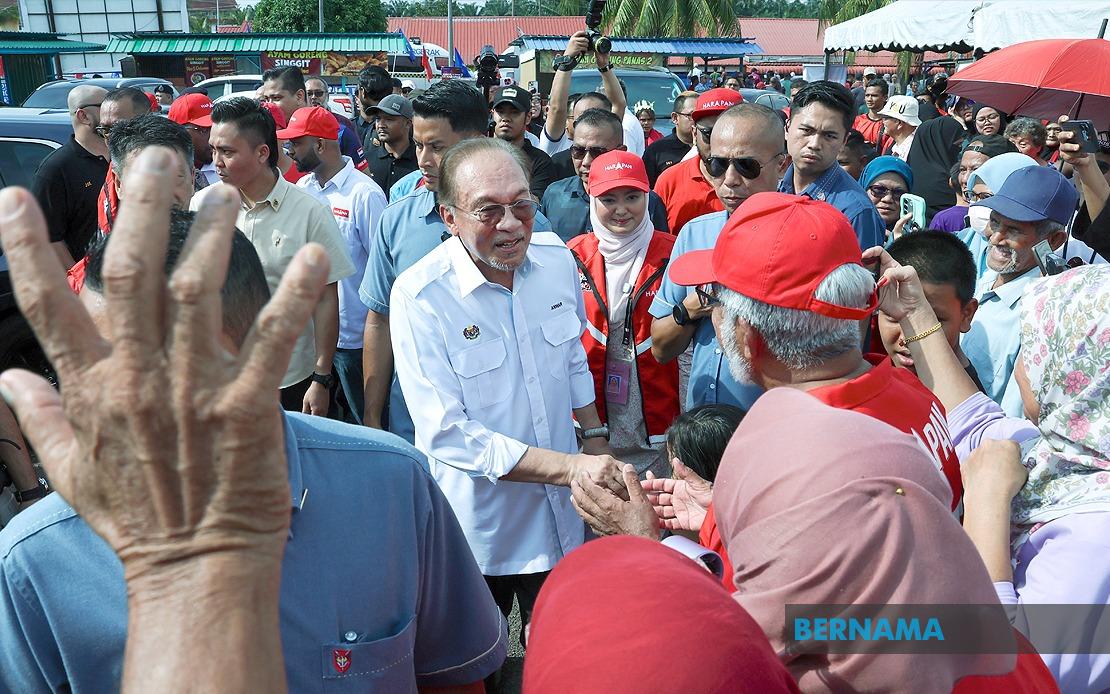
In an inspiring display of familial dedication, Rosimah Mohammad, a 58-year-old grandmother from Kampung Pudu in Segamat, Johor, made an unconventional journey through palm oil estates on a motorcycle to realise her grandson's cherished aspiration. Muhammad Afif Ikhwan, nine years old, harboured a deep admiration for Prime Minister Datuk Seri Anwar Ibrahim, and his grandmother's determination to bridge that gap speaks to the lengths parents and grandparents in Malaysia will go to create meaningful memories for their children.
The pivotal moment occurred during a programme at Felda Palong Timur in Segamat on Sunday, where Anwar was scheduled to address gathered supporters and community members. Rosimah recognised the opportunity and made the decision to transport her grandson across the countryside by motorcycle, a journey that would ultimately change how the boy viewed his relationship with national leadership. The pair's arrival at the venue marked the beginning of an experience that neither expected would unfold with such significance.
According to Rosimah's recollection, the anticipation leading up to the event was palpable. Young Muhammad Afif struggled to sleep in the nights before, his mind consumed with the possibility of seeing his idol in person. This level of enthusiasm from a child reflects broader patterns of civic engagement among younger Malaysians, though often channelled through admiration for individual political figures rather than abstract institutional concepts. When the day finally arrived, the grandmother and grandson positioned themselves strategically near the pathway to the stage, hoping for a glimpse of the Prime Minister.
What unfolded exceeded their modest expectations. As Anwar made his way towards the stage, greeting members of the public along the route, Muhammad Afif summoned the courage to push through the crowd and extend his hand. The gesture did not go unnoticed. Rather than a fleeting handshake, the Prime Minister invited the young boy onto the stage itself, allowing him to stand alongside him during the delivery of his speech. For Rosimah, watching this moment unfold was profoundly moving, though she candidly admits she had never anticipated such an outcome when planning their journey.
The emotional resonance of this encounter has lingered well beyond the event itself. Rosimah described how her grandson continues to process and commemorate the experience, hugging the shirt he wore that day each night before sleep. This ritualistic behaviour underscores how such personal interactions between citizens and political leadership can crystallise into enduring memories that shape a child's sense of connection to the nation's governance structures. For a nine-year-old, the memory of standing beside the Prime Minister during a public address represents a tangible affirmation of his existence and significance.
News of Muhammad Afif's journey and his subsequent meeting with Anwar eventually reached the Prime Minister himself, prompting what could be characterised as an official acknowledgement of the child's determination and the grandmother's dedication. Rather than allowing the moment to fade into informal community memory, Anwar arranged for a formal follow-up visit. Through PKR deputy information chief Siti Aishah Shaik Ismail, the Prime Minister extended his appreciation by visiting the boy's home in Kampung Pudu, transforming a spontaneous public encounter into a structured gesture of recognition.
The visit included tangible gifts—a bicycle, a school bag, and a new pair of shoes—items that carry practical utility but also symbolic weight. In the Malaysian context, such gifts represent more than material provision; they signal to a child that their dreams and aspirations merit institutional attention. Siti Aishah emphasised that these contributions came directly at Anwar's request, suggesting that the Prime Minister himself viewed this episode as worthy of his personal intervention and resources.
This incident illuminates several dimensions of contemporary Malaysian politics and society. First, it demonstrates the accessibility that political leaders maintain at grassroots level, at least in ceremonial contexts. The ability of an ordinary grandmother to bring her grandson to a public event where the Prime Minister would be present, and the subsequent willingness of that leader to engage directly with the child, reflects a particular democratic culture in Malaysia where physical proximity to power remains possible for ordinary citizens. Second, the story reveals how personal relationships with political figures can supersede institutional loyalty, particularly among younger demographics who may not yet grasp the complexities of party politics or policy divergence.
The narrative also raises questions about representation and accessibility in rural Malaysia. Segamat and its surrounding areas, including Felda Palong Timur, represent regions where agricultural communities have historically felt distant from national decision-making processes. The grandmother's effort to ensure her grandson could participate in this political moment suggests a desire to integrate the child into the broader national conversation and to affirm that rural voices and rural children merit consideration by those in power.
Furthermore, this story encapsulates the gendered dynamics of care and aspiration in Malaysian families. The grandmother's role as the primary facilitator of her grandson's dream reflects patterns of familial support structures where elder women often serve as custodians of children's hopes and organisers of their experiences. Her willingness to navigate unfamiliar terrain and navigate a crowded public event speaks to the quiet determination that characterises much of Malaysian family life beyond the headlines.
The continuation of this narrative beyond the initial meeting—with the Prime Minister's subsequent home visit—suggests recognition of a human element in political leadership that extends beyond formal duties. Whether motivated by genuine personal interest or strategic political considerations regarding public relations, Anwar's decision to formalise the interaction demonstrates an understanding that such moments carry weight in shaping public perception and individual memories of governance.
As Malaysia continues to navigate questions about political polarisation, institutional trust, and the relationship between citizens and their elected representatives, stories like Muhammad Afif's offer a counterpoint to narratives of cynicism and distance. A grandmother's motorcycle journey through palm oil estates, undertaken solely to fulfil a child's dream, and a Prime Minister's subsequent decision to visit that child's home, represent moments of connection that transcend partisan considerations and speak to shared values of family, aspiration, and recognition.

