Malaysia's National Anti-Drug Agency (AADK) has endorsed Malaysia Aviation Group's decision to implement mandatory drug screening across its entire pilot workforce of 1,260 staff members, a move triggered by the recent arrest of one Malaysia Airlines pilot in Indonesia. The endorsement underscores the government's commitment to maintaining strict safety standards in commercial aviation, an industry where lapses in crew wellness directly threaten passenger security and public confidence.
AADK director-general Datuk Ruslin Jusoh framed the screening initiative as a natural extension of the agency's zero-tolerance stance on substance abuse and drug trafficking. He emphasised that aviation safety cannot tolerate compromise, given the industry's fundamental responsibility to protect thousands of travellers daily. This position reflects a hardening global consensus that crew drug use, however rare, poses unacceptable risks in an environment where impaired judgment or reflexes could precipitate catastrophic outcomes affecting hundreds of lives.
The agency has signalled its readiness to deepen cooperation with Malaysia Aviation Group through a multi-faceted approach. This includes conducting targeted drug abuse detection operations, rolling out and strengthening the Drug-Free Workplace (TEKAD) programme tailored to aviation operations, providing specialised screening and prevention training for supervisors, and facilitating cross-agency information sharing. Such collaborative frameworks are essential in an industry characterised by complex regulatory requirements and international operational standards.
Historically, the AADK has already undertaken detection operations within Malaysia's aviation sector, conducting screening exercises at Malaysia Airlines in April 2025 and at AirAsia in December 2025. These initiatives demonstrate a systematic, preventative approach rather than reactive crisis management. Going forward, the agency plans to coordinate closely with law enforcement, the Civil Aviation Authority of Malaysia (CAAM), and international regulatory bodies to enhance information sharing protocols and strengthen security controls at the country's primary ports of entry.
While acknowledging that individual misconduct should not reflect adversely on the broader aviation workforce, Ruslin reaffirmed the AADK's commitment to supporting both public and private sector initiatives designed to maintain Malaysia's drug-free status. This balanced messaging is politically important, as it prevents unwarranted stigmatisation of Malaysia's generally professional and dedicated aviation personnel while maintaining the resolve to eliminate any systemic vulnerabilities.
Beyond aviation, the AADK highlighted progress in Terengganu state, where the addict and drug-abuser population declined 7.2 percent to 7,582 individuals in the first quarter of 2026 from 8,174 in the equivalent period the previous year. However, this headline improvement masks disturbing undercurrents. Drug involvement among children aged 10 to 14 surged 16.7 percent, signalling a troubling shift towards younger users. Additionally, emerging clusters among those aged 55 to 59 and 65 to 69 suggest the drug problem is permeating age groups previously considered insulated from substance abuse.
Among drugs currently prevalent, Amphetamine-Type Stimulants (ATS) remain dominant, accounting for 6,206 cases or 81.9 percent of recorded incidents during the first quarter of 2026. This category includes methamphetamine (syabu), yaba tablets, and ecstasy. Opiates follow distantly with 1,281 cases representing 16.9 percent of cases. The overwhelming prevalence of ATS reflects a persistent challenge across Southeast Asia, where synthetic drug production and trafficking networks remain entrenched despite enforcement efforts.
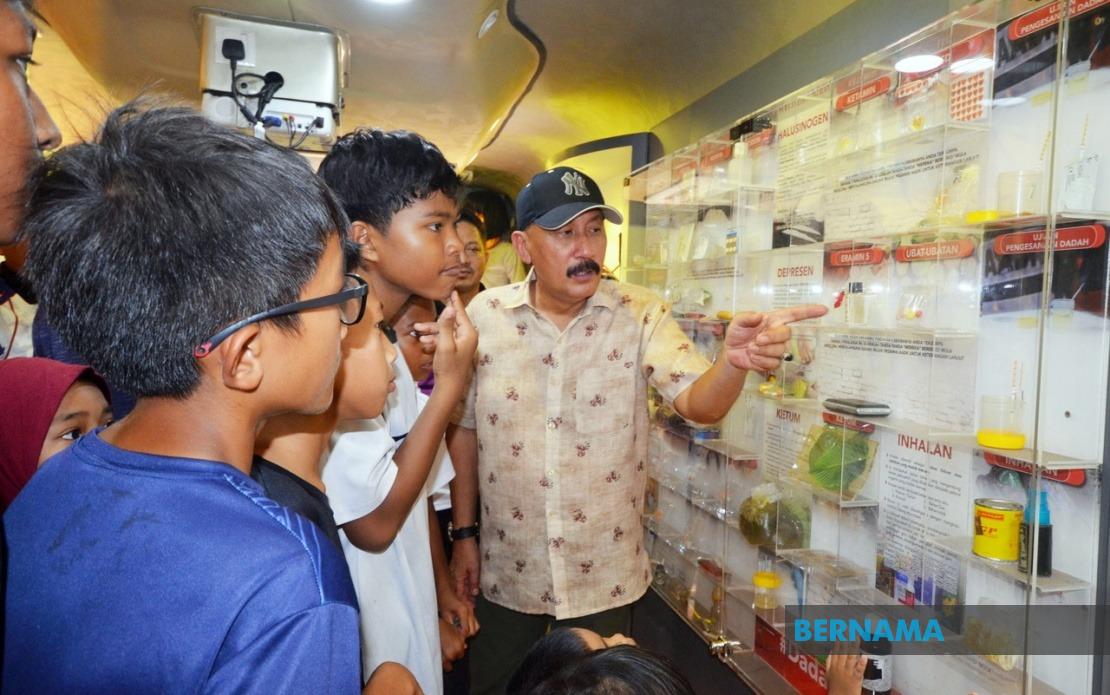
The AADK simultaneously launched community-based prevention programmes at FELDA Tenang in Terengganu, including the MADANI Foster Village (KAM) and MADANI Foster School (SAM) initiatives. These programmes reflect a strategic pivot towards embedding drug prevention within rural and school environments from childhood onwards. Infrastructure improvements implemented included renovation of sports facilities, installation of solar lighting at community cemeteries, and enhancement of school learning spaces with air-conditioning and public address systems—recognising that environmental quality and community pride contribute to resilience against substance abuse.
The focus on youth intervention through SAM programmes acknowledges that early adolescence represents a critical vulnerability window. By positioning drug prevention education and community engagement at the school level, the government aims to establish protective factors before substance experimentation becomes entrenched. This aligns with international evidence that prevention investments yield far greater public health returns than treatment or enforcement alone.
The mandatory screening initiative for Malaysia Airlines personnel should be understood within a broader regional context. Southeast Asian countries, including Malaysia, have intensified efforts to eliminate drug vulnerabilities within high-security sectors—aviation, maritime, and border security—recognising that these industries represent potential vectors for transnational trafficking. Malaysia's approach mirrors practices adopted by regional neighbours and international carriers operating under stringent regulatory oversight.
For Malaysia's reputation as a stable aviation hub competing regionally for international traffic, maintaining crew integrity and safety standards is commercially and strategically essential. The incident prompting this policy response, whilst isolated, risks damaging investor and passenger confidence if left unaddressed. The coordinated response from AADK, Malaysia Aviation Group, and regulatory authorities demonstrates systematic crisis management and commitment to prevention rather than denial.
Looking forward, the success of mandatory screening initiatives will depend on implementation consistency, fairness in testing protocols, rehabilitation pathways for affected personnel, and maintaining crew morale and operational efficiency. The AADK's emphasis on cooperation and multi-agency coordination suggests recognition that sustainable drug prevention in aviation requires balanced approaches combining deterrence, detection, treatment, and community engagement rather than enforcement alone.

