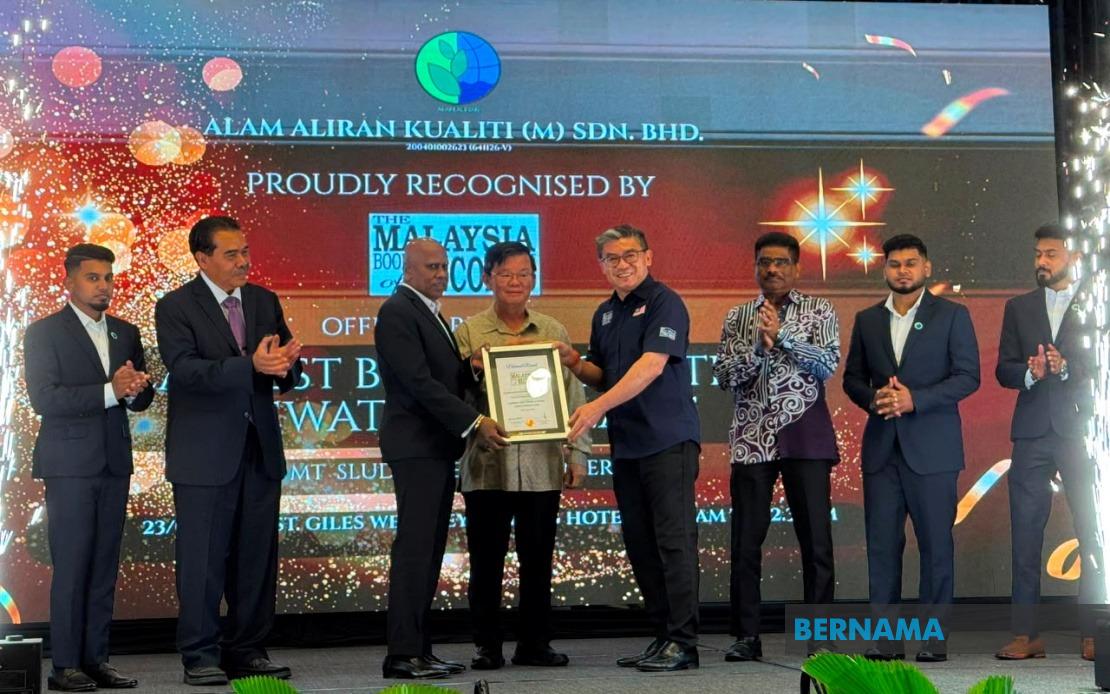
Alam Aliran Kualiti (M) Sdn Bhd (AAK) has secured a place in Malaysian history with recognition from the Malaysian Book of Records for developing and operating the nation's largest belt press system dewatering plant, located at Sungai Dua in Penang. The achievement underscores how Malaysian companies are pushing engineering boundaries to address pressing environmental and water security challenges across Southeast Asia.
The Sungai Dua facility was developed through a strategic partnership with Perbadanan Bekalan Air Pulau Pinang (PBAPP), Penang's water authority, creating a facility designed to handle extraordinary volumes of water treatment residuals. With a processing capacity of 10 million litres per day and the ability to manage approximately 450 tonnes of water treatment sludge each day, the plant represents a significant leap forward in how Malaysia tackles the inevitable byproducts of modern water treatment infrastructure. The scale of this operation places it ahead of comparable facilities in the region and demonstrates that Malaysian engineering firms can compete at international standards.
During the presentation ceremony in George Town, AAK director Gokulaan Balan framed the MBOR recognition not as a final achievement but as a foundation for future environmental innovation. His comments reflect a broader industry sentiment that records and accolades serve as catalysts for continuous improvement rather than endpoints. He emphasized that the company remains committed to advancing engineering excellence and strengthening Malaysia's position as a leader in environmental sustainability, particularly in sectors where innovation can yield tangible improvements to national infrastructure and resource management.
What distinguishes the Sungai Dua plant from conventional dewatering operations is its integration into a circular economy framework. Rather than treating water treatment sludge as waste to be disposed of in landfills—a common practice across Southeast Asia—AAK has developed complementary processes that transform these residuals into Eco Green Cement Bricks, commercially viable construction materials. This approach simultaneously addresses two problems: reducing landfill burden and creating new material value, a model that could be replicated across the region as countries grapple with waste management pressures.
Penang Chief Minister Chow Kon Yeow highlighted during the ceremony how the innovation tackles a persistent challenge in water infrastructure management. The plant recovers treated water from the dewatering process and channels it back into the treatment cycle, significantly reducing overall water losses. For Penang, an island state historically vulnerable to water scarcity, this kind of efficiency gain has direct implications for long-term water security. As populations grow and climate variability increases pressure on water supplies throughout Malaysia and Southeast Asia, such closed-loop systems become increasingly valuable for maintaining supply resilience.
The economic dimensions of the project deserve equal attention to its environmental benefits. By converting what would ordinarily be scheduled waste (SW204 classification) into saleable construction materials, the facility creates a secondary revenue stream while reducing disposal costs. This economic viability makes the circular economy model attractive to other water authorities and waste management operators across the region who might otherwise lack incentives to adopt more sustainable practices. When environmental responsibility and financial performance align, adoption accelerates.
AAK itself brings considerable pedigree to this achievement. Since its establishment in 2004, the company has specialized in environmental engineering and scheduled waste management solutions, accumulating two decades of technical expertise in handling complex waste streams. The Sungai Dua operation, combined with its Eco Green Brick Manufacturing Plant, represents the culmination of the company's evolution toward comprehensive waste-to-value solutions. This track record suggests the facility should operate reliably and that the company possesses the institutional knowledge to optimize performance over time.
The MBOR recognition, presented by Christopher Wong, the organization's chief executive officer, arrives at a moment when Southeast Asian governments are increasingly scrutinizing water infrastructure and environmental management practices. The presentation was witnessed by senior figures including Pengurusan Aset Air Berhad (PAAB) chairman Datuk Seri Jaseni Maidinsa, signaling that the achievement has received validation from Malaysia's water sector leadership. This visibility may encourage other water authorities and private operators to invest in comparable technologies.
For Malaysian readers and regional observers, the Sungai Dua achievement illustrates how domestic engineering talent can address infrastructure challenges without waiting for foreign solutions. The belt press dewatering technology itself is well-established globally, but its application at this scale, integrated with circular economy processes, demonstrates that Malaysian companies can adapt and improve upon existing technologies to create contextually appropriate solutions. This capability becomes increasingly important as regional governments seek to implement sustainable development goals while managing rapid urbanization and industrial growth.
Looking forward, the success of the Sungai Dua plant establishes a template that other Malaysian water authorities and private waste management operators may seek to emulate. Penang, Selangor, and Kuala Lumpur—all facing intense pressure on water infrastructure and landfill capacity—could benefit from similar integrated approaches to water treatment residuals. The project demonstrates that innovations in environmental engineering need not be imported wholesale from overseas; they can be developed locally, tested at scale, and refined through practical experience, ultimately delivering solutions better suited to local conditions and constraints.
The broader implication extends to Malaysia's positioning in the Southeast Asian economy. As countries across the region prioritize environmental sustainability and circular economy development, Malaysian firms with recognized expertise in transforming waste into resources will find growing demand. The MBOR recognition serves as both a validation of past achievement and a signal to potential partners, investors, and government agencies that AAK and companies like it deserve consideration for regional infrastructure projects. This reputation-building effect may ultimately prove as valuable as the operational efficiency gains achieved at Sungai Dua itself.

