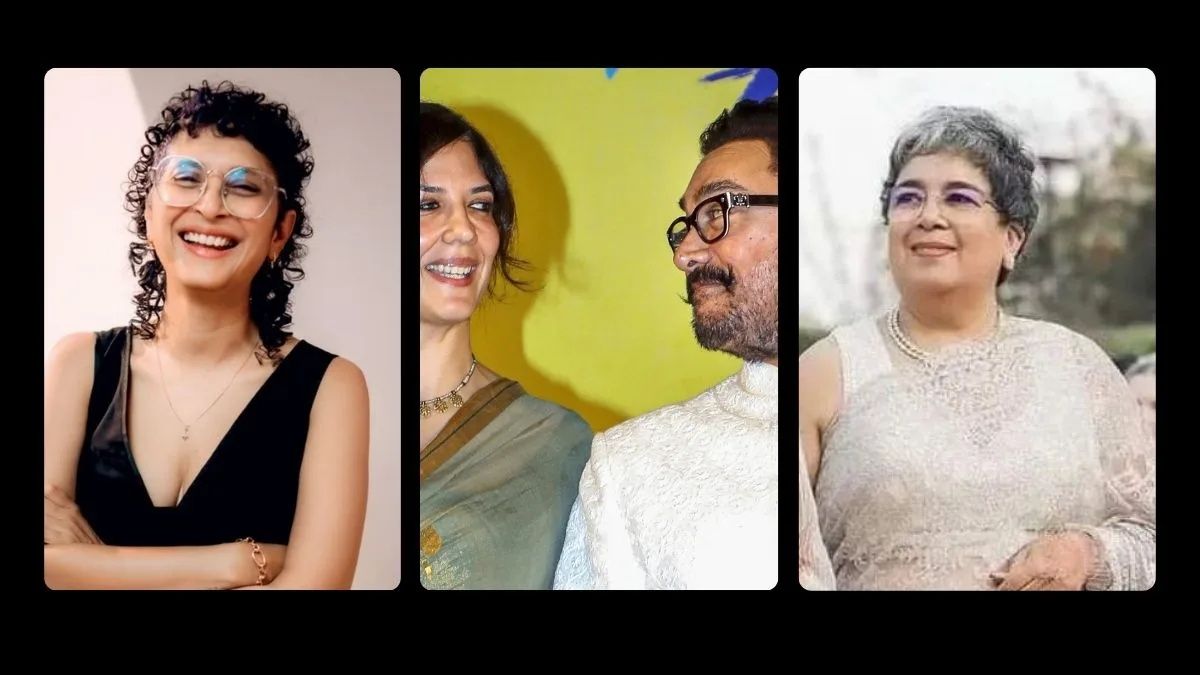
Bollywood star Aamir Khan has broken his silence on controversial allegations branding him an ambassador of "love jihad" in the aftermath of his recent marriage to longtime companion Gauri Spratt, forcefully denying the charges and positioning his marriage within a broader family tradition of interfaith unions. In remarks to Rediff, the acclaimed actor stressed that his household has consistently embraced individuals across religious boundaries without pressuring anyone to abandon their faith, framing his personal relationships as an extension of deeply held family values rather than as part of any coordinated religious strategy.
The timing of Khan's statement comes several weeks after his July 5 wedding at his Mumbai residence, an occasion that reignited online discourse around interfaith marriages in the Indian film industry. The term "love jihad" has become increasingly prevalent in Indian public debate, often deployed to suggest that Muslim men systematically target women from other faiths for religious conversion through marriage. Such accusations carry significant social and political weight in contemporary India, where discussions around religious identity and conversion have become increasingly polarised along communal lines.
To substantiate his position, Khan outlined his family's composition, noting that both his sisters have married Hindu men, whilst his daughter has also wed into a Hindu family. He further cited his cousin, filmmaker Mansoor Khan, as an example of an interfaith partnership, having married a Christian woman. These examples, Khan suggested, demonstrate that his approach to marriage and religious pluralism reflects established family precedent rather than any novel or ideologically driven pattern. The cumulative picture presented is one of generational acceptance across religious divides, a narrative that runs counter to the implications embedded in accusations of orchestrated religious conversion.
Regarding his own matrimonial history, Khan was explicit in clarifying the religious status of his spouses. His first wife, Reena Dutta, to whom he was married from 1986 until their 2002 divorce, never converted from her original faith. Similarly, filmmaker Kiran Rao, whom he married in 2005 before the couple announced their separation in 2021, maintained her religious identity throughout their relationship. Notably, Khan and Rao have maintained a collaborative professional relationship and co-parenting arrangement despite dissolving their marriage, a fact that underscores the complexity of their personal bond beyond religious categorisation. Khan's current wife, Gauri Spratt, is Christian and does not actively practise her religion, Khan revealed, yet this circumstance appears irrelevant to the fundamental claim that no conversion transpired.
The distinction Khan emphasises—that all three marriages were conducted as civil ceremonies rather than religious rites—carries considerable significance in the Indian legal and social context. Civil marriages, governed under the Special Marriage Act, explicitly allow individuals of different faiths to marry without either party adopting the other's religion. By highlighting this procedural detail, Khan underscores that the legal framework itself precludes the conversion narrative that underpins "love jihad" allegations. The choice of civil marriage thus becomes a deliberate statement against the very premise of the accusations levelled against him.
Khan's relationship with Spratt, now formalised through marriage, had its genesis approximately 25 years earlier when the two first became acquainted. Their friendship remained dormant until roughly two years ago, when they reconnected in Bengaluru through Khan's cousin Nuzhat Khan. This rekindling of connection developed into romance over subsequent months, culminating in a two-year courtship before they decided to marry. The narrative of a quarter-century friendship preceding romantic involvement presents an alternative framing to the accusation framework—one emphasising genuine compatibility and mutual choice rather than predatory intent or religious engineering.
Khan's public introduction of Spratt occurred during celebrations surrounding his 60th birthday in March of the preceding year, marking the moment when the couple's relationship transitioned from private to media knowledge. This controlled emergence into public view had apparently not forestalled the subsequent allegations, which gained traction in online spaces and among certain sections of the commentariat despite the straightforward circumstances of their union. The persistence of such claims even after transparent disclosure suggests that the controversy reflects broader societal anxieties about interfaith relationships rather than specific evidence regarding Khan's conduct.
The actor's sardonic observation that "life is becoming more comical as time passes" conveys palpable frustration with what he evidently regards as absurd and unfounded accusations. This rhetorical flourish captures a broader sentiment among India's secular-minded citizens who perceive "love jihad" discourse as inflammatory and divorced from evidence. For Malaysian and Southeast Asian observers, Khan's experience illuminates how religious sensitivities intersect with celebrity culture and political messaging in the Indian context, offering cautionary lessons about how interfaith relationships can become flashpoints for communal tension when amplified through social media and partisan political rhetoric.
The substantive position Khan articulates—that interfaith marriages conducted through civil law without religious conversion represent a legitimate and longstanding family practice—challenges the binary framing often imposed by critics. His emphasis on family history, legal procedure, and the absence of conversion creates a multifaceted defence that addresses different dimensions of the accusation. Whether this reasoned response will alter public perception among those already convinced by "love jihad" narratives remains uncertain, reflecting a deeper question about whether factual clarification can overcome ideologically entrenched positions in polarised contemporary discourse.

