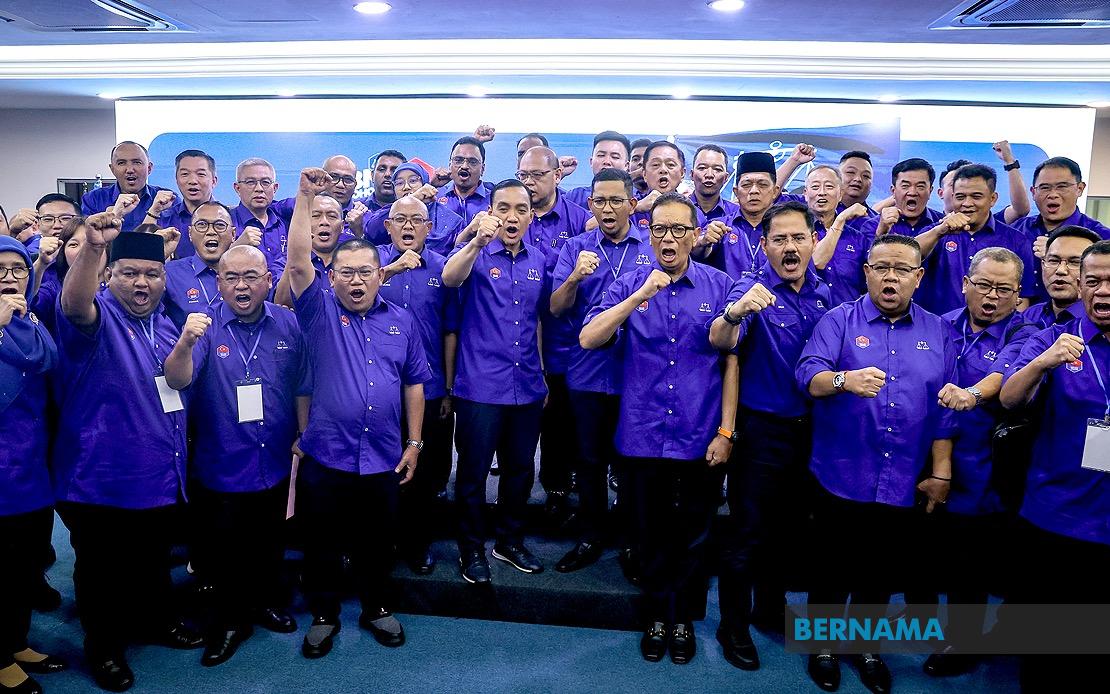
Johor Barisan Nasional has finalised its candidate roster for the forthcoming 16th state election, announcing a mix of seasoned political operators and emerging figures to contest all 56 legislative seats. The coalition's Johor chairman Datuk Onn Hafiz Ghazi presented the slate at a candidate declaration ceremony in Johor Bahru on June 24, with the selection process bearing the approval of BN national chairman Datuk Seri Dr Ahmad Zahid Hamidi.
The composition of the slate reflects the traditional power-sharing arrangement within BN's Malaysian state machinery. UMNO dominates the allocation with 37 nominations, while the Malaysian Chinese Association contributes 15 candidates and the Malaysian Indian Congress rounds out the partnership with four nominees. This distribution underscores UMNO's continued electoral dominance within the coalition and its expectation of capturing the state government following the polls.
Onn Hafiz, who currently serves as Menteri Besar, will seek to retain his own seat in Machap, the constituency he successfully won during the 2022 state election. His decision to stand for re-election signals BN's confidence in the incumbent administration and Onn Hafiz's personal political standing within Johor's electoral landscape. The Menteri Besar's continued leadership of the state represents a critical element of BN's electoral messaging heading into the campaign period.
Among the most significant names announced is Datuk Seri Dr Adham Baba, the former health minister who now heads the Tenggara UMNO division. Adham has been fielded to contest the Pasir Raja seat, marking a return to the constituency he previously represented for two consecutive terms spanning 2008 to 2018. His political résumé extends beyond state-level representation; he served as Member of Parliament for Tenggara across two separate periods—from 2004 to 2008 and again from 2018 to 2022—giving him substantial experience in federal politics as well. His nomination represents a strategic decision to deploy experienced national figures in key constituencies.
The BN line-up demonstrates a deliberate approach to candidate selection that blends continuity with selective renewal. Nine of the ten former Johor executive councillors who contested the 2022 state election have retained their candidacies for the upcoming poll. This approach suggests the coalition views the previous state administration's performance as sufficiently strong to warrant retaining most of its senior figures. However, the rejection of at least one executive council member indicates BN is not operating on pure incumbency advantage alone.
Khairin-Nisa Ismail @ Md On, who previously chaired the State Women, Family and Community Development Committee, represents the single exception to this pattern of retention. She has not been renominated to defend the Serom seat, signalling that performance evaluations or internal political considerations have led to her replacement. Her exclusion may reflect broader considerations about female representation or specific constituency-level dynamics that BN assessed as disadvantageous.
A notable change in Benut constituency illustrates how BN is willing to make substantial personnel adjustments where strategic calculation dictates. Datuk Seri Hasni Mohammad, a former Menteri Besar who held the incumbent assemblyman position in Benut, has been dropped from the slate entirely. In his place, BN has nominated Datuk Mohd Sumali Reduan, who serves as UMNO's national working secretary. This substitution represents a significant recalibration for a seat previously held by a heavyweight politician, suggesting either internal party dynamics or electoral calculations necessitated the change.
Johor's political significance extends beyond the state itself, given that the southern state has traditionally served as a crucial testing ground for BN's broader electoral viability across Malaysia. The coalition's performance in Johor carries implications for federal politics and intra-coalition dynamics. The decision to field experienced figures like Adham Baba alongside party functionaries such as Mohd Sumali Reduan reflects BN's strategy of combining name recognition with administrative competence.
Onn Hafiz used his address at the candidate announcement ceremony to frame the nomination process through the lens of institutional responsibility rather than personal reward. He characterised the candidacies as trusts that demanded integrity and conscientious stewardship of public interest. The Menteri Besar specifically exhorted all nominees to conduct their campaigns with courtesy, respect, and prudence, explicitly invoking Johor's cultural and political values as the ethical framework within which the election would unfold. This rhetorical positioning attempts to elevate the electoral contest beyond partisan competition and locate it within a broader narrative of good governance.
The candidate line-up's regional implications merit consideration for Malaysian political observers. Johor's electoral outcome will provide early signals about voter sentiment toward BN's national direction under Ahmad Zahid Hamidi's leadership. The performance of individual candidates—particularly whether experienced figures like Adham Baba can successfully recapture previously held seats—will generate data about the trajectory of Malaysian electoral politics heading into any eventual federal general election.
For Southeast Asian analysts monitoring Malaysian political developments, the Johor election offers a window into how established coalitions manage internal negotiations, candidate selection, and the balance between continuity and renewal. The decision patterns evident in BN's slate—retaining most executives while strategically replacing others—demonstrate how dominant coalitions calibrate electoral strategy to maintain control without appearing complacent or entrenched.
The campaign period leading up to polling day will test whether BN's candidate selections translate into electoral performance. The presence of familiar figures like Adham Baba may provide continuity and voter familiarity in constituencies where such factors prove decisive. Meanwhile, the deployment of party functionaries in place of long-serving politicians like Hasni Mohammad will reveal whether administrative credentials and party rank can overcome the absence of established constituency relationships. The overall trajectory of BN's Johor campaign will offer crucial insights into the coalition's current political momentum and prospects for sustained governance.