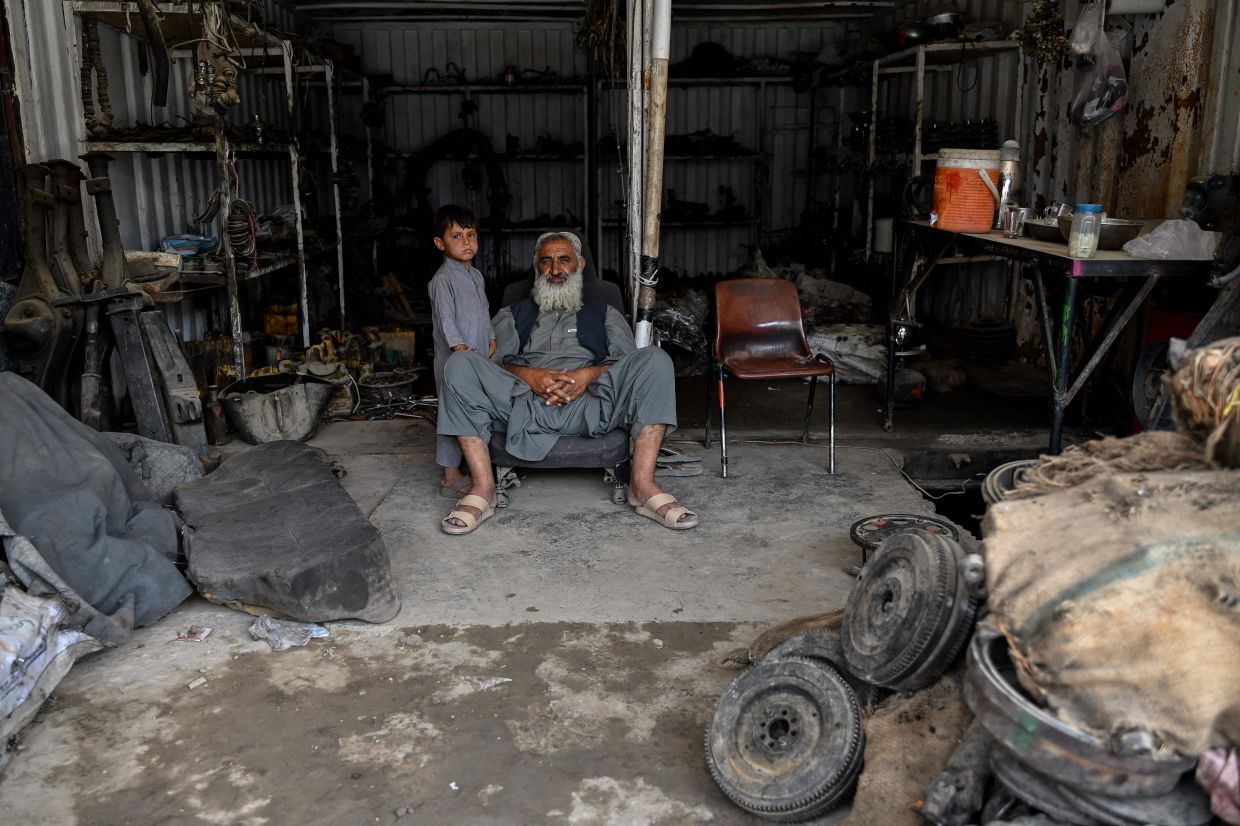
The once-bustling automotive marketplace in Spin Boldak, nestled in Afghanistan's southern Kandahar province, has descended into a ghostly stillness. What was formerly a dynamic regional hub for importing and distributing vehicle components has effectively shut down, victims of overlapping security crises that have severed the supply chains upon which thousands of traders, mechanics, and workers depend. The collapse of this critical sector illustrates how Afghanistan's political isolation and geographic vulnerabilities leave its economy dangerously exposed to distant upheaval.
The first major disruption arrived in October when escalating cross-border violence between Afghanistan and Pakistan forced authorities to close the Spin Boldak frontier, historically the primary conduit for vehicle parts originating from Japan and other distant suppliers. The closure was particularly damaging because the overland route through Pakistan had been the most efficient and economical pathway for moving goods into the heart of the Afghan market. Abdul Baqi Bina, the deputy head of the Kandahar Chamber of Commerce and Investment, acknowledged that traders initially attempted to salvage their operations by rerouting shipments through Iran's Bandar Abbas port, but this alternative remained fraught with logistical difficulties and required navigating a more cumbersome bureaucratic landscape.
When the Pakistani border became untenable, merchants reluctantly adopted a longer and substantially costlier workaround: routing goods through the United Arab Emirates. This detour significantly increased both transit time and expenses, yet it represented the only viable means of maintaining any commercial activity. Importers absorbed these additional costs while hoping that the security situation would eventually stabilize and allow a return to normal operations. However, this fragile substitute network proved short-lived as larger regional forces intervened.
In February, the eruption of conflict in the Middle East introduced a second, more devastating blow. The instability disrupted shipping lanes through the Strait of Hormuz, one of the world's most critical maritime chokepoints, creating unprecedented complications for international commerce. Shipping companies warned that normalizing operations through this vital waterway would require considerable time, casting a shadow of uncertainty over any timeline for recovery. For traders in Spin Boldak who had already endured six months of border closure and supply chain improvisation, this development represented a catastrophic compounding of their difficulties.
The financial impact has been staggering. Asadullah, an importer who sources from both Dubai and Japan, described his business as completely "paralysed." He revealed that container shipping costs skyrocketed from approximately US$2,000 to US$8,000 following the Middle East conflict—a fourfold increase that rendered many transactions economically unviable. The 40-year-old trader currently has more than 30 containers trapped in transit between Japan and the UAE, with many languishing at Dubai's Jebel Ali port, a major logistics hub that has itself become congested under the weight of regional disruptions.
Masoud, another importer specializing in Japanese vehicle parts, has witnessed his monthly intake collapse from dozens or even hundreds of containers to zero. The scale of this contraction underscores how completely the supply chain has fractured. Facing mounting storage fees in the UAE and no realistic prospect for timely delivery to Afghanistan, Masoud made the painful decision to reverse shipments back to Japan—a costly admission of defeat that represents a total loss on those transactions. His situation exemplifies the impossible calculus facing Afghan traders: continue absorbing storage expenses while hoping for an opening, or accept losses by returning goods to their origin.
The consequences extend far beyond the merchant class. The Spin Boldak market employed thousands in supporting roles: crane operators, mechanics, workshop owners, and vehicle assemblers who depended on the steady flow of imported components. Mohammad Naeem, a 21-year-old crane operator, confronted an immediate threat to his employment prospects. Without incoming containers to unload and process, there is simply no work available. If the blockade persists, he will be forced to abandon vehicle-related employment entirely and seek livelihoods in other sectors—assuming such alternatives exist in a province ravaged by conflict.
In the workshops scattered throughout the marketplace, production has completely ceased. Samiullah, a 30-year-old workshop proprietor, recalls when his operation assembled five to seven vehicles weekly. Now the facility sits dormant, tools gathering dust while employees remain on his payroll despite the absence of incoming work or revenue. This situation exemplifies a broader tragedy: Afghan business owners cannot simply lay off workers without violating social obligations, yet they lack the income to sustain these commitments indefinitely. Prolonged inactivity will eventually force painful workforce reductions.
The retail sector has similarly suffered. Noor Ali's car showroom, filled with a dozen colorful vehicles assembled from Japanese components, has not registered a single sale for a month. His inventory represents stranded capital, built in anticipation of customer demand that has evaporated as the supply of new parts has dried up. Without fresh inventory arriving, customers have no incentive to visit showrooms, creating a vicious cycle that further depresses economic activity throughout the market.
The macroeconomic implications extend well beyond Kandahar province. The World Bank identified Afghanistan as "highly exposed to external shocks" in a May assessment, noting that the nation's import-export gap has widened to 70 percent of GDP during the 2025 fiscal year. The vehicle parts collapse exemplifies precisely this vulnerability: Afghanistan lacks domestic capacity to manufacture automotive components, making it entirely dependent on imported supplies routed through borders and maritime passages controlled by neighboring countries and distant powers. When those routes are severed, the entire economy convulses.
The standoff reflects broader geopolitical realities that threaten Afghanistan's economic recovery. The nation sits at the intersection of Pakistani security concerns, Iranian interests, Middle Eastern supply chains, and Japanese manufacturing networks. Any disruption in any of these relationships—whether arising from direct conflict or collateral damage from third-party disputes—reverberates immediately through Afghan commerce. The Spin Boldak marketplace, once a thriving symbol of transnational trade, now stands as a cautionary illustration of how disconnected Afghanistan remains from stable, predictable commercial networks.
For now, Spin Boldak's traders can only wait, hope, and absorb mounting losses. The opening of the Pakistani border seems unlikely absent a resolution to bilateral security tensions. The normalization of Strait of Hormuz shipping depends on developments entirely beyond Afghan influence or control. Until these obstacles are resolved, the marketplace will remain paralyzed, workers will be displaced, and the broader Afghan economy will continue to deteriorate—casualties of conflicts fought elsewhere but felt acutely in the warehouses and workshops of southern Kandahar.

