The African Union's Peace and Security Council has issued a strong rebuke against external powers attempting to shape Sudan's political future, declaring that foreign interference and schemes to create rival governmental structures threaten the country's territorial integrity. The position emerged during talks between Sudan's Sovereignty Council Chairman Abdel Fattah al-Burhan and an African Union delegation led by Algerian diplomat Mohamed Khaled at the presidential palace in Khartoum on Sunday, underscoring continental concerns about the trajectory of one of Africa's most destabilised nations.
The meeting represents a significant diplomatic intervention aimed at consolidating Sudan's institutional framework at a moment when the country's governance structures remain fractured by ongoing conflict. Khaled, serving as the rotating chair of the Peace and Security Council, characterised the discussions as productive, touching on interconnected matters of peace, security and stability that will determine whether Sudan can rebuild functional state institutions or descends further into fragmentation. The emphasis on rejecting parallel entities reflects continental anxiety that competing power centres could permanently splinter the state apparatus.
The council's position carries particular weight because it directly addresses a pervasive concern in African diplomacy: the tendency of external powers to exploit internal conflicts by backing rival factions or establishing shadow administrations that undermine legitimate authority. By explicitly condemning such interference, the AU signals to the international community that it views Sudan's sovereignty as non-negotiable and that territorial consolidation must precede any political transition. This stance positions the continent as a guardian of state integrity rather than a passive observer of external intervention.
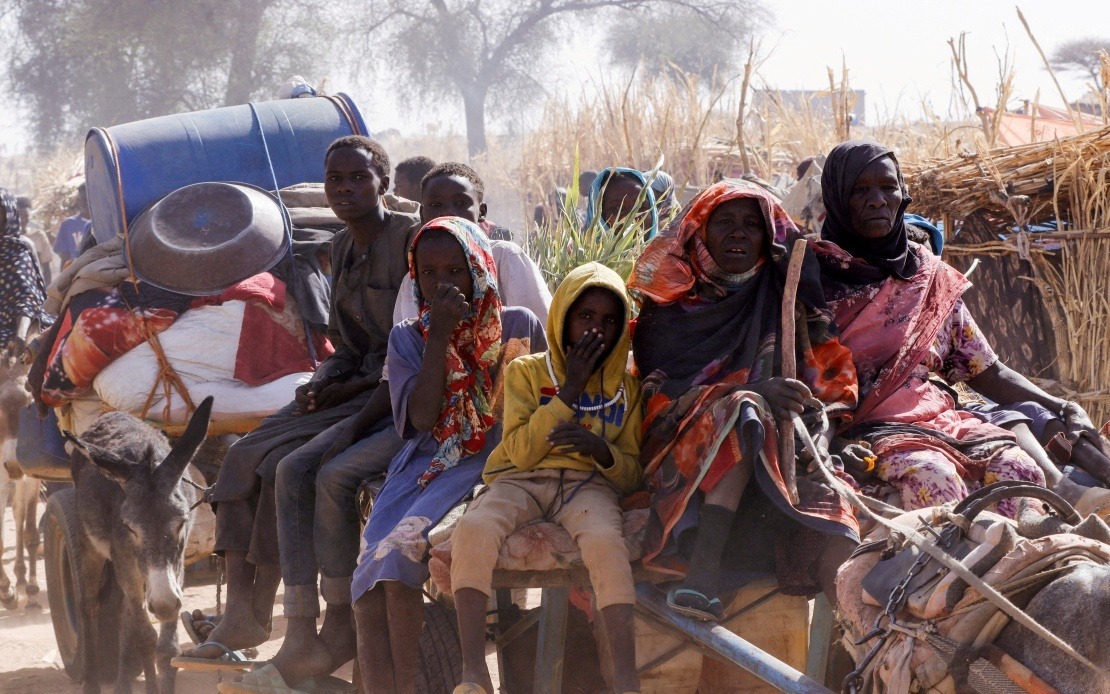
Khaled's framing of foreign involvement as a catalyst for deepening conflict reflects a nuanced understanding of Sudan's civil war dynamics. Since April 2023, the rupture between the regular army and the paramilitary Rapid Support Forces has killed tens of thousands and displaced approximately 13 million people according to United Nations estimates, creating a humanitarian catastrophe of staggering proportions. External powers supplying weapons, funding rival commanders or positioning themselves to influence post-conflict arrangements have complicated efforts to broker ceasefires and negotiate settlements. The AU's intervention aims to create international pressure for restraint.
The council's call for inclusive dialogue and national reconciliation addresses the political dimension of Sudan's crisis that often receives less attention than the military dimension. Rather than imposing solutions from Khartoum or accepting those dictated by external actors, the AU framework envisions Sudanese stakeholders engaging in comprehensive talks that produce a political settlement reflecting popular aspirations. This emphasis on bottom-up consensus-building contrasts with the history of elite-dominated transitions that have characterised Sudan's post-1989 period and provides a roadmap, however aspirational, for legitimate governance renewal.
Sudanese Prime Minister Kamil Idris's announcement that Sudanese-Sudanese dialogue would commence in the near term suggests some willingness by the central authorities to engage in the kind of broad-based negotiations the AU advocates. The timing of this commitment during the African Union visit carries significance, implying that international diplomatic pressure and continental legitimacy matter to Khartoum's calculations about transitional processes. However, the gap between announcing dialogue and achieving substantive negotiations remains substantial, particularly given the military dynamics on the ground where various factions continue competing for territorial advantage and resource control.
The AU's characterisation of the government's return to performing duties from Khartoum as a pivotal development reveals how basic institutional functionality has become contested terrain in Sudan's conflict. With earlier capitals shifting and administrative capacity withering during the war, the restoration of central government operations from the traditional capital carries symbolic and practical importance for reasserting state presence. This reopening of institutions can facilitate service delivery, enable tax collection and establish the administrative spine necessary for any political transition, though insecurity continues limiting governmental reach across much of the country.
For Southeast Asian readers and policymakers, Sudan's trajectory offers instructive lessons about the dangers of state fragmentation and the vulnerability of developing nations to external interference during internal conflicts. Malaysia and its neighbours have maintained careful diplomatic balances partly by building regional consensus through forums like the Association of Southeast Asian Nations, an approach the AU now attempts to replicate at the continental level. Sudan's experience demonstrates how quickly state capacity erodes when competing militias fragment sovereignty and how external actors exploit such vacuums, making early diplomatic intervention and continental solidarity valuable investments in stability.
The council's insistence on a constitutional framework through free and fair elections reflects a vision of legitimate governance that extends beyond military administration toward democratic accountability. Khaled's call for the transitional process to become more inclusive and generate national consensus represents an implicit critique of the current arrangement's narrowness and suggests the AU sees broader participation as essential for conflict resolution credibility. Whether such inclusivity can be achieved amid active warfare remains an open question, but the AU's posture establishes a normative standard against which future Sudanese governance arrangements will be measured.
The continental rejection of parallel governments carries particular relevance given global precedents where foreign powers have backed alternative administrations to undermine adversaries' legitimacy. The AU's explicit opposition to such arrangements reflects African states' determination to prevent Sudan from becoming another arena where competing international patrons maintain rival proxy structures. This position acknowledges that Sudan's crisis has attracted interest from multiple external powers with competing interests, and that crystallising AU consensus around sovereignty preservation may constrain such interventionism even if it cannot entirely eliminate it.
Looking forward, the effectiveness of the AU's diplomatic initiative will depend on whether external powers respect the continent's position and whether Sudanese stakeholders can translate statements about dialogue into actual negotiations. The council's emphasis on timing, calling for rapid movement toward constitutional arrangements, reflects awareness that prolonged conflict will only deepen the humanitarian crisis and create more entrenched rival power structures. Sudan's path to recovery will require not only military de-escalation but also political settlements that address both elite and popular grievances, institutional rebuilding across fractured state apparatus and sustained regional and international support for genuine Sudanese agency in determining outcomes.

