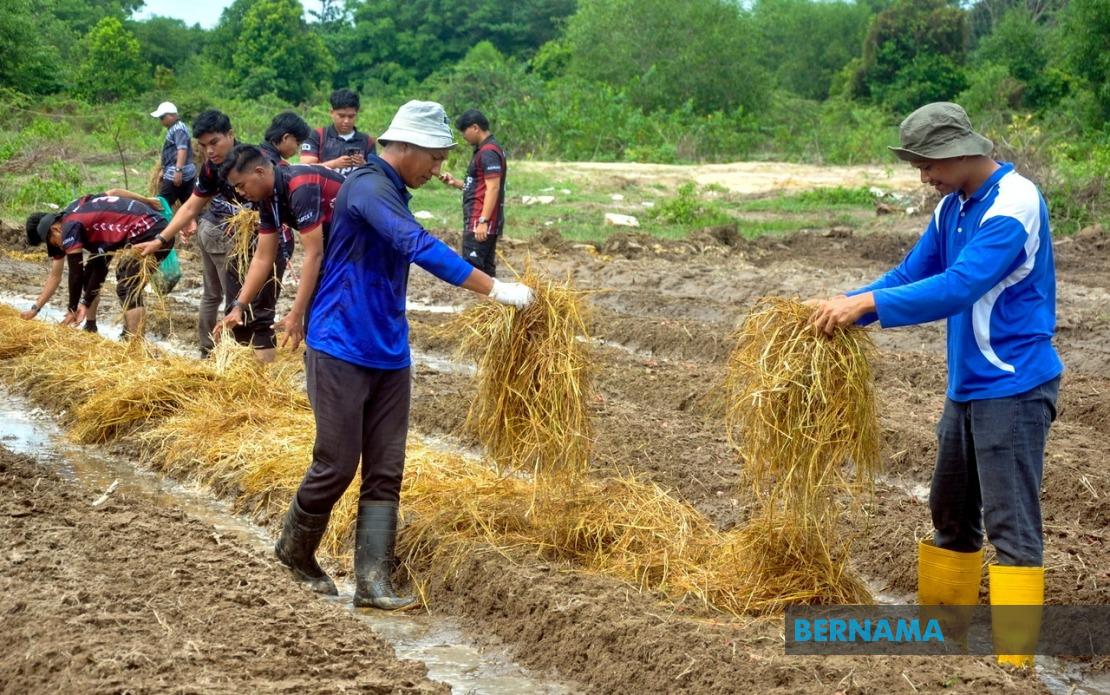
Agricultural vocational training graduates in Malaysia are finding employment at higher rates than ever before, with official data showing the employment rate has risen substantially over the past six years. The Ministry of Agriculture and Food Security released findings showing that 76 per cent of Technical and Vocational Education and Training (TVET) graduates in the agricultural sector secured jobs in 2024, marking a significant improvement from the 61 per cent rate recorded in 2018. Despite this upward trajectory, the figure still falls short of the national TVET average of 95 per cent, suggesting that the agricultural sector faces distinct challenges in absorbing its trained workforce compared to other vocational fields.
The Graduate Outcomes of Agricultural TVET in Malaysia report, unveiled during a stakeholder engagement session in Putrajaya, emerged from collaboration between the Ministry of Agriculture and Food Security and PNB Research Institute. The research partnership, formalized through a memorandum of understanding in September 2025, aims to strengthen agricultural vocational education while generating evidence to support long-term food security planning. By examining comprehensive Ministry data spanning multiple years, researchers traced employment patterns, income trajectories, and entrepreneurial outcomes for graduates who completed agricultural TVET programmes, providing policymakers with granular insights into how Malaysia's farm sector is deploying its trained workforce.
One particularly encouraging finding relates to income prospects for those who remain in agriculture. Graduates who pursued careers within the agricultural sector earned an average of RM100 more per month compared to their peers who took employment outside farming and agribusiness. The advantage extends further for those pursuing entrepreneurial ventures: agro-entrepreneurs demonstrated notably higher incomes than graduates operating non-agricultural businesses. This data challenges persistent narratives about agriculture as a low-wage sector and suggests that, for vocational graduates willing to engage with modern farm enterprise, the financial returns can be competitive with alternative career paths.
Yet beneath these encouraging statistics lies a structural challenge that threatens Malaysia's food production and rural livelihoods. The agricultural workforce has skewed dramatically towards older workers, with roughly one in two farm workers now aged 40 years or above. Over the past decade, youth participation in farming and agribusiness has declined consistently, pointing to cultural shifts and opportunity costs that vocational education alone cannot resolve. This demographic trajectory creates urgency: as the existing workforce ages toward retirement, without substantially increased youth engagement, Malaysia faces potential disruptions to agricultural productivity and supply chains.
Geographic distribution of agricultural TVET graduates reveals another dimension of the employment puzzle. Sabah has emerged as the regional leader in concentrating such graduates, accounting for 15 per cent of the national total, trailed by Kedah at 14 per cent and Sarawak at 13 per cent. Conversely, established agricultural powerhouses such as Johor, Pahang, and Perak—traditionally Malaysia's breadbasket regions—remain underrepresented in graduate placement data. This geographic mismatch suggests that either vocational training infrastructure in major agricultural states requires expansion, or that graduates trained in these regions are pursuing opportunities elsewhere, indicating potential inefficiencies in matching skills to regional economic needs.
In response to these findings, the Ministry outlined a six-point policy framework intended to address employment and engagement gaps. First, programme expansion should be calibrated to specific state requirements rather than deployed uniformly, recognizing that Johor faces different agricultural dynamics than Sabah. Second, institutional success metrics must be redefined to centre on agriculture-relevant outcomes, moving beyond generic TVET completion benchmarks. Third, entrepreneurship support systems should be strengthened to mitigate the business risks that deter graduates from establishing agricultural enterprises. Fourth, all vocational curricula should embed entrepreneurial literacy and market awareness, equipping students not merely for employment but for economic agency.
Fifth, educational providers must expand exposure to entire value chains, helping graduates understand how farms connect to processing, marketing, logistics, and retail. This systems-level knowledge encourages graduates to identify opportunities beyond primary production and fosters appreciation for agribusiness complexity. Sixth, the framework emphasizes industry collaboration, recognizing that employers, agricultural associations, and agritech companies must partner with training institutions to shape programmes responsive to actual labour market demand. These policy directions address the gap between vocational training supply and labour market reality.
The Ministry's findings have been integrated into national strategic frameworks. In June 2024, the National Technical and Vocational Education and Training Council, chaired by Deputy Prime Minister Datuk Seri Dr Ahmad Zahid Hamidi, received the study findings at its meeting. These outcomes now inform implementation of the National Food Security Policy 2030 and the National Agro-Food Policy 2021-2030 (DAN 2.0), anchoring agricultural TVET development within broader food security and agricultural modernization agendas. This positioning underscores the government's recognition that vocational training represents a critical lever for achieving self-sufficiency in staple food production while creating rural employment.
For Malaysia's agricultural sector, the implications are significant. The 15-percentage-point gap between agricultural TVET employment (76 per cent) and the broader TVET average (95 per cent) reflects systemic friction points that mere programme expansion cannot resolve. The sector must compete not only with manufacturing and services for graduate talent but also address entrenched perceptions of farming as undesirable work. Rising agro-entrepreneur incomes and documented earnings premiums for agricultural workers offer potential marketing angles for recruitment campaigns, yet financial incentives alone have historically proven insufficient to reverse decades of rural-to-urban migration.
The geographic concentration of graduates in Sabah, Kedah, and Sarawak, while underrepresentation in Johor and Pahang, suggests opportunities for strategic rebalancing. Established agricultural states could leverage stronger institutional partnerships to attract graduate talent, and vocational institutions in these regions might partner with agritech firms and export-oriented producers to demonstrate career advancement pathways. Additionally, the skill sets valued in modern agriculture—data analytics for precision farming, supply chain management, export market navigation—differ markedly from traditional farming knowledge, and curricula should reflect this transition.
As Malaysia confronts food inflation, supply chain vulnerabilities, and the impending retirement of aging farm workers, agricultural TVET serves as a critical infrastructure for resilience. The 76 per cent employment figure represents progress, yet the 19-percentage-point shortfall against the national TVET benchmark underscores work ahead. Success will require sustained commitment to the six policy directions, authentic industry-education collaboration, and candid examination of why agriculture fails to capture the same graduate engagement as other sectors despite documented income competitiveness and strategic importance to national security.

