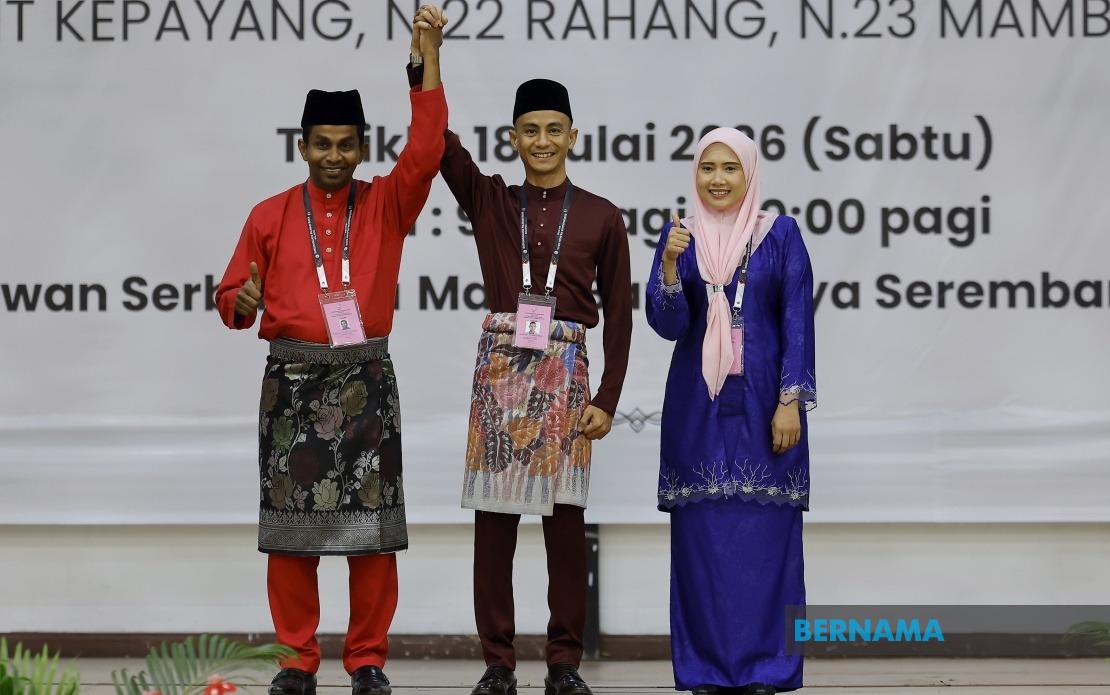
The 16th Negeri Sembilan state election is shaping up to be a competitive battle in Labu, where PKR's Datuk Ahmad Faez Abdul Razak is making his electoral debut on behalf of Pakatan Harapan. Speaking after nomination proceedings in Seremban, the property developer articulated a vision of steering the fast-growing constituency through a delicate equilibrium between economic expansion and safeguarding residents' interests, signalling PH's determination to wrest back a seat lost in 2023.
Ahmad Faez's entry into electoral politics carries personal intensity. He acknowledged the emotional weight of his first election campaign, describing himself as simultaneously excited and anxious about the prospect. Yet he radiates confidence drawn from nearly three years of ground engagement across Labu's 32,884 registered voters. That extended period of community interaction, he believes, has cultivated sufficient public goodwill to reverse PH's previous setback in this constituency.
The incumbent assemblyman, Mohamad Hanifah Abu Baker, won the seat in the 2023 election representing Bersatu and Berjaya Nasional with a slender 1,640-vote majority. He defeated PKR's Datuk Ismail Ahmad, who garnered 10,021 votes. This tight margin suggests the seat remains genuinely competitive, though the appearance of Barisan Nasional's Siti Nur Umaira Hasim creates a three-way contest that could fracture opposition support. The race has intensified as Ahmad Faez seeks to consolidate scattered pro-PH votes and convert undecided voters.
Ahmad Faez's policy platform centres on addressing gaps in youth amenities. He proposes constructing a dedicated community centre and recreational hub for young people, framing this as essential infrastructure missing from the constituency's current offerings. This focus reflects broader demographic concerns across Negeri Sembilan and aligns with national priorities around youth engagement and retention in developing areas. By targeting this specific demographic, Ahmad Faez hopes to mobilise younger voters and address concerns about quality-of-life provisions beyond mere economic opportunity.
Leveraging his background in property development, Ahmad Faez positions himself as uniquely equipped to navigate Labu's transformation. The constituency straddles the Malaysia Vision Valley (MVV) development corridor, a sprawling 11,000 to 12,000-hectare zone designated for industrial and residential expansion. This geographical advantage promises employment generation and economic dynamism but also threatens the lifestyle disruption and environmental strain that often accompany rapid urbanisation. Ahmad Faez frames his candidacy as offering the expertise to capture MVV's economic benefits whilst preserving community cohesion and quality of life.
The Malaysia Vision Valley project represents one of Negeri Sembilan's most significant infrastructure initiatives, positioning Labu within a strategic economic zone of national importance. For Malaysian readers in similar constituencies facing accelerated development, Ahmad Faez's candidacy illustrates how election campaigns increasingly pivot on managing growth rather than opposing it outright. The challenge, as he articulates it, lies not in constraining development but in ensuring its distribution of benefits includes grassroots residents rather than external investors alone.
Ahmad Faez credits the Negeri Sembilan government's alignment with federal Pakatan Harapan policies as building public confidence in the current administration, suggesting that state-level electoral outcomes depend partly on voters' satisfaction with PH's broader governance record. This framing links Labu's ballot to the performance of PH's federal administration and Negeri Sembilan's state government, making this contest a referendum on incumbent performance at multiple levels of government.
The electoral mechanics favour competitive campaigns. With 32,869 ordinary voters and 15 police personnel plus spouses, the constituency contains just over 32,000 voters—a manageable size for intensive grassroots mobilisation. Ahmad Faez's extended presence in the community provides a structural advantage compared to candidates parachuted into constituencies days before elections. Early voting occurs on July 28, with polling day set for August 1, compressed timelines that reward pre-existing ground operations and community familiarity.
The Labu race illustrates broader Southeast Asian political dynamics wherein development management becomes central to electoral competition. Both Ahmad Faez's candidacy and the MVV corridor investment reflect how constituencies in developing nations increasingly define electoral stakes through infrastructure, employment, and community facility provision rather than ideological positioning alone. For PH, retaking Labu would reverse 2023's setback and chip away at BN's resilience in Negeri Sembilan. For Ahmad Faez, election night will determine whether his three-year community investment translates into sufficient voter mandate to implement his development-balancing vision.

