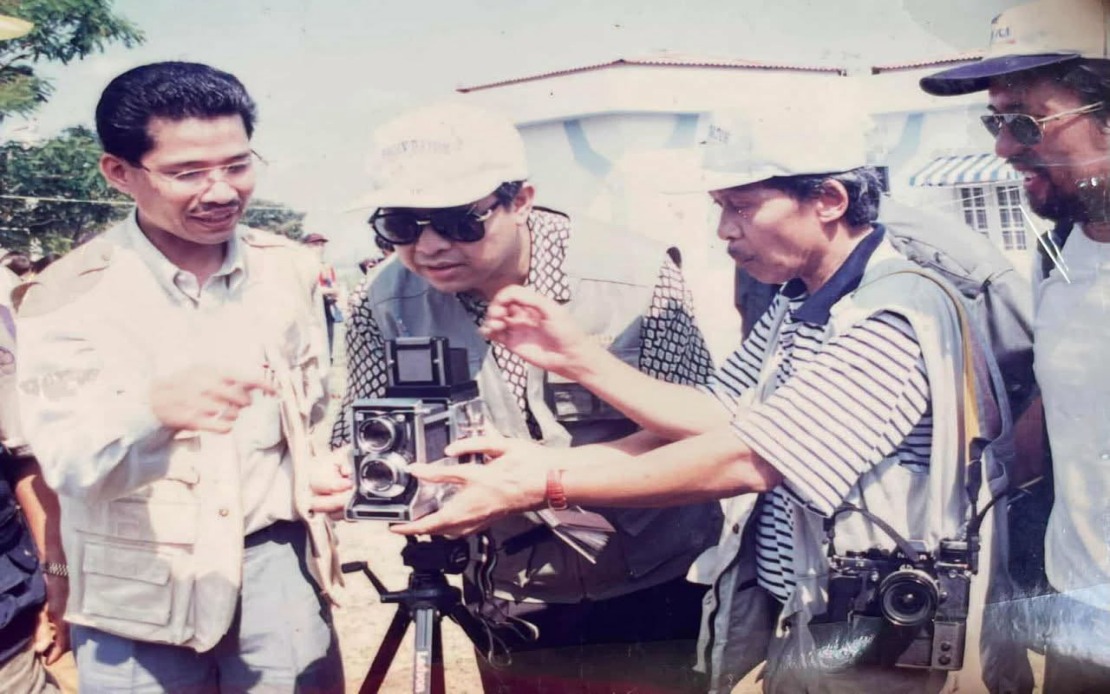
Deputy Prime Minister Datuk Seri Dr Ahmad Zahid Hamidi has extended warm greetings to the global photography community as the world marks World Photography Day 2026, underscoring the profession's indispensable role in documenting human experiences and creating lasting records of our shared history.
In his tribute, Ahmad Zahid cast a wide net across the photography landscape, recognising that the craft extends far beyond professional practitioners. His acknowledgment encompasses media photographers who work in demanding news environments, event photographers who document corporate functions and celebrations, and the informal family photographers who capture candid moments during gatherings—each group contributing distinctly to how we preserve and understand our lives.
The Deputy Prime Minister's remarks reflect a deeper appreciation for photography's multifaceted value in contemporary society. Professional photographers operate within structured commercial frameworks, bringing technical expertise and artistic vision to their assignments. Media photographers, by contrast, operate under time pressures and ethical constraints, tasked with conveying truth and immediacy through their lens. Event photographers serve the crucial function of memorialising celebrations and milestones that families and organisations wish to preserve. Yet the informal family photographer, often wielding nothing more than a smartphone, plays an equally vital role in maintaining personal and domestic histories.
Ahmad Zahid's observation that photographs serve multiple purposes resonates across Malaysian and Southeast Asian societies, where visual documentation has become increasingly democratic and accessible. Some photographs remain private treasures, kept in albums or digital folders, accessed only by those closest to us. Others achieve wider circulation through framing and display in homes and offices, becoming conversation pieces and identity markers within households. Still others transcend their original context entirely, evolving into historical documents that scholars, journalists, and future generations consult to understand past eras, social conditions, and cultural practices.
The temporal dimension that Ahmad Zahid emphasises—the notion that today's images become tomorrow's memories—carries particular significance in an age of digital proliferation. The ease with which photographs can now be captured, stored, and shared contrasts sharply with earlier eras when photography required technical knowledge, expensive equipment, and deliberate intention. Yet this democratisation has not diminished the craft's essential nature; if anything, it has amplified the importance of thoughtful image-making in an ocean of visual content.
The act of photography itself demands a particular skill set that Ahmad Zahid implicitly acknowledges: the photographer must observe their surroundings with heightened awareness, anticipate moments before they fully materialise, and exercise judgment about the precise instant to activate the camera. This convergence of perception, timing, and decision-making occurs in compressed timeframes—sometimes mere fractions of a second separate a compelling image from a missed opportunity. The result of this brief moment of creative action can reverberate across decades, providing visual testimony to events, emotions, and conditions that might otherwise fade from collective memory.
For Malaysia and the broader Southeast Asian region, photography has played a crucial documenting role throughout recent history. Images have captured moments of national significance, from independence celebrations to contemporary political events. They have documented social change, economic development, cultural traditions, and the everyday lives of ordinary citizens. In an era when misinformation spreads rapidly, the photographic record—when created with integrity and preserved carefully—serves as an important counterweight, offering visual evidence against revisionist narratives.
The photography community in Malaysia encompasses diverse practitioners working across commercial, journalistic, artistic, and personal domains. Professional associations and educational institutions support the continued development of photographic practice. Digital technology has transformed workflows and accessibility, yet the fundamental principles of composition, lighting, and storytelling remain as relevant as ever. World Photography Day provides an opportunity for this diverse community to reflect on shared values and the collective impact of their work.
Ahmad Zahid's message carries an implicit encouragement for continued engagement with photography as both practice and appreciation. In directing his tribute to "all of you," he extends recognition not only to those who consider themselves photographers professionally but also to anyone who has experienced the satisfaction of capturing a meaningful moment. This inclusive framing acknowledges photography's role as both specialist craft and universal human activity.
The preservation function that Ahmad Zahid highlights takes on additional urgency in contemporary Malaysia, where rapid urbanisation, demographic shifts, and technological change continuously reshape the social landscape. Photographs serve as anchors to vanishing ways of life, endangered architectural heritage, and evolving cultural practices. They provide visual continuity across generations, allowing younger Malaysians to connect with the experiences and environments of their predecessors. As digital formats increasingly replace physical photographs, questions of preservation, archiving, and digital longevity become pressing concerns for institutions and families alike.
The Deputy Prime Minister's decision to mark World Photography Day reflects broader governmental recognition of cultural and creative industries in Malaysia. Photography sits at the intersection of art, technology, commerce, and documentation, contributing to economic activity, cultural expression, and civic engagement. Official acknowledgment of photography's significance by senior political figures helps elevate the profession's status and encourages investment in training, infrastructure, and support systems.
Ahmad Zahid's call to photographers to "keep capturing every moment" encapsulates an optimistic vision of photography's ongoing importance. Whether through professional assignment, journalistic obligation, or personal passion, photographers continue to generate the visual record through which societies understand themselves and communicate with others. The images created today will indeed become the documentary evidence and emotional touchstones of tomorrow, serving future researchers, historians, and individuals seeking to reconnect with their heritage and understand their place within broader historical narratives.

