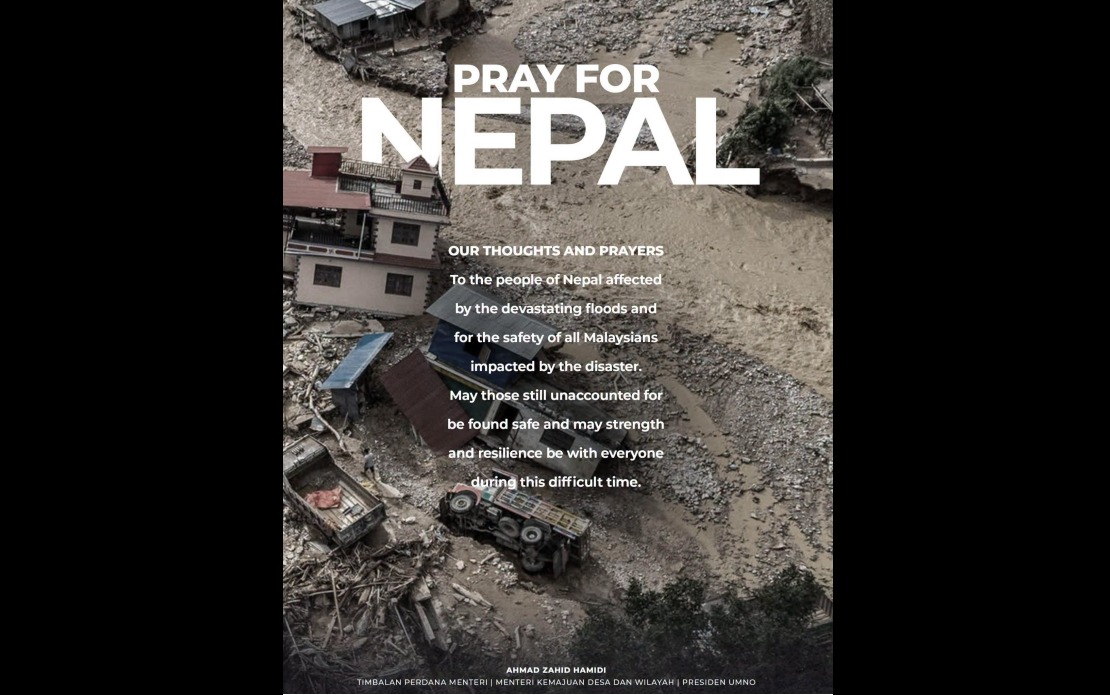
Deputy Prime Minister Datuk Seri Dr Ahmad Zahid Hamidi has issued a statement of grave concern regarding the welfare of Malaysian nationals impacted by the catastrophic flooding that has swept through Nepal, offering his hopes that those currently missing will be located and restored to their families. In his message released through social media on Wednesday, Ahmad Zahid extended sympathies to bereaved families while affirming Malaysia's solidarity with the affected nation.
The scale of the humanitarian crisis unfolding in Nepal has prompted official Malaysian government attention at the highest levels. According to Nepal's tourism board, the confirmed death toll had risen to 359 as of Thursday evening local time, making this one of the most severe natural disasters to strike the mountainous nation in recent years. The flash floods have not only claimed lives but have also caused extensive displacement and infrastructure damage across multiple regions.
In his public statement, Ahmad Zahid conveyed the emotional weight of the situation, acknowledging the profound grief experienced by families who have lost relatives in the flooding. He specifically highlighted the anguish of households still waiting for word of missing family members, recognising the uncertainty and anxiety that characterises such situations. The Deputy Prime Minister's intervention underscores how Malaysian officials are treating this incident with appropriate urgency, particularly given the significant number of Malaysian nationals who travel to and reside in Nepal for tourism, education, and business purposes.
The prayer for successful search and rescue operations reflects Malaysia's understanding of the critical window for locating survivors in flood situations. Flash floods are particularly dangerous because of their sudden onset and tremendous force, often catching people with minimal warning. Rescue teams working in Nepal face considerable challenges given the difficult terrain, damaged communication infrastructure, and the scale of the affected areas. International cooperation and resource coordination become essential in such circumstances, and countries with citizens in the disaster zone often engage with international humanitarian frameworks to support relief efforts.
Ahmad Zahid's message also carried a broader spiritual dimension, asking for resilience and strength for affected families in the aftermath of the tragedy. This reflects the cultural and religious values that typically inform Malaysian diplomatic responses to natural disasters affecting other nations. The statement represents not merely official condolence but an expression of shared humanity and empathy across borders, recognising that natural disasters transcend national boundaries and affect vulnerable populations regardless of origin.
The floods in Nepal typically occur during monsoon seasons when heavy rainfall can trigger rapid water flows in mountain valleys and river systems. The country's geography, with its steep terrain and complex river networks, makes it particularly susceptible to such events. Climate patterns and rainfall intensity in recent decades have contributed to increasingly severe flooding incidents across South Asia, a trend that meteorological services and disaster management agencies across the region have been documenting with growing concern.
For Malaysia specifically, this incident serves as a reminder of the interconnectedness of Southeast Asia with the broader South Asian region. Thousands of Malaysians work, study, and travel throughout Nepal annually, particularly in tourism-related sectors and educational institutions. When major disasters strike in such countries, Malaysian diplomatic missions and consular services must rapidly mobilise to account for nationals, provide assistance where possible, and coordinate with local authorities. The Foreign Ministry and relevant agencies typically establish hotlines and provide updates to concerned families during such emergencies.
The response from Ahmad Zahid also sets a tone for institutional action across government agencies. When the Deputy Prime Minister publicly acknowledges a crisis affecting Malaysian nationals, it typically prompts coordinated responses from the Foreign Ministry, consular offices, and humanitarian agencies. This includes verifying the status of registered citizens, providing financial or logistical support through embassies, and facilitating communication between stranded Malaysians and their families back home. Such coordination becomes especially important in the immediate aftermath of disasters when information flow is chaotic and resources are stretched thin.
Beyond the immediate humanitarian concerns, Nepal's tourism sector faces significant challenges from such natural disasters. The flooding impacts iconic trekking routes, hotels, transportation networks, and local communities that depend heavily on visitor spending. For Malaysian tourists who frequently visit Nepal for adventure tourism and cultural experiences, these disruptions affect travel plans and highlight the inherent risks of travel to mountainous regions during monsoon seasons. Travel insurance and pre-trip planning become increasingly important for those considering visits to Nepal during high-risk weather periods.
The international dimension of this disaster also reflects Malaysia's broader role in promoting regional stability and humanitarian cooperation. By expressing concern and solidarity, Ahmad Zahid signals Malaysia's commitment to supporting neighbouring countries through crises. Such statements often precede tangible assistance, whether through donations, expert personnel, or diplomatic advocacy for increased international support. Nepal's recovery efforts will likely benefit from coordinated assistance across multiple countries, with each nation contributing according to its capacities and capabilities.
As rescue operations continue and the full extent of the disaster becomes clearer, Malaysian authorities will likely provide updates on any citizens requiring assistance. The experience underscores the importance of robust consular services, maintained communication channels between embassies and nationals abroad, and international disaster response protocols that have been developed through regional cooperation frameworks. For Malaysians considering travel or work in high-risk regions, such incidents serve as sobering reminders of the need for careful planning and appropriate precautions.

