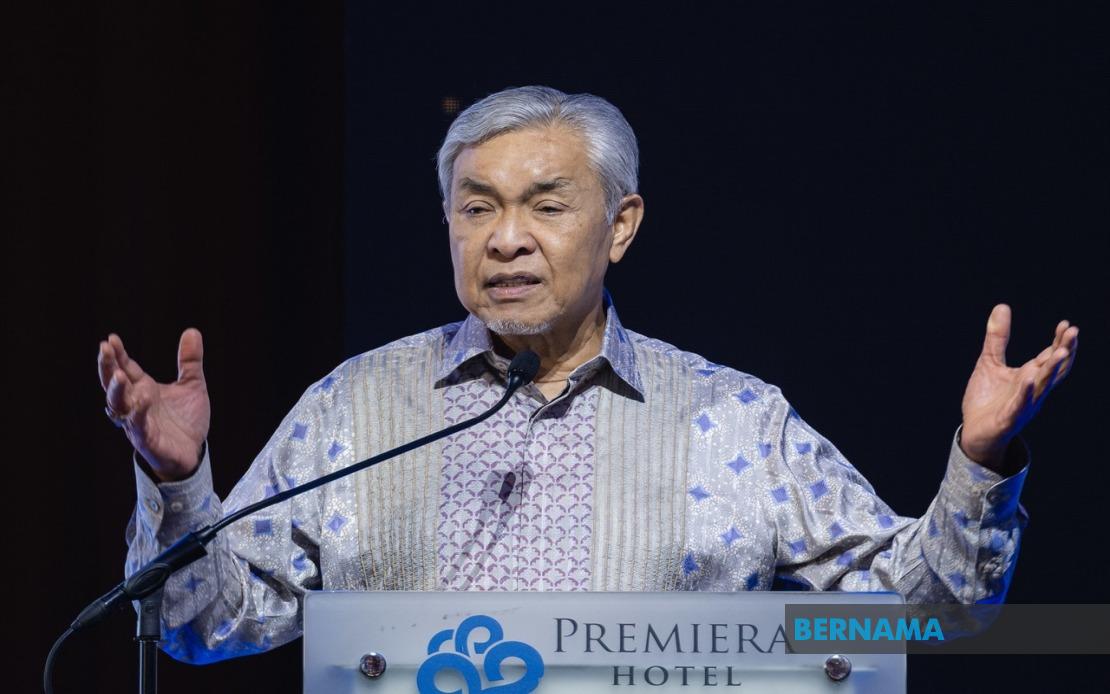
Deputy Prime Minister Datuk Seri Dr Ahmad Zahid Hamidi has signalled that proposals for constructing new rural roads across Sabah and Sarawak will receive consideration during the Budget 2027 formulation process. Speaking after attending the Ministry of Rural and Regional Development's annual awards ceremony in Kuala Lumpur, Ahmad Zahid, who also oversees the portfolio, underscored the government's commitment to addressing connectivity gaps in areas that currently lack adequate access to major urban centres and established settlements throughout East Malaysia.
The undertaking reflects a broader prioritisation within government circles to tackle persistent infrastructure deficits in remote communities. Ahmad Zahid outlined that the Ministry of Rural and Regional Development has established road construction as a core responsibility, with the explicit mandate of bridging geographical divides between isolated areas and population centres. This positioning ensures that connectivity initiatives remain aligned with the ministry's strategic objectives rather than being fragmented across multiple departments with competing priorities.
Despite the constructive signal, Ahmad Zahid cautioned that any new infrastructure projects will ultimately need to navigate the established approval mechanisms. Both the Ministry of Finance and the Public Works Department maintain regulatory oversight of such proposals, meaning that inclusion in the budget framework represents only one step in a longer implementation journey. The existence of these gatekeeping processes reflects broader fiscal discipline requirements, particularly given Malaysia's ongoing commitment to maintaining fiscal prudence while managing competing developmental demands across the federation.
The ministry intends to refine its proposals through extensive consultations with stakeholders before formally submitting them for budgetary consideration. This consultation phase carries significance for rural communities in Sabah and Sarawak, as input from local authorities, community leaders, and infrastructure specialists can shape how projects are conceived and ultimately executed. The thoroughness of this engagement process may ultimately determine whether projects genuinely address the most critical connectivity shortfalls or reflect broader political considerations.
Beyond the immediate announcement regarding road infrastructure, Ahmad Zahid articulated a philosophical reorientation for his ministry during the awards ceremony. He introduced what he termed a "new discipline," fundamentally challenging existing programme structures within the Ministry of Rural and Regional Development. This framework demands ruthless evaluation: initiatives demonstrating tangible community impact must be expanded; those progressing sluggishly require acceleration or restructuring; and programmes failing to deliver measurable benefits must face either improvement or termination. This approach signals departure from traditional bureaucratic conservatism toward results-oriented governance.
The Deputy Prime Minister's emphasis on outcomes rather than process reflects international development thinking that has gradually influenced Malaysian policy discourse. For rural communities in Sabah and Sarawak, this philosophical shift carries practical implications. Infrastructure projects may face heightened scrutiny regarding their actual impact on livelihoods rather than mere completion metrics. Road construction, for instance, would be evaluated not simply by kilometres completed but by tangible improvements in market access, emergency response times, and economic opportunities for residents.
Ahmad Zahid expanded his vision beyond infrastructure alone, articulating that rural development must evolve into ecosystem creation. This conceptualisation moves beyond the traditional infrastructure-centric approach that dominated earlier development phases. Instead, road construction should catalyse broader economic transformations—enabling rural enterprises to reach markets, attracting investment to previously isolated communities, and facilitating knowledge transfer between urban and rural areas. For East Malaysian states particularly, where geographic isolation has historically constrained economic diversification, this ecosystemic perspective offers potential for more holistic development outcomes.
The minister's prescription for public service reform within the rural development sector addresses a critical implementation challenge. He contended that transitioning from manual to digital systems, while necessary, represents only superficial modernisation. Genuine reform requires fundamental mindset shifts among civil servants—specifically, the willingness to make decisive choices and embrace change despite institutional inertia. This diagnosis suggests that past infrastructure projects may have faltered not due to budgetary constraints but due to implementation delays, unclear accountability, or resistance to innovative delivery mechanisms.
Ahmad Zahid's call for continuous learning, innovation, and ethical conduct among ministry personnel addresses recurring governance challenges. Sabah and Sarawak have experienced instances where development projects suffered from delays, cost overruns, or quality compromises. By emphasising lifelong learning and accountability, the minister implicitly acknowledges these historical shortcomings and signals intent to remedy them through personnel development rather than structural reorganisation alone. This approach recognises that infrastructure quality ultimately depends upon the competence and commitment of implementing officials.
For Malaysian readers in East Malaysia specifically, the announcement carries dual significance. Immediate interest centres on whether specific road projects in their constituencies might gain budget allocation in 2027. However, the broader policy directions outlined—emphasising impact, ecosystem development, and reformed implementation practices—suggest that even successful budget inclusion would not guarantee smooth execution. The consultation phase now underway offers a critical window for communities to articulate their infrastructure priorities in ways that align with the government's stated evaluation criteria.
The timing of this announcement relative to Budget 2027's development schedule suggests that groundwork for formal inclusion is already advancing. Ministries typically begin preliminary planning many months before budget submission, implying that Ahmad Zahid's statement reflects genuine initiatives under internal evaluation rather than speculative political positioning. This timeline offers communities in Sabah and Sarawak reasonable expectation that projects currently under ministerial consideration could materialise, provided they survive the upcoming consultation and approval processes.
The broader context for rural infrastructure investment in Malaysia involves competition across regions for limited budgetary resources. While Sabah and Sarawak contain significant portions of Malaysia's rural population, Peninsular Malaysia equally competes for allocation. Ahmad Zahid's prominent emphasis on East Malaysian road projects suggests political recognition of these states' infrastructure deficit and perhaps acknowledgement that previous allocations inadequately addressed regional disparities in connectivity. Whether this translates into substantial budget allocation, however, depends upon fiscal circumstances and competing priorities that will emerge during the 2027 budget cycle.

