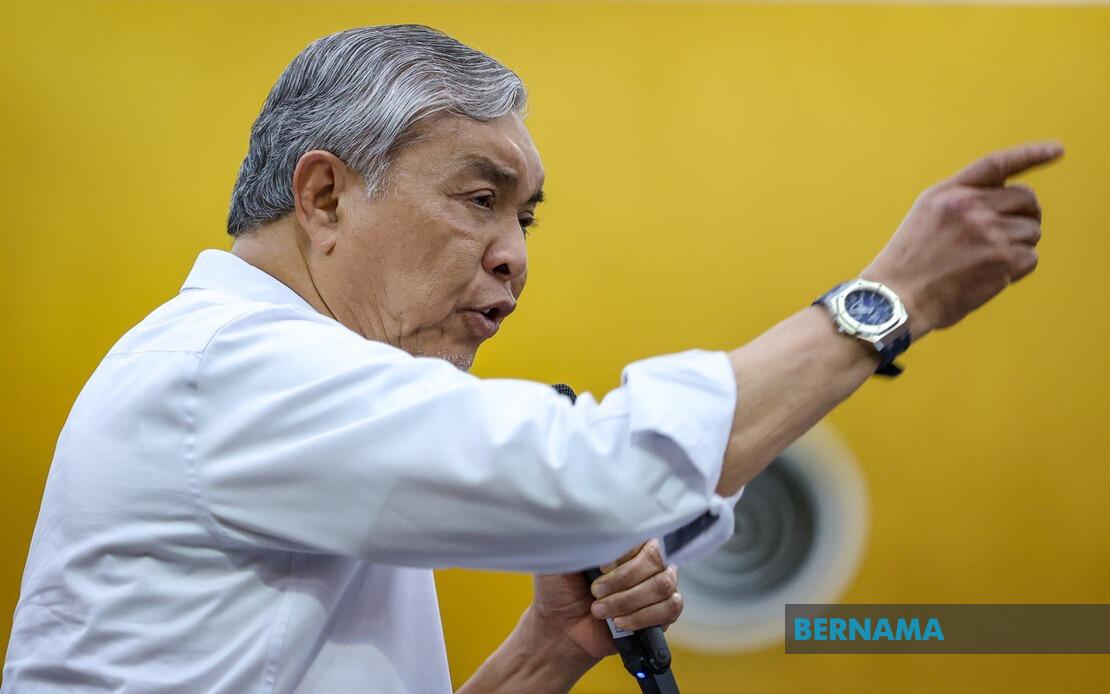
Deputy Prime Minister Datuk Seri Dr Ahmad Zahid Hamidi has called for Student Representative Councils at universities and colleges across Malaysia to participate in structured programmes focused on leadership development and political education. Speaking in Johor Bahru on July 9, the Barisan Nasional chairman argued that such initiatives would equip the nation's emerging youth leaders with a more sophisticated grasp of democratic institutions and the evolving political terrain they will inherit.
The initiative reflects growing concern among senior government figures about the political literacy of younger voters, particularly as Malaysia's electoral landscape continues to shift. Ahmad Zahid framed the proposal not as compulsory political indoctrination but rather as essential preparation for informed citizenship. He emphasised that young people needed to understand the mechanics and complexities of national politics, regardless of whether they ultimately pursued active party involvement.
According to Ahmad Zahid, the federal government stands ready to finance these educational programmes provided the student councils themselves request such support. The arrangement would require sign-off from Higher Education Minister Datuk Seri Dr Zambry Abd Kadir, introducing a gatekeeping mechanism that ensures proposals align with broader tertiary education policy. This conditional funding approach suggests the government views the initiative as potentially sensitive, requiring careful coordination across multiple ministry portfolios.
The Deputy Prime Minister drew on his own formative experience as a student leader at Universiti Malaya to illustrate how early exposure to political engagement can shape career trajectories. His personal trajectory from campus activist to senior cabinet rank carries implicit endorsement of student political participation, yet he was careful to distinguish between encouraging political awareness and expecting universal involvement. Ahmad Zahid stressed that voting-age citizens need not become party members or active participants, but they must develop sufficient understanding to exercise their franchise responsibly.
This framing addresses a persistent tension in Malaysian political discourse: the desire to cultivate informed democratic participation without appearing to push young voters toward particular ideological or partisan positions. By positioning political education as universal civic competency rather than recruitment, Ahmad Zahid attempted to preempt criticism that government-funded programmes might amount to covert campaign machinery targeting impressionable minds. The emphasis on equipping students to "help shape the nation's future political landscape" invoked aspirational language about youth agency while remaining safely abstract about specific outcomes.
The timing of Ahmad Zahid's remarks proved significant, arriving amid the Johor state election campaign with polling scheduled for the Saturday following his statement. The fifty-six state seats contested in that ballot represented a crucial test of Barisan Nasional's standing in the crucial southern state, and proposals affecting youth engagement naturally carried electoral implications. Whether intentional or not, the announcement contributed to the broader campaign narrative about which coalition could best nurture the next generation of national leaders.
The proposal speaks to deeper anxieties about youth disengagement from formal political structures across Southeast Asia. Malaysia's student movement history includes episodes of vibrant campus activism, yet contemporary university politics often struggles to maintain prominence relative to social media-driven activism and single-issue movements. By offering funded educational pathways, the government sought to reintegrate student councils into coherent national political conversations, potentially offsetting alternative sources of political socialisation that might not align with establishment narratives.
Ahmad Zahid's emphasis on young voters making "informed choices" implicitly acknowledged dissatisfaction with existing levels of political understanding among first-time electors. The concern that voters might "waste" their ballot through inattention or apathy suggested government research had identified susceptibility to poor decision-making among youth cohorts. Educational intervention thus became framed as protecting democratic integrity by ensuring citizens exercised their rights thoughtfully rather than capriciously.
The proposal also reflected a strategic recognition that Student Representative Councils, despite fluctuating influence, retain symbolic importance as formal channels for youth representation within institutional structures. Rather than attempting to revive declining student activism through other means, the government offered partnership with existing bodies, respecting their autonomy while extending resources. This approach preserved institutional legitimacy that more heavy-handed intervention might have compromised.
For Malaysian universities and their student communities, the initiative represented both opportunity and potential pitfall. Councils accepting government funding would gain resources to enhance programming and speaker access, yet would necessarily navigate perceptions of compromise or co-optation. Declining funding, conversely, would require defending that choice to members seeking expanded activities. The conditional nature of the offer meant that true student leadership autonomy remained qualified, a dynamic reflecting broader tensions between institutional governance and youth autonomy across the region.
The proposal's success would ultimately depend on implementation details: curriculum content, speaker selection, institutional safeguards against partisan capture, and genuine openness to critical perspectives on Malaysian politics. Ahmad Zahid's framing suggested government confidence that political education, properly structured, would reinforce rather than undermine establishment legitimacy. Whether that optimism proved justified would reveal much about the depth and brittleness of contemporary Malaysian democratic consensus.

