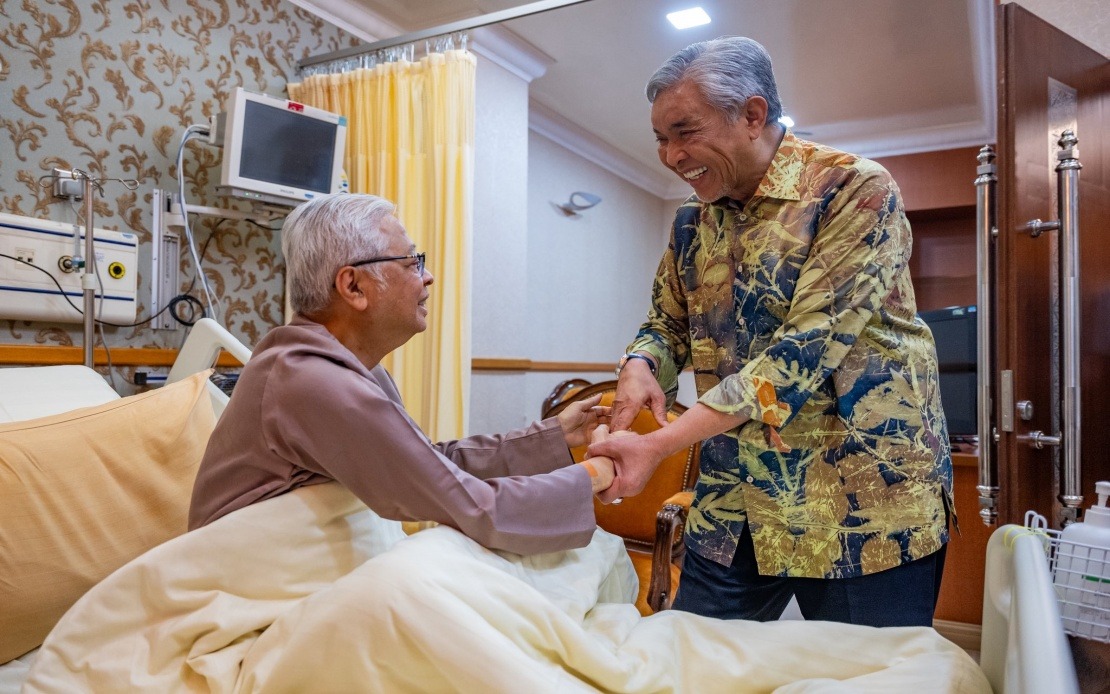
Deputy Prime Minister Datuk Seri Dr Ahmad Zahid Hamidi made a visit to the National Heart Institute (IJN) in Kuala Lumpur to check on former Prime Minister Datuk Seri Ismail Sabri Yaakob, who is currently undergoing medical treatment at the facility. The gesture reflects continued solidarity within the political establishment despite the turnover in leadership roles, with Ahmad Zahid publicly sharing his well-wishes through social media.
In his statement posted on social media platform X, Ahmad Zahid extended prayers for Ismail Sabri's complete recovery and restored health. The Deputy Prime Minister expressed hopes that the former leader would regain full strength and be able to resume his normal daily responsibilities and parliamentary duties as the Bera Member of Parliament. His remarks underscored the significance of Ismail Sabri's return to active public service in the eyes of senior government officials.
Ismail Sabri's hospitalisation began unexpectedly on August 6 when he experienced acute health complications while at the Malaysian Anti-Corruption Commission (MACC) headquarters for a scheduled statement recording session. The sudden onset of symptoms necessitated immediate medical intervention, and he was promptly transported to IJN for specialist cardiac assessment and treatment.
Upon arrival at the institute, medical specialists determined that Ismail Sabri required an interventional procedure to address an underlying cardiac rhythm disorder. He subsequently underwent implantation of a wireless pacemaker, a minimally invasive cardiac device designed to regulate abnormal heart rhythms and ensure proper cardiac function. Such procedures represent standard modern treatment for patients with specific arrhythmia conditions, allowing individuals to maintain functional independence with appropriate medical monitoring.
The timing of Ismail Sabri's health episode coincided with his appearance before the MACC, an institution that has maintained investigations into various political figures in recent years. His sudden medical situation at the anti-corruption body's premises drew immediate attention across Malaysia's political and media landscape. The incident highlights the unpredictable nature of health crises and their potential to interrupt governmental and institutional proceedings.
Ismail Sabri's tenure as Prime Minister from August 2021 to August 2022 represented a significant period in Malaysia's recent political history, marked by navigating the coalition complexities of the Barisan Nasional government during challenging economic and pandemic-related circumstances. Since stepping down from the top post, he has continued to maintain his parliamentary presence as a senior member of the ruling coalition.
The visit from Ahmad Zahid carries symbolic importance within Malaysia's political framework, demonstrating that despite the competitive dynamics inherent in high-level government positions, senior leaders maintain personal courtesies and concern for one another during health crises. Such gestures have historically been observed across different political administrations, transcending factional divisions.
Ismail Sabri's recovery trajectory will be monitored closely by both the medical team at IJN and political observers, given his continuing relevance to parliamentary affairs and ongoing public responsibilities. The implantation of a wireless pacemaker typically allows patients to resume normal activities within a reasonable recovery period, provided they adhere to medical recommendations and undergo appropriate follow-up monitoring.
The incident also underscores the demanding nature of Malaysia's highest political offices and the stress associated with simultaneous involvement in both active governance and institutional inquiries. The convergence of Ismail Sabri's MACC appearance and subsequent health emergency serves as a reminder of the intensive pressures facing former and current government officials navigating Malaysia's complex political environment.
Ahmad Zahid's public acknowledgement of his hospital visit and his formal prayers for Ismail Sabri's recovery reflect established diplomatic protocols within Malaysian political culture, where maintaining respectful relationships across leadership transitions remains valued. Such actions also signal to the broader public that health crises transcend political divisions and warrant genuine concern from senior government figures.

