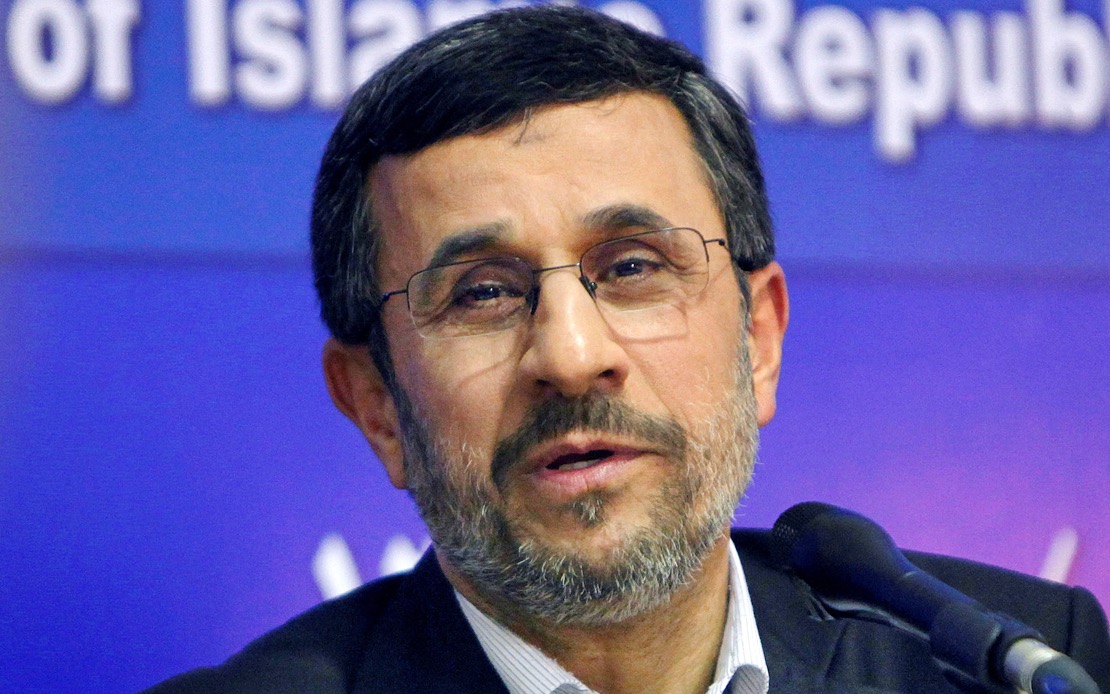
Former Iranian President Mahmoud Ahmadinejad moved swiftly to refute allegations published by The New York Times, issuing a formal statement through his office on Tuesday that dismissed claims of contact with Israel's Mossad intelligence agency as wholly untrue. The rejection came after the American newspaper reported that the spy agency had attempted in recent years to recruit the ex-president and secure his cooperation, viewing him as a potential successor to lead Iran following what the report characterised as Israeli efforts to catalyse regime change.
Ahmadinejad's office attacked the credibility of the reporting itself, accusing The New York Times of disseminating false information deliberately crafted to mislead the Iranian public and exacerbate political fractures within the country. The statement was notably forceful, with officials using language suggesting a coordinated campaign to undermine the narrative being constructed by the international media outlet. The denial extended to a secondary claim that Ahmadinejad remains under house arrest, which his representatives branded as fabricated propaganda designed to lend false credibility to what they termed the newspaper's "absurd" broader allegations.
According to The New York Times investigation, Mossad's alleged operation extended to financial arrangements, with the report claiming that Israeli officials had covertly provided Ahmadinejad with funds covering his housing and travel expenses over several years. The newspaper further alleged that Israeli operatives had met with the former president on multiple occasions outside Iranian territory, including in Budapest, suggesting a sophisticated ongoing engagement rather than isolated contact. These details, if accurate, would paint a picture of deep intelligence service investment in cultivating a relationship with a prominent Iranian political figure.
The newspaper's account became more dramatic when describing events in late February, positioning them within what it characterised as the opening phase of escalating US-Israeli military operations against Iran. According to the report, Israeli intelligence mounted an operation timed to coincide with this conflict, allegedly attempting to extract Ahmadinejad from Tehran as part of a broader scheme to overthrow Iran's government and install him as a replacement leader. This characterisation raises significant questions about the nature and scope of intelligence operations during a period of heightened regional tensions.
Central to the allegations was an Israeli airstrike on February 28 targeting Ahmadinejad's residential compound in Tehran. The New York Times reported that the strike damaged a structure used by his security team and destroyed his armoured vehicle, suggesting a targeted effort rather than incidental damage. The account then describes how, according to four senior Iranian officials cited by the newspaper, a dark-coloured Peugeot arrived at the scene following the bombardment, collected Ahmadinejad, and transported him to an undisclosed secure location within Iran itself.
The newspaper attributed responsibility for this alleged extraction to Mossad operatives, citing American and Iranian officials described as having knowledge of the operation. This claim introduces the element of international intelligence cooperation, with the reporting implying that American officials possessed detailed information about Israeli operations on Iranian soil. For regional observers, such cooperation during military hostilities underscores the depth of coordination between Washington and Jerusalem in their approach to Iran.
Ahmadinejad's public reappearance carries significance in evaluating the credibility of the various claims. The former president, who served as Iran's chief executive from 2005 to 2013, made what was described as his first public appearance since the commencement of US-Israeli military operations when he attended the funeral of Supreme Leader Ali Khamenei last week. His presence at such a high-profile state event seemed to contradict suggestions of house arrest or extreme isolation, offering visual evidence that contradicts at least some dimensions of the reporting.
For Malaysian and Southeast Asian audiences, this dispute between Ahmadinejad and The New York Times illustrates the broader challenge of evaluating contested claims about intelligence operations and state conduct in the Middle East. The allegations speak to long-standing patterns of alleged clandestine Western and Israeli efforts to influence Iranian politics, though the specific details remain disputed. Understanding the veracity of such claims carries implications for comprehending the region's political dynamics and the willingness of intelligence services to intervene in other nations' internal affairs.
The timing of the allegations warrants consideration within the context of regional conflict escalation. The reported timeline coincides with documented periods of increased military tension, raising the question of whether The New York Times gained access to legitimate operational intelligence or whether the account represents speculative reconstruction based on fragmentary sources. Ahmadinejad's emphatic denial suggests he perceives the reporting as damaging to his political standing, whether or not the specific operational details are accurate.
The dispute also reflects a broader pattern of contested narratives surrounding Iran's internal politics and external pressures. Ahmadinejad has long been a controversial figure within Iran's complex political system, and allegations of foreign recruitment would carry particular weight given the strong nationalist sentiment that predominates in Iranian public discourse. His office's decision to issue a forceful denial rather than remain silent indicates awareness that the allegations posed a reputational threat requiring immediate public response.
Regional analysts must consider multiple interpretations of this exchange. The possibility exists that the reporting reflects genuine intelligence operations, that Ahmadinejad's denial masks uncomfortable truths, or alternatively that the allegations represent journalistic overreach based on incomplete information. The truth likely lies along a spectrum rather than at either extreme, as intelligence services regularly engage in exploratory contact and recruitment attempts, though the specific scale and nature of such efforts remain classified information.
Moving forward, the contradictory claims will likely persist absent declassification or additional documentation. For observers in Malaysia and across Southeast Asia, the episode serves as a reminder of the opacity surrounding intelligence operations and the difficulty of establishing definitive truth regarding allegations of foreign espionage or recruitment attempts. The region's own experience with intelligence operations and foreign interference provides context for understanding similar patterns in other parts of the world.

