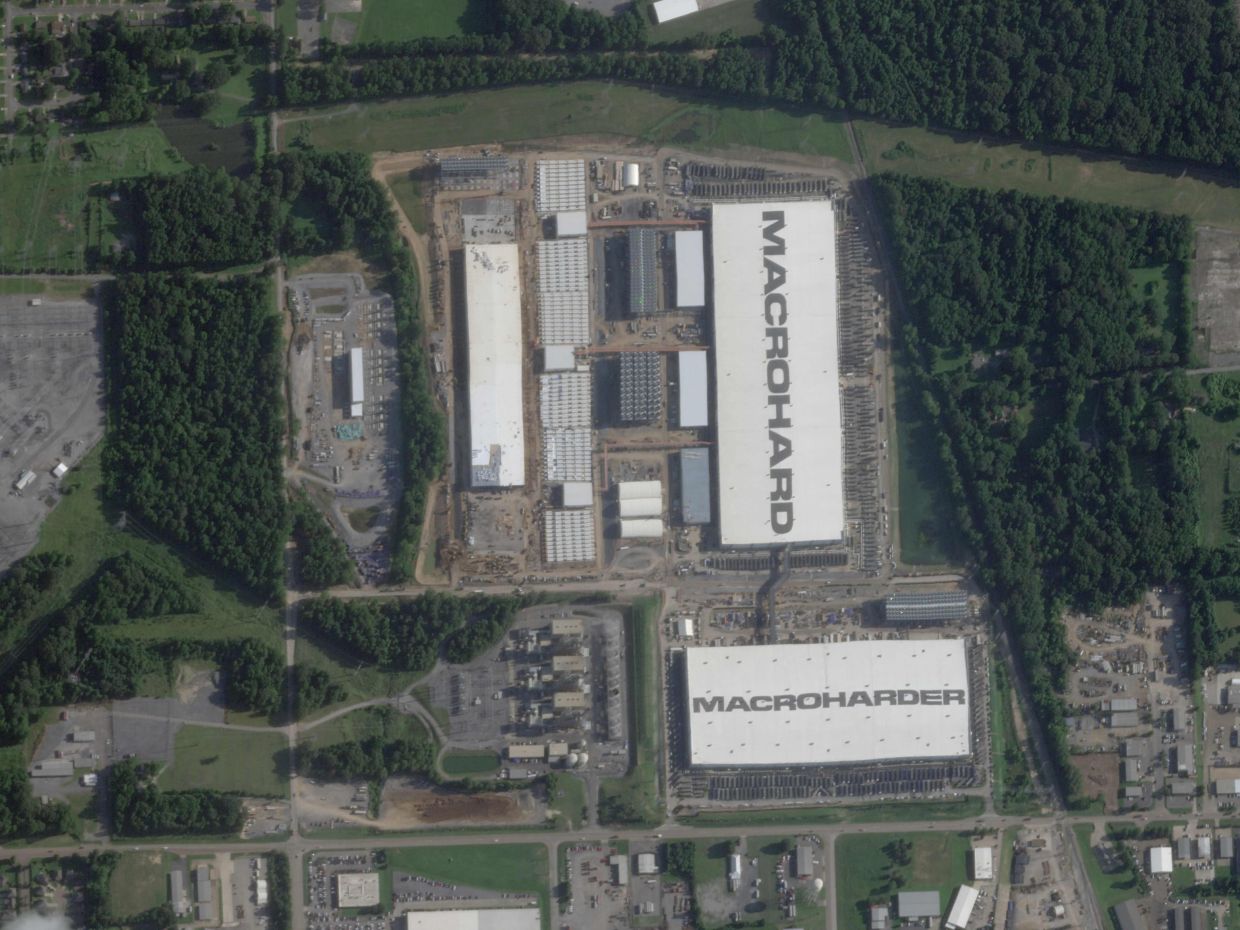
The race to dominate artificial intelligence is leaving a trail of environmental damage across America's most vulnerable communities. In Memphis, Tennessee, and neighbouring Mississippi, sprawling data centres built at breakneck speed to feed the world's insatiable appetite for computing power are now sparking fierce resistance from residents who bear the pollution burden. The conflict reveals how rapidly expanding tech infrastructure is being grafted onto communities already scarred by industrial neglect, raising critical questions about who profits from AI and who pays the price.
Colossus I, Elon Musk's flagship supercomputer facility in Memphis, exemplifies the collision between Silicon Valley ambitions and ground-level realities. The facility, which took just four months to construct, now leases to Anthropic for more than US$1 billion per month—a staggering economic engine that has generated US$12 million in tax revenue. Yet for residents of South Memphis and the adjacent Boxtown neighbourhood, the facility represents something far different: another chapter in a long history of industrial exploitation. Boxtown itself carries the weight of that legacy, having been established by freed slaves following the Emancipation Proclamation of 1863, only to become a dumping ground for polluting factories and infrastructure projects that wealthier areas rejected.
Seventeen-year-old Jasmine Bernard has spent two years campaigning against the gas turbines that power the data centre, watching them spew emissions into the air above her neighbourhood. The stakes feel personal and urgent when cancer risk in your community registers four times higher than the national average. Bernard frames the struggle not merely as an environmental issue but as a continuation of historical injustice. "This community of Boxtown and South Memphis as a whole historically just has been the subject of environmental neglect," she told international media. "It's deeply tied to the history... it's been a Black community for centuries." Her observation cuts to the heart of the matter: environmental racism does not emerge accidentally but flows from deliberate policy choices and official indifference.
KeShaun Pearson, co-founder of Memphis Community Against Pollution, has become the public face of local resistance, crisscrossing the country to publicise both the specific hazards posed by Colossus I and the broader pattern of corporate overreach. Pearson characterises the project as symptomatic of a broken social contract, where elected officials make grand promises about economic opportunity but then systematically exclude the communities most directly affected from any meaningful participation in decisions that will reshape their neighbourhood. "They don't listen or involve the community or the people who are going to be directly impacted," Pearson explained, describing how officials and the company bypassed standard consultation processes. SpaceX AI declined to respond to inquiries but claimed in a statement that its turbines are equipped with advanced emission controls and that air quality monitoring shows compliance with Environmental Protection Agency standards—claims that do nothing to address the community's deep scepticism.
The air quality dispute, however significant, masks a more alarming problem: the facility's voracious consumption of groundwater. Each day, Colossus I extracts 1.2 million gallons—roughly 4.5 million litres—from the aquifer that supplies Memphis residents with drinking water. This water serves as coolant for the supercomputer's intensive operations. Sarah Houston from Protect Our Aquifer has raised the alarm about this hidden cost of AI expansion. SpaceX AI promised to construct a water recycling facility to mitigate the impact, but that project remains suspended, leaving the aquifer's depletion unaddressed. For a region already wrestling with water scarcity and climate pressures, the decision to divert millions of gallons daily to power a private computing facility represents a troubling misallocation of a finite public resource.
In neighbouring Mississippi, residents face similar ordeals on an even larger scale. At Colossus II in Southaven, sixty-nine turbines operate continuously to power the infrastructure supporting Grok, SpaceX AI's AI-powered assistant. Krystal Polk, whose family has owned their home for generations amid groves of protective pine trees, describes the facility's impact in visceral terms. The constant drone—audible day and night—produces noise and vibrations that neighbours compare to a jet engine perpetually stuck on the tarmac. "The noise is 24/7," Polk recounts. "If you're out here too long, the vibrations – that wave sound makes you nauseous." The physical health effects compound the psychological burden of watching corporate interests literally reshape the soundscape of residential life.
Legal experts argue that SpaceX AI has flagrantly disregarded existing American environmental law. The Clean Air Act explicitly requires companies to obtain permits and demonstrate compliance with health and safety standards before construction begins, not after. Yet SpaceX AI deliberately circumvented this requirement by initially labelling the turbines as "temporary" and beginning operations while the permitting process dragged on—a strategy designed to avoid a power gap during regulatory approval. Laura Thoms, representing the civil rights group NAACP in litigation against SpaceX AI, explains the company's calculation: rather than wait for proper authorisation, they installed illegal infrastructure and negotiated permission retroactively. In late July, SpaceX AI agreed to dismantle the turbines and replace them with a code-compliant power plant, but opponents charge that the closed-door negotiation with local officials gives the company until July 2027 to complete the work—three years to rectify what should never have been built in the first place.
The Justice Department's recent request to dismiss the NAACP's complaint, citing national security concerns, adds a disturbing dimension to the dispute. The move signals that federal authorities may be willing to subordinate community health and environmental law to perceived technological imperatives, a troubling precedent for future AI infrastructure development. Meanwhile, two additional data centres have materialized near Colossus II, with a fourth under construction, yet residents claim they have received no information about how these facilities will be powered or cooled. The pattern suggests that SpaceX AI views public consultation and legal compliance as obstacles to be navigated rather than foundational commitments.
Memphis Mayor Paul Young recently announced plans to redirect US$3.35 million in tax revenue toward affected communities, an acknowledgment of the facility's impact. Yet this relatively modest allocation pales against the company's US$1 billion monthly lease revenue and does nothing to address the core environmental costs: perpetual air pollution, aquifer depletion, noise-induced illness, and the continuation of a historical pattern in which Black neighbourhoods absorb the toxic externalities of profitable enterprise. Residents point to their successful campaign in 2021 to block a pipeline project as evidence that organised community pressure can succeed even against powerful corporate and government interests. As additional data centres proliferate across the region with no clear accountability mechanisms, Memphis and Mississippi stand as early tests of whether communities can constrain AI infrastructure expansion or whether the technology's perceived strategic importance will simply steamroll local objections.

