The technology startup world is undergoing a fundamental restructuring driven by artificial intelligence coding assistants, reshaping both how companies build products and who they hire to do so. Giftory, a gift-experience platform, exemplifies this trend: its roughly 30 employees subscribe to premium AI coding tools costing about US$200 (RM816) monthly per developer – a fraction of their average US$100,000 (RM408,130) annual salary – yet this investment enables the company to accomplish work that previously required far larger teams. This calculus is spreading rapidly across the startup ecosystem, creating a new hiring philosophy centred on experienced architects rather than junior developers learning the craft.
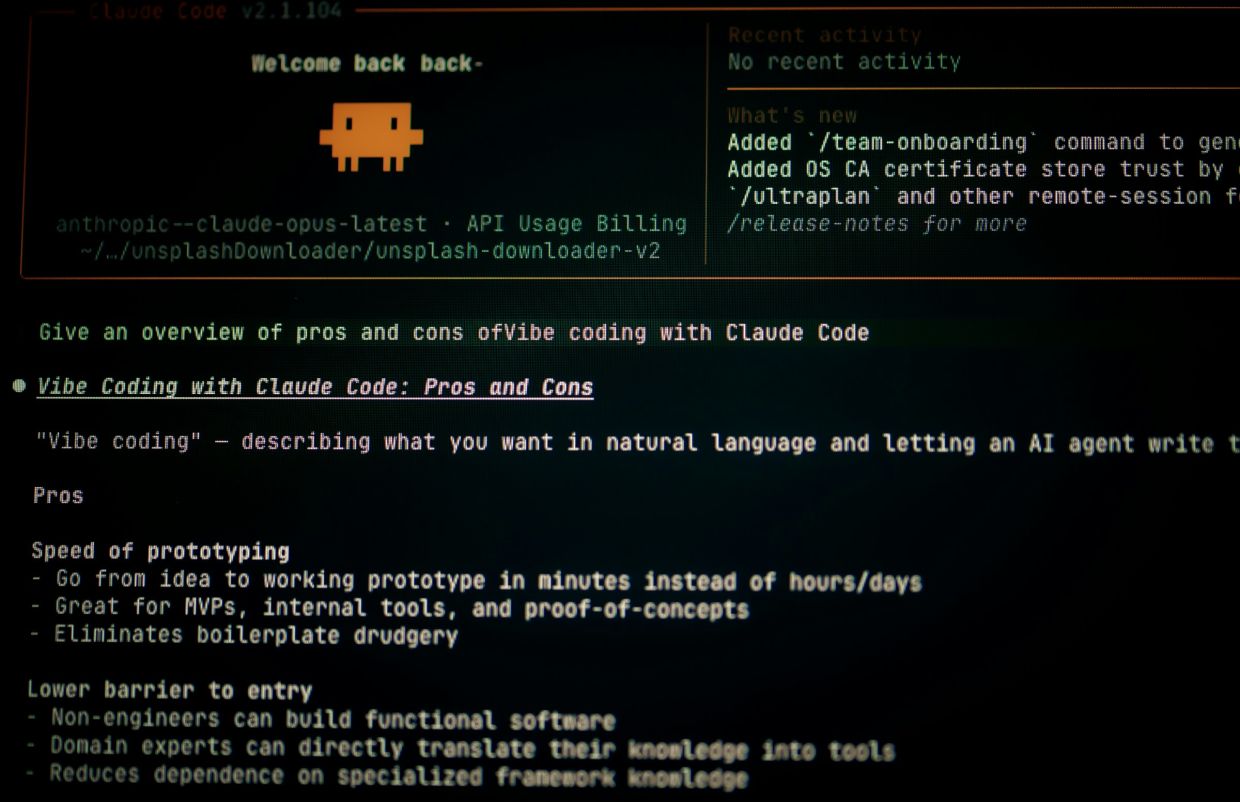
Companies deploying tools such as Anthropic's Claude Code and OpenAI's Codex have fundamentally altered the nature of software development work. Rather than writing code line by line, developers now function as project managers who translate business requirements into text prompts, allowing AI to generate, test, and debug software automatically. The shift has proven remarkably effective: among Y Combinator's Winter 2025 cohort of startups, roughly a quarter were built on codebases that were 95 per cent AI-generated, according to Managing Partner Jared Friedman. This represents an extraordinary acceleration in how quickly small teams can prototype and launch products.
The preference for experienced developers, or what one founder describes as "mid-career people who are lazy in a smart way," reflects the new employment model. These architects possess deep knowledge of workflows, system architecture, and project management – the contextual understanding necessary to wield AI tools effectively rather than treat them as substitutes for programming fundamentals. Candidates without this foundational experience, by contrast, find themselves at a disadvantage, as they lack the professional judgment to leverage AI coding assistants strategically. This preference has begun reshaping hiring patterns across the sector, favouring seniority over the entry-level positions that historically served as the pathway into the industry.
The financial logic driving this transformation is compelling for startup operators. Stems Labs co-founder Haitham Mengad articulated the approach directly: with a talented core team already in place, the strategy becomes maximising output through AI augmentation rather than expanding headcount. Espresa, a software company, has seen its operations team achieve millions of dollars in annual savings through AI integration. Vice President of Customer Success Lindsay Euller suggested the efficiency gains are becoming a metric of leadership competence, noting that future requests for additional staff will increasingly be met with demands to demonstrate AI optimisation efforts first.
Yet beneath these productivity gains lies a troubling employment reality. Data from Stanford Digital Economy Lab examining payroll records across millions of US workers reveals that employment among 22- to 25-year-olds in AI-exposed occupations, including software development, declined nearly 20 per cent from its late 2022 peak. Harvard researchers analysing resume and job posting data covering 62 million workers across 285,000 firms found that companies adopting generative AI reduced junior employment by roughly nine per cent relative to non-adopting competitors within six quarters, even as senior positions continued growing. This pattern suggests a systematic hollowing out of entry-level opportunities precisely when young programmers need them most.
The broader implications extend beyond employment statistics into workforce development and industry leadership. Amazon Web Services CEO Matt Garman has warned explicitly against replacing junior developers with AI, calling the strategy "one of the dumbest things I've ever heard." His concern reflects a fundamental paradox: by eliminating the entry-level roles where future architects and leaders gain foundational experience, the industry risks creating a talent pipeline failure. Without opportunities to apprentice, debug, and learn practical software engineering, the next generation of senior developers cannot emerge.
Signs of this disruption are already visible in educational institutions. Computer science enrollment has declined six per cent across the University of California system and fallen at two-thirds of computing programs nationwide, according to the Computing Research Association. This decline likely reflects both reduced employment prospects and shifting perceptions among students about the career's trajectory. When entry-level programming jobs disappear, students rationally question whether investing years in computer science education offers adequate returns.
Cybersecurity startup CEO Ian Amit captures the hiring paralysis affecting the sector. Companies are conducting extensive interview processes but deferring actual hiring decisions, caught between recognising the need for talent and recognising that AI tools may reduce that need. This hesitation creates a kind of labour market stasis where demand signals weaken precisely when they should be strongest, further discouraging new entrants to the field.
For Southeast Asian markets including Malaysia, these trends carry particular significance. The region has developed a growing software development sector partly dependent on entry-level talent from computer science programmes and bootcamps. As AI coding tools mature and US-based startups demonstrate that small distributed teams can accomplish substantial engineering work, Malaysian tech companies may accelerate similar hiring practices. This could reduce entry-level opportunities at precisely the moment when the region's young population might otherwise pursue technical careers. Conversely, companies that successfully train architects capable of leveraging AI tools effectively could potentially attract senior talent and build competitive advantages in specific domains.
The fundamental tension remains unresolved: AI coding assistants genuinely increase productivity and enable startups to launch with fewer resources, yet this same efficiency erodes the career-building opportunities that have historically developed the senior architects these tools now require. Startup founders continue prioritising this economic logic – choosing AI augmentation and leaner teams over hiring and training entry-level developers. Until regulatory, educational, or cultural factors shift these incentives, the pattern seems likely to continue, creating an industry increasingly populated by experienced developers while the apprenticeship pathway narrows.

