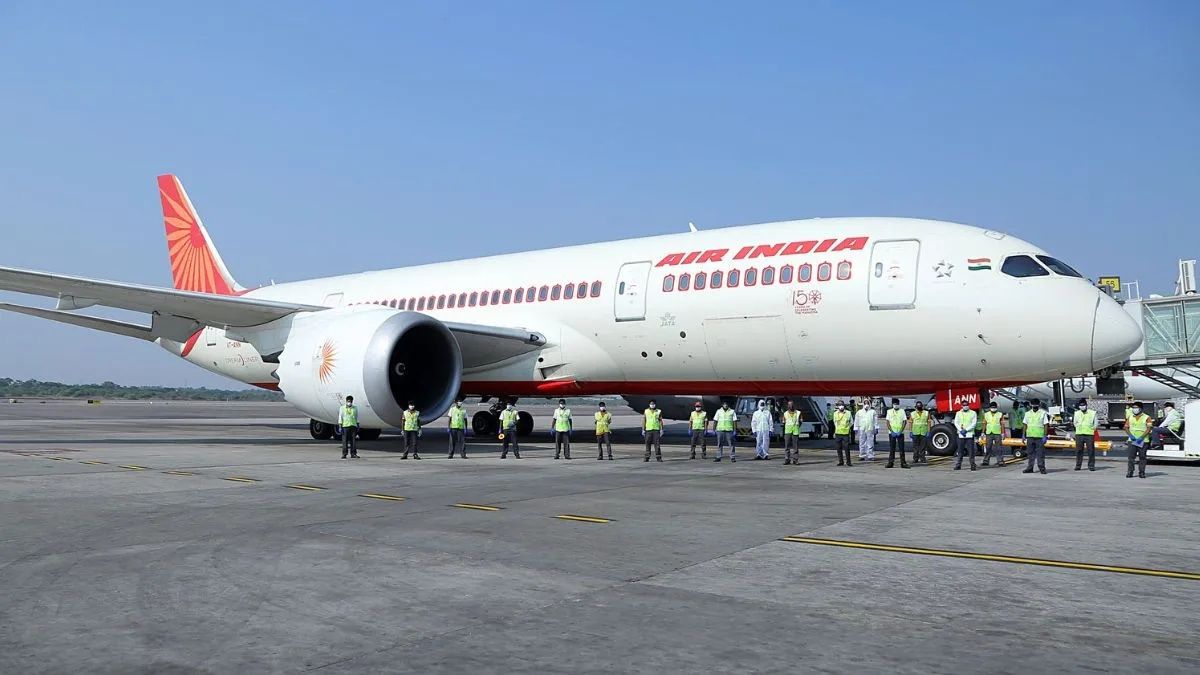
An Air India Airbus A321 operating flight AI-463 from New Delhi to Amritsar inadvertently crossed into Pakistani airspace late Monday evening due to a malfunction in its onboard navigation system, aviation authorities confirmed this week. The aircraft was safely redirected back into Indian territory following coordination between Pakistani and Indian air traffic control centres, though the incident highlighted vulnerabilities in flight management systems that could have posed serious complications in the sensitive airspace between the two nations.
The flight departed from Delhi's Indira Gandhi International Airport at 9:18pm on June 22. Within minutes of takeoff, the aircraft's navigation equipment began malfunctioning, causing its westward trajectory to deviate significantly from the assigned flight path. The technical failure resulted in the aircraft crossing the International Border into Pakistani airspace, an occurrence that could have escalated tensions given the militarily sensitive nature of the boundary region. The breach, though brief, underscores the critical importance of robust navigation systems and real-time monitoring protocols in maintaining safe passage through contested airspace.
Pakistani air traffic control authorities detected the intrusion almost immediately and took swift action to address the situation. Controllers established communication with the flight crew and alerted them to the unauthorised airspace violation. The pilots, upon receiving this notification, immediately corrected their course and guided the aircraft back across the International Border into Indian airspace. The rapid response from Pakistani ATC and the professionalism demonstrated by the flight crew prevented what could have become a more serious diplomatic incident. Such occurrences, while rare, require seamless coordination between neighbouring nations' aviation systems to resolve safely.
The incident's complications, however, extended beyond the initial navigation failure. As flight AI-463 approached Sri Guru Ram Dass Jee International Airport in Amritsar around 10:30pm, the airport was experiencing substantial air traffic congestion. Amritsar's relatively smaller infrastructure, compared to major Indian hubs, often faces capacity constraints during peak evening operations. With no available landing slot and facing operational constraints, Indian air traffic controllers made the decision to divert the aircraft back to Delhi rather than risk a prolonged holding pattern that might compromise passenger safety and fuel efficiency.
The decision to return to the capital meant the aircraft retraced its route to Indira Gandhi International Airport, where it landed safely at an unspecified time for mandatory technical inspections. Aviation maintenance teams conducted thorough examinations to identify the precise nature of the navigation system failure and verify that all aircraft systems were functioning normally before permitting further operation. These inspections are standard protocol following any significant technical anomaly and are essential for maintaining safety standards across commercial aviation operations.
Once cleared by technical personnel and receiving the necessary operational approvals from air traffic authorities, flight AI-463 finally departed Delhi for Amritsar once more. The aircraft touched down at its intended destination at approximately 2:20am on Tuesday, nearly four hours behind its originally scheduled arrival time. For the passengers aboard, the extended journey represented not only inconvenience but also the unpredictability that occasionally characterises air travel, even on what should have been a routine domestic service covering the roughly 400-kilometre distance between the two cities.
Neither Air India nor India's Directorate General of Civil Aviation (DGCA) has issued detailed public statements regarding the specific technical cause of the navigation system failure. This absence of official communication has left many questions unanswered about what type of navigational equipment malfunctioned, whether it was an instrument failure or a software glitch, and what corrective measures have been implemented to prevent similar incidents. The lack of transparency, while perhaps understandable given potential security sensitivities, raises questions about public accountability in aviation safety matters that directly affect passenger confidence.
Aviation authorities in India have initiated a routine investigation into the route deviation incident. Such inquiries typically examine maintenance records, pilot actions, weather conditions, and system diagnostics to establish a comprehensive understanding of how the failure occurred and what preventive measures should be implemented. The investigation will likely review whether the aircraft's navigation systems had undergone recent servicing and whether any warning signs had been overlooked during pre-flight checks. These findings, once compiled, will be important for the broader aviation industry's understanding of potential vulnerabilities in similar aircraft systems.
This incident occurs within a broader context of occasional airspace violations between India and Pakistan, reflecting the challenges inherent in managing aviation operations across a tense international boundary. Just one month prior, a Pakistan International Airlines flight had briefly entered Indian airspace due to adverse weather conditions before being guided back to its designated route by Indian air traffic controllers. That incident, like this one, was resolved through professional coordination and demonstrated that established protocols can effectively manage such situations despite the political tensions that characterise India-Pakistan relations.
The occurrence raises important questions about the reliability of navigation systems on commercial aircraft and the adequacy of backup procedures. Modern commercial aviation relies heavily on sophisticated navigation technology, including GPS systems and inertial navigation units. When such systems fail simultaneously or in combination, pilots must depend on established protocols and air traffic control support to maintain safety. The fact that Pakistani and Indian air traffic controllers could coordinate effectively to resolve the situation suggests that despite political differences, professional aviation standards create mechanisms for managing crises that transcend national antagonism.
For Malaysian aviation observers and passengers, this incident serves as a reminder that technical failures in navigation systems remain possible even on modern aircraft maintained by major carriers. Malaysia Airlines and other regional carriers operate similar aircraft types and depend on comparable navigation systems. The incident underscores the importance of rigorous maintenance schedules, thorough pre-flight inspections, and continuous monitoring of aircraft systems to detect anomalies before they result in operational deviations. Airlines across Southeast Asia must remain vigilant in ensuring their maintenance protocols match or exceed international standards to prevent similar occurrences.
The resolution of this incident, while ultimately successful, also highlights the potential risks associated with operating in regions where international borders are militarily sensitive. Modern air traffic management systems, including ground-based radar and satellite monitoring, provide layers of safety that caught the deviation promptly. However, the incident demonstrates that no single technology is foolproof and that human coordination remains essential for managing aviation emergencies. As air traffic increases across Asia, including in the South China Sea region where Malaysia maintains significant interests, such incidents remind regional nations of the critical importance of maintaining professional communication channels and cooperative protocols for aviation safety.