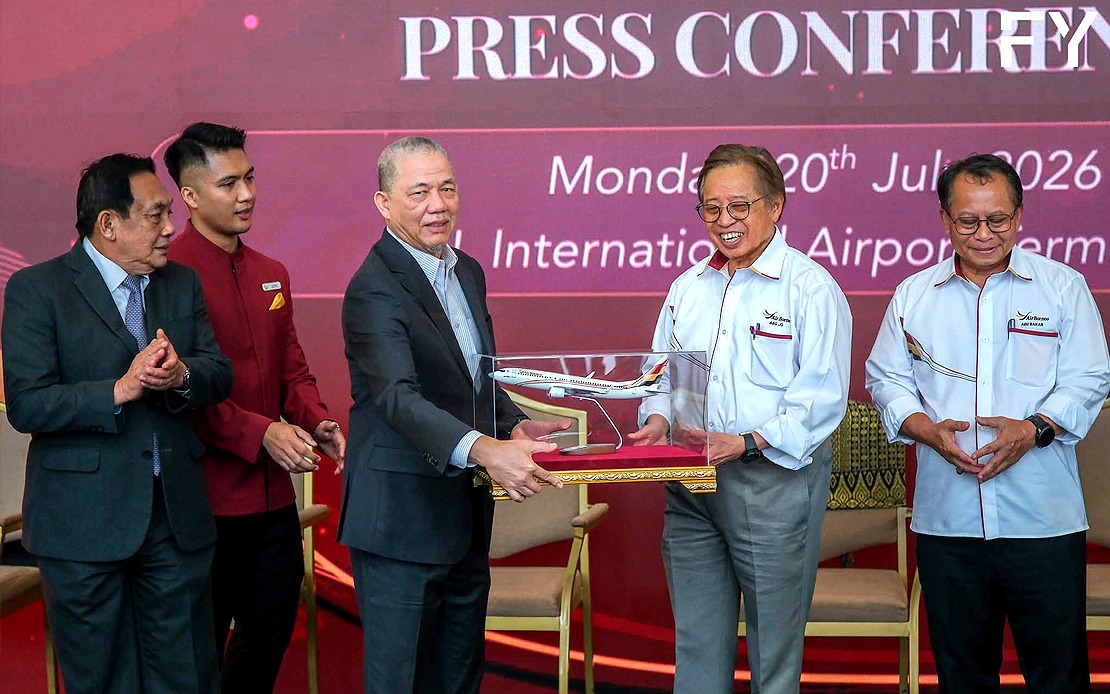
The maiden flight of AirBorneo Airways touched down at Kuala Lumpur International Airport's Terminal 1 on July 20, marking a significant milestone for Sarawak's ambitions to reshape its aviation landscape. Carrying Sarawak Premier Tan Sri Abang Johari Tun Openg and a delegation of state officials, the inaugural service from Kuching represented more than a routine commercial operation—it embodied the state government's determination to wrest greater control over air transport and pricing within its borders. The timing held particular symbolic weight, arriving just two days before Sarawak Day celebrations on July 22, a moment that amplified the carrier's significance as a statement of state pride and self-determination.
Deputy Prime Minister Datuk Seri Fadillah Yusof, who greeted the arriving delegation at KLIA, framed AirBorneo not merely as a commercial venture but as a strategic instrument addressing years of frustration among Sarawak residents over elevated ticket prices. The recurring complaint about unaffordable air travel within and from the state has long constrained both leisure and business mobility for ordinary Sarawakians, creating a disparity that the new carrier seeks to remedy. Fadillah articulated a vision centred on delivering services that are simultaneously more economical, more transparent in their pricing structures, and more attentive to passenger needs—all without sacrificing operational standards or safety records.
The establishment of AirBorneo represents a calculated gambit by the Sarawak state government to gain leverage in an aviation market dominated by larger carriers with competing priorities. By owning and operating its own airline, the state positions itself to influence route decisions, pricing mechanisms, and service frequency according to local priorities rather than remaining beholden to external commercial considerations. This ownership model provides Sarawak with direct control over a critical piece of transport infrastructure, enabling policy-makers to balance commercial viability with social obligations to connect rural communities that might otherwise be underserved by purely profit-driven operators.
For Malaysia's broader transport ecosystem, AirBorneo's emergence highlights growing recognition that aviation connectivity drives economic vitality. Fadillah emphasized how enhanced air links cultivate opportunities across tourism, trade, investment, and regional development—sectors that generate employment and attract capital. Sarawak, with its substantial natural resources, significant tourism potential, and strategic geographic position within Southeast Asia, stands to benefit materially from improved transport accessibility. By reducing friction in reaching the state, competitive airfares make both inbound tourism and business partnerships more attractive, potentially unlocking economic value that remains latent when travel costs prohibit casual or frequent visits.
The timing of AirBorneo's launch also reflects broader political currents within Malaysian federalism. The Sarawak state government has increasingly sought autonomy in sectors affecting its development trajectory, with aviation representing a domain where local control yields tangible benefits. This initiative demonstrates how state governments can leverage their constitutional powers and fiscal capacity to intervene directly in markets, addressing grievances that federal-level carriers or regulators have not adequately resolved. The precedent may inspire similar actions elsewhere, particularly in Sabah, which faces comparable air connectivity challenges.
Rural connectivity emerges as a secondary but crucial dimension of AirBorneo's mandate. Fadillah explicitly acknowledged the importance of maintaining air services to remote communities where ground transport remains limited and aviation represents the primary link to broader economic opportunities and essential services. Commercial airlines often view such routes as loss-making propositions, but a state-owned carrier can subsidize routes serving public welfare objectives while offsetting losses through higher-margin services on established corridors. This hybrid model potentially sustains connectivity that market forces alone would eliminate, a consideration particularly salient in Sarawak's geographically dispersed settlement patterns.
The carrier's operational model will merit close scrutiny as it develops. Success requires not only competitive pricing but also reliable scheduling, modern fleet management, and service consistency that win passenger loyalty away from entrenched competitors. AirBorneo enters a market where incumbents possess established networks, loyalty programs, and operational experience. The new airline must establish itself through superior value propositions while building organizational capacity to handle growth. Early operational performance will signal whether the venture can translate political commitment into sustainable commercial operation.
From a Southeast Asian perspective, AirBorneo's launch participates in a broader trend toward regional economic integration and intra-national mobility. As ASEAN economies deepen cross-border trade and tourism, secondary hubs like Kuching gain importance as gateways connecting peripheral regions to major commercial centres. Improved connectivity from Sarawak to Kuala Lumpur and potentially onwards to other regional destinations strengthens Sarawak's position within Malaysia's economic network while enhancing its appeal as a Southeast Asian destination. This repositioning carries implications for how the region distributes economic activity beyond dominant metro centres.
The state government's framing of AirBorneo as an expression of Sarawak's capacity for self-directed development holds particular resonance given historical debates about resource distribution and autonomy within the Malaysian federation. By successfully launching and operating the airline, Sarawak demonstrates technical and financial capability to manage complex infrastructure independently. This tangible achievement reinforces political narratives about state competence and justified claims to greater decision-making authority in matters affecting development priorities.
Longer-term sustainability will depend on several factors beyond initial launch enthusiasm. Fadillah's articulation of service quality maintenance signals awareness that cost-cutting cannot undermine safety or reliability—critical considerations in aviation where passenger confidence proves essential. The carrier must navigate regulatory requirements, staffing challenges, and competitive pressures while remaining mindful of its social mandate to serve unprofitable but community-vital routes. Additionally, macroeconomic factors including fuel prices, currency fluctuations, and global travel demand will significantly influence financial performance.
For Malaysian readers, particularly those in Sarawak, AirBorneo's commencement offers concrete hope that persistent complaints about aviation costs may finally receive substantive response. The new carrier provides an alternative to existing options, introducing competitive pressure that may benefit all passengers regardless of which airline they ultimately patronize. However, realizing Fadillah's vision of affordable, transparent, passenger-centric air services requires the carrier to survive beyond its symbolic inaugural flight and establish durable operations. The coming months and years will reveal whether AirBorneo transitions from a meaningful gesture into a transformative economic actor reshaping Sarawak's transport landscape and supporting its development aspirations.

