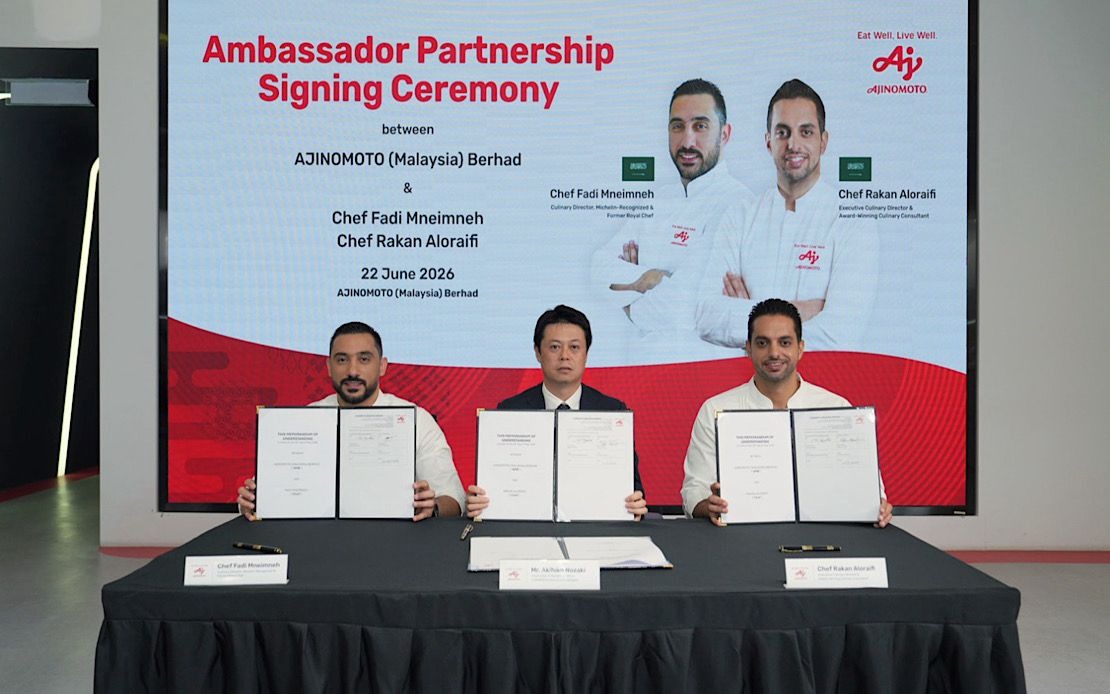
Ajinomoto (Malaysia) Berhad is accelerating its Middle East expansion by forging strategic ties with two of Saudi Arabia's most prominent culinary figures, recognizing the region's surging appetite for premium halal food products and the critical role that respected chefs play in shaping consumer preferences and industry standards across hospitality sectors.
The company has entered into a partnership with Chef Fadi Mneimneh, a Michelin-starred culinary director and former royal chef, alongside Chef Rakan Aloraifi, an award-winning executive director and culinary consultant. Both individuals command considerable influence throughout the Middle Eastern food and hospitality ecosystem, positioning them as ideal ambassadors for driving awareness of Ajinomoto's halal-certified offerings to premium market segments and decision-makers in the region.
The collaboration crystallized recently when both chefs undertook an exclusive visit to Ajinomoto Malaysia's manufacturing facility in Bandar Enstek, Negeri Sembilan. During this facility tour, the chefs gained direct exposure to the company's quality assurance protocols, the breadth of its product portfolio, and the rigorous halal certification processes embedded throughout its operations. This immersive experience serves as foundation-building for authentic advocacy, ensuring that when these culinary influencers promote the brand within their networks, they do so from positions of genuine understanding and firsthand verification of manufacturing standards.
A central theme of the partnership involves educating Middle Eastern consumers and food industry professionals about umami—the fifth taste—and its applications within traditional and contemporary cuisine. Ajinomoto recognizes that while umami is fundamental to Japanese culinary philosophy and widely accepted in Asian markets, it remains relatively nascent as a conscious concept among Middle Eastern food practitioners and diners. By positioning umami as a complementary enhancement rather than a foreign imposition on traditional recipes, the company aims to overcome cultural reservations and establish its products as tools for culinary refinement rather than substitutes for authentic preparation methods.
During their Negeri Sembilan visit, Chef Fadi and Chef Rakan conducted live culinary demonstrations that married authentic Middle Eastern dishes with selected Ajinomoto products. These sessions illustrated how umami-enhancing ingredients could deepen and enrich flavor profiles while preserving the integrity and cultural authenticity of traditional recipes. This hands-on approach—moving beyond theoretical discussion to tangible gustatory experience—represents a sophisticated marketing strategy that acknowledges that professional chefs and decision-makers in the hospitality sector require empirical proof of product benefits before incorporating new ingredients into their operations or menus.
The partnership holds significance beyond immediate sales objectives. By collaborating with prestigious Saudi chefs, Ajinomoto Malaysia is actively positioning itself as a manufacturer that understands and respects regional culinary heritage rather than attempting to impose external food concepts. This cultural sensitivity matters considerably in the Middle Eastern market, where authenticity and tradition carry substantial commercial and symbolic weight. The partnership also demonstrates Malaysia's role as a global halal standards leader, reinforcing the country's reputation for rigorous halal certification and manufacturing excellence—a competitive advantage that resonates particularly strongly within Gulf Cooperation Council nations.
The initiative also encompassed regional networking dimensions. A representative from Ajinomoto Malaysia's Brunei distributor attended the Negeri Sembilan sessions, facilitating knowledge exchange and opening pathways for deeper collaboration across Southeast Asia and the broader Asia-Pacific region. This multilayered networking approach recognizes that market expansion in complex, relationship-dependent business environments like the Middle East requires cultivation of trust and understanding across multiple stakeholder levels, from individual chefs to distribution partners to procurement decision-makers.
Looking forward, Ajinomoto Malaysia has committed to extending this partnership into the Hotel, Restaurant and Café (HORECA) professional sector. The company is planning participation in major HORECA events tentatively scheduled for the first week of October 2026 in both Riyadh and Jeddah, Saudi Arabia. During these exhibitions, Chef Fadi and Chef Rakan will lead live culinary demonstrations aimed at hospitality professionals, executive chefs, and procurement officials—precisely the decision-makers whose adoption of Ajinomoto products could cascade into widespread usage across premium dining establishments, restaurant chains, and institutional foodservice operations throughout the kingdom.
This strategy reflects sophisticated market segmentation. Rather than pursuing mass-market consumer promotion, Ajinomoto is investing in professional influencer relationships and industry events where adoption by respected chefs and procurement leaders can create downstream demand among both hospitality establishments and their respective clienteles. HORECA events provide concentrated access to purchasing decision-makers and implementation gatekeepers, making them high-value platforms for demonstrating product quality and establishing industry credibility.
The Middle East represents an increasingly attractive market for Malaysian food manufacturers, driven by demographic growth, rising disposable incomes, and heightened emphasis on food safety and certification standards. Gulf nations particularly value halal credentials and manufacturing transparency, areas where Malaysia has invested substantially in regulatory infrastructure and brand development over recent decades. By highlighting its Malaysian manufacturing heritage alongside its halal expertise, Ajinomoto Malaysia can differentiate itself from competitors while leveraging positive perceptions of Malaysian food industry standards.
The umami-focused messaging strategy also aligns with observable global culinary trends. Professional chefs across diverse culinary traditions increasingly recognize umami as a legitimate and valuable taste dimension, and markets once skeptical of umami-based products are gradually incorporating them into mainstream practice. By engaging Saudi Arabia's most respected culinary figures in this educational process, Ajinomoto is essentially building grassroots acceptance among the professionals whose endorsement carries most weight within regional culinary communities.
For Malaysian business observers, this partnership exemplifies the evolving approach required for successful Middle East expansion. Rather than relying solely on competitive pricing or generic product promotion, Malaysian manufacturers are increasingly recognizing that regional success demands cultural understanding, relationship cultivation, and strategic partnerships with locally credible figures. Ajinomoto Malaysia's investment in these partnerships signals confidence in Middle Eastern market potential while demonstrating the sophistication required to compete effectively in premium segments of international food markets.

