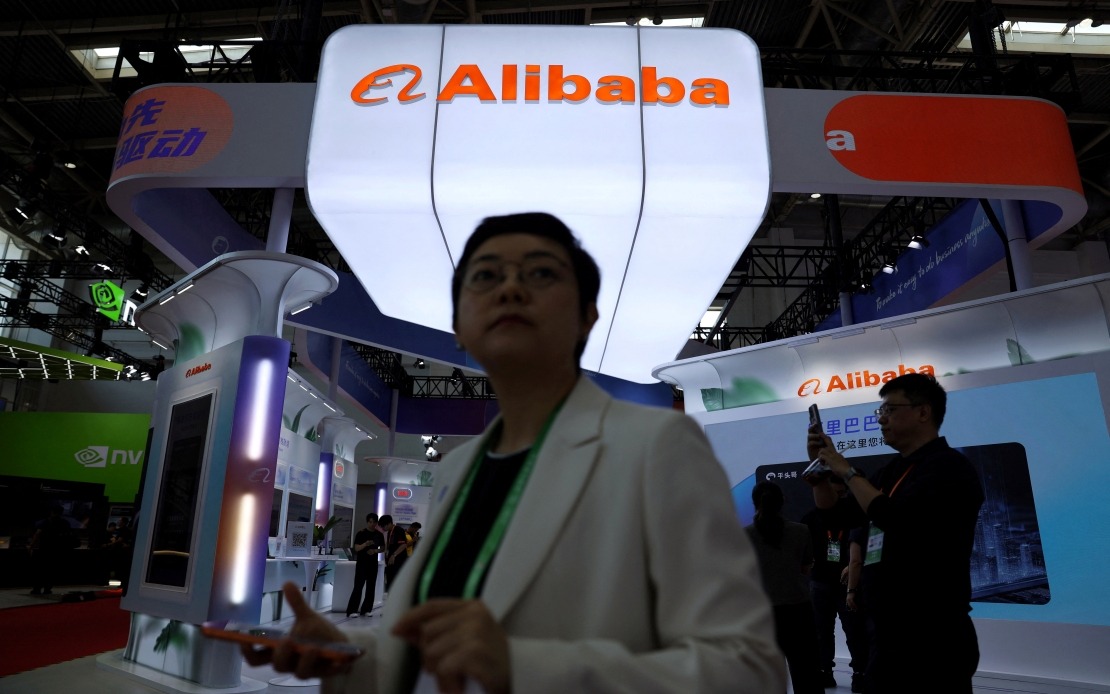
Chinese technology conglomerate Alibaba has launched legal action against the United States Department of Defense, disputing its classification as an entity linked to China's military-industrial apparatus. The lawsuit, filed in federal court and disclosed on Tuesday, represents an escalating confrontation between American regulators and one of Asia's most influential digital platforms over geopolitical and commercial concerns.
The Pentagon's inclusion of Alibaba on its list of military-connected companies came in early June, when the Department of Defense designated 188 firms as entities affiliated with China's defence establishment. This sweeping action placed Alibaba alongside other technology heavyweights including Tencent and automotive manufacturer BYD, triggering immediate corporate and diplomatic tensions across the Pacific. The determinations have profound implications not only for the companies involved but for the entire technology ecosystem operating across multiple jurisdictions.
Alibaba's legal challenge directly confronts the factual premises underlying the Pentagon's decision. According to the court filing, the company contends that the military designation lacks any substantive foundation in either law or evidence. The lawsuit emphasises that Alibaba maintains independent governance structures with a board of directors entirely free from military affiliation or influence, suggesting that the classification fundamentally misrepresents the company's operational and organisational reality.
At the core of Alibaba's defence lies a straightforward claim about operational scope. The firm asserts that its entire product and service portfolio is engineered exclusively for civilian commercial purposes, specifically serving retail commerce, logistics networks, and enterprise-grade information technology applications. This positioning is central to the company's argument that military designation represents categorical misclassification rather than a mere labelling dispute.
Further strengthening its position, Alibaba highlights explicit contractual safeguards and compliance mechanisms designed to prevent military utilisation of its platforms and technologies. The company notes that its formal agreements with clients and internal compliance policies expressly prohibit applications for military purposes. Additionally, Alibaba stresses that it holds no military certifications or licences from Chinese authorities, a detail intended to undercut any suggestion of integrated involvement with defence sector activities.
The timing of this legal action reflects broader tensions in US-China technology relations. American policymakers have increasingly used export controls, investment restrictions, and military company designations as instruments to constrain Chinese technology advancement and to address national security concerns. For Malaysian and other Southeast Asian investors and businesses, these designations carry serious consequences, as they can trigger secondary sanctions and restrict access to critical supply chains and partnerships.
Alibaba's lawsuit also reflects the company's strategic calculation about defending its international reputation and operational capacity. The military company designation, while primarily affecting American entities' interactions with Alibaba, creates reputational damage and uncertainty that ripples across the company's global operations. Multinational corporations and institutional investors increasingly scrutinise such designations when evaluating Chinese technology platforms for partnerships or investment.
The broader context reveals escalating American efforts to compartmentalise its technology engagement with China. Beyond Alibaba, the inclusion of Tencent and BYD signals that the Pentagon now views major Chinese technology and manufacturing champions as elements of an integrated military-industrial complex, regardless of their stated civilian focus. This reflects a fundamental shift in how American defence policy conceptualises Chinese commercial entities and their relationship to state security interests.
For Southeast Asian economies dependent on Chinese investment and technology transfer, these American actions create complex navigation challenges. Malaysia, Singapore, Indonesia, and other regional economies benefit from Alibaba's logistics platforms, cloud services, and digital infrastructure investments. Military designations create friction points where regional companies must manage relationships with both American and Chinese technology ecosystems, often facing implicit pressure to choose sides.
Alibaba's legal strategy appears aimed at establishing a precedent that military company designations require rigorous factual foundation and legal justification rather than categorical assumptions about Chinese technology firms. A successful challenge could provide protective jurisprudence for other Chinese companies facing similar designations. Conversely, if the designation withstands legal scrutiny, it would validate the Pentagon's broader approach to identifying military-linked entities within China's commercial sector.
The case also highlights unresolved questions about how military company designations should operate in an era when technological capabilities increasingly blur distinctions between military and civilian applications. Artificial intelligence, semiconductor manufacturing, cloud computing, and logistics platforms can serve both military and commercial purposes. Alibaba's position that operational intent and contractual prohibition should determine classification reflects one approach; Pentagon reasoning that structural integration with China's state apparatus creates inherent military relevance reflects another.
This litigation will likely become a focal point for broader American policy debates about technology decoupling and supply chain security. The outcome could influence how future designations are constructed and defended, potentially affecting dozens of other Chinese companies in technology, manufacturing, and telecommunications sectors. For Malaysian businesses and investors monitoring US-China tensions, the case exemplifies how geopolitical friction translates into specific regulatory actions with material consequences for commercial relationships and investment decisions across Southeast Asia.