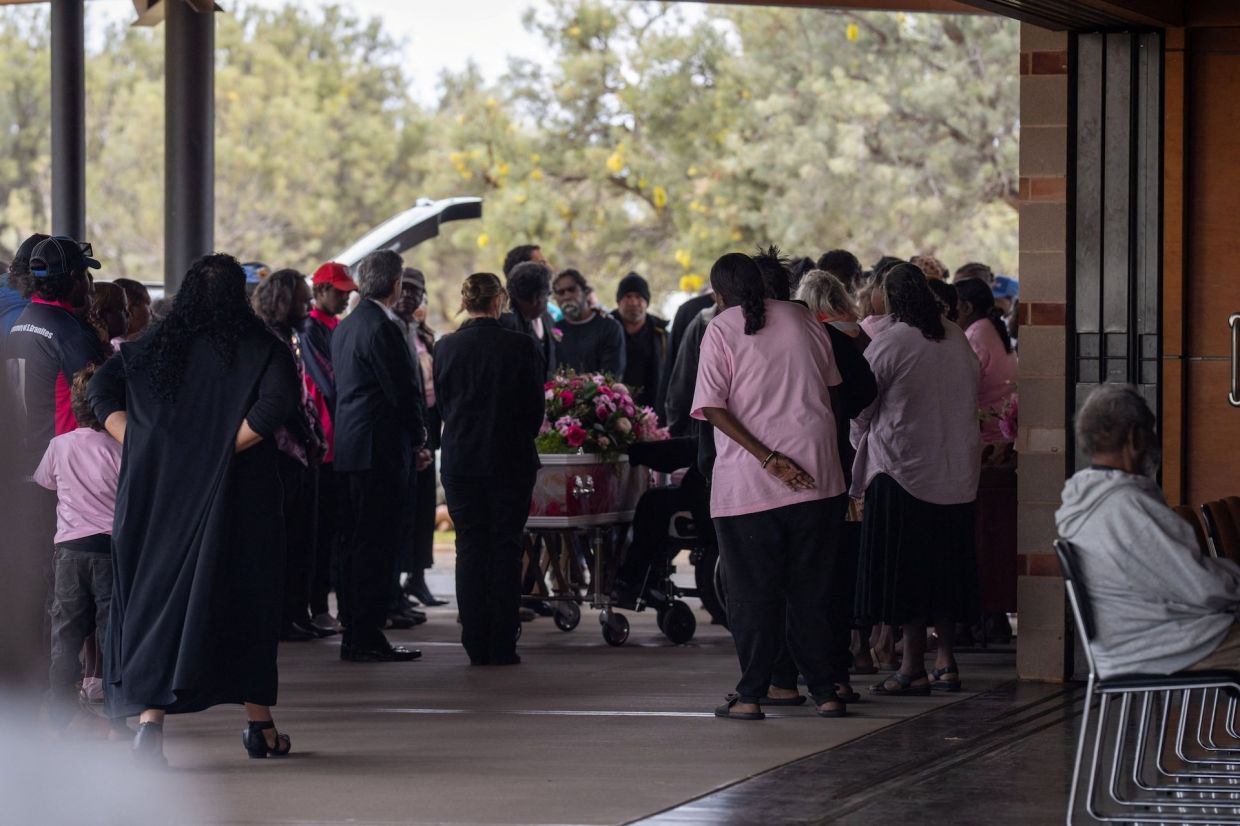
Hundreds of mourners assembled at Alice Springs' Garden Cemetery on Saturday to attend the funeral service of five-year-old Kumanjayi Little Baby, marking a solemn moment for a remote Northern Territory community gripped by grief and social tension since the child's death in April. The funeral procession drew significant attendance in the town located some 1,250 kilometres south of Darwin, with many mourners honouring the young girl by wearing her favourite colour, pink, as the flower-covered coffin arrived by black hearse for the service.
The death of Kumanjayi Little Baby—a name used according to Indigenous cultural custom—sent shockwaves across Australia when news emerged of the circumstances surrounding her killing. What followed was a cascade of unrest that saw violence erupt in Alice Springs, a regional hub of approximately 25,000 residents, as tensions boiled over within the community. The incident highlighted deep frustrations that had been building beneath the surface of this remote outback centre, where economic opportunity is scarce and social pressures run high.
The aftermath of the child's death triggered what Indigenous communities recognise as "sorry business"—a comprehensive mourning period encompassing cultural practices and ceremonies observed when an Indigenous person passes away. For the residents of Alice Springs, a significant portion of whom identify as Indigenous, this period has extended for months as the community processes the tragedy through traditional practices while simultaneously grappling with the shock of the incident itself.
The broader context of life in Alice Springs reveals structural inequalities that have long characterised remote Indigenous settlements. Approximately one-fifth of the town's population is Indigenous, with thousands living in informal camp communities situated on the periphery of the main urban area. These settlements frequently suffer from inadequate housing infrastructure, limited access to essential services, and insufficient investment in basic amenities—conditions that have persisted despite growing national awareness of Indigenous disadvantage.
The arrest of a suspect and reports that locals apprehended and assaulted the individual before police involvement further complicated the situation, underscoring how community grief had transformed into vigilante action. This sequence of events exposed the fragility of social cohesion in Alice Springs and the depth of anger within the Indigenous population regarding crime, safety, and systemic neglect.
Prime Minister Anthony Albanese responded to the killing by directing his remarks toward territorial authorities, urging them to prioritise improvements to living conditions in the camp communities surrounding Alice Springs. His intervention signalled acknowledgment at the highest levels of government that the tragedy was symptomatic of broader policy failures affecting remote Indigenous Australians. The political pressure, however, raised questions about whether commitments would translate into concrete resource allocation and sustained reform.
Jefferson Lewis, aged 47, has been formally charged with the girl's murder and two additional offences that remain under legal suppression orders. The criminal proceedings are expected to occupy the judicial system for an extended period, during which the community must navigate the twin challenges of seeking justice while managing the emotional toll of prolonged legal proceedings.
For Malaysian observers, the Alice Springs situation illuminates challenges that resonate across the Asia-Pacific region regarding the treatment of marginalised Indigenous populations. Australia's struggle to adequately provide housing, services, and economic opportunity to Indigenous communities in remote areas reflects patterns visible in various Southeast Asian contexts, where geographic isolation frequently compounds social disadvantage. The incident demonstrates how concentrated poverty, inadequate public services, and social isolation can create conditions ripe for violence and unrest, ultimately destabilising entire communities.
The funeral service represents more than a farewell to a single child; it represents a moment of collective reckoning for Alice Springs. For the hundreds gathered at Garden Cemetery, the ceremony provided an opportunity to honour Kumanjayi Little Baby according to their cultural traditions while also confronting uncomfortable truths about the conditions that characterise life in this remote Australian town. The prominence of pink—the child's favourite colour—throughout the service symbolised an attempt to reclaim innocence and hope amid circumstances marked by tragedy and systemic failure.
Moving forward, the attention generated by this case may create momentum for genuine policy reform in remote Australia. Advocates for Indigenous affairs will likely use the heightened public consciousness surrounding Alice Springs to push for increased investment in housing, education, healthcare, and employment programs targeting remote settlements. Whether such momentum translates into sustained political will and adequate funding remains uncertain, but the funeral service marks a threshold moment where the community's grief intersects with broader demands for transformative change.

