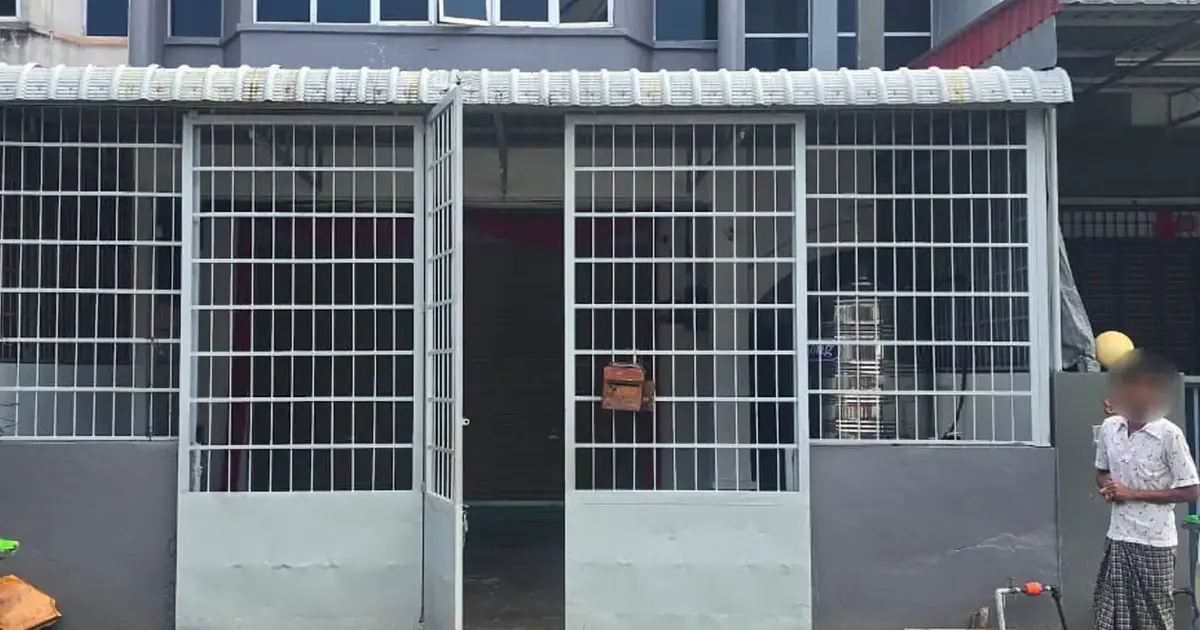
Alor Setar City Council has conducted a raid on premises being utilised as an informal educational facility for Rohingya refugee children in the Kedah capital, triggering a formal investigation into what officials describe as unauthorised institutional operations. The enforcement action underscores growing regulatory scrutiny surrounding unregistered learning centres that have emerged across Malaysian urban areas to serve refugee and migrant communities, many of whom lack access to formal schooling channels.
Authorities have initiated proceedings centred on two primary violations: the improper deployment of industrial-zoned property for educational purposes and the operation of a teaching facility without requisite government authorisation. The case highlights the complex intersection of humanitarian concerns regarding refugee access to education and municipal compliance requirements that govern land-use categories and institutional registration within local council jurisdictions.
The Rohingya, a stateless ethnic minority predominantly from Myanmar's Rakhine State, have constituted one of the world's largest displaced populations since mass exodus events in 2017. Malaysia has become home to approximately 180,000 registered and undocumented Rohingya individuals, concentrated primarily in urban centres including Kuala Lumpur, Selangor, and Penang. Kedah has emerged as an additional settlement area, particularly in its capital city, where informal communities have developed informal structures to address urgent social needs including education for children denied access to national schooling systems.
The legal status of Rohingya children regarding Malaysian educational access remains constrained. While the Federal Constitution theoretically guarantees education to all children within Malaysian territory, practical implementation for undocumented refugee populations involves substantial bureaucratic barriers. Many Rohingya children lack the documentation prerequisites required for enrolment in government schools, forcing families to seek alternative learning arrangements through community-operated or faith-based centres, some of which function without formal institutional licensing.
The Alor Setar raid reflects municipal authorities' escalating enforcement posture concerning unlicensed educational venues. City councils nationwide have ramped up compliance inspections targeting establishments operating beyond regulatory frameworks, particularly those utilising zoned industrial premises for purposes divergent from original designation. These enforcement measures reflect broader policy tensions between accommodating vulnerable populations' foundational needs and maintaining administrative order within municipal regulatory structures.
Rohingya communities operating informal schools typically function through voluntary contributions and community fundraising, with instruction delivered by individuals possessing varying educational credentials. These makeshift educational arrangements, while addressing critical knowledge deficits among refugee children, exist in legal grey zones regarding teacher qualifications, curriculum standards, and facility safety compliance. Authorities argue such unregulated operations pose potential risks concerning educational quality, child welfare oversight, and infrastructure safety protocols.
The investigation triggered by the Alor Setar council raid will examine whether industrial zoning regulations were violated and whether the premises met minimum standards for educational facility operation. Officials will likely scrutinise documentation concerning the operator's identity, funding sources, attendance records, and any claims to formal institutional status or government alignment. Such investigations typically result in closure orders where violations are substantiated, displacing the student population and disrupting whatever educational continuity had been established.
This enforcement action carries broader implications for refugee integration policy across Malaysia. The proliferation of unregistered schools signals genuine educational access gaps within existing institutional frameworks, yet municipal enforcement approaches primarily target closure rather than channelling resources toward regularised alternatives. Unlike some Southeast Asian jurisdictions that have established parallel educational pathways or temporary recognition provisions for refugee learners, Malaysia has maintained comparatively restrictive formal access policies, inadvertently creating conditions where informal arrangements emerge.
Civil society organisations working with Rohingya communities have consistently highlighted the impossible position facing refugee families: children require schooling for future opportunity and skills development, yet formal channels remain effectively inaccessible without citizenship documentation. Informal educational ventures, despite regulatory shortcomings, represent adaptive responses to this institutional exclusion. However, the quality and sustainability of such arrangements remain precarious, dependent entirely on community capacity and goodwill rather than systemic support structures.
The case also reflects Alor Setar City Council's broader municipal governance priorities. Industrial property zoning infractions constitute straightforward regulatory violations that councils can definitively prove and enforce through established procedures. Addressing the underlying humanitarian drivers would require coordinated policy interventions across federal education, immigration, and social services portfolios—a substantially more complex institutional undertaking than pursuing zoning violations against individual premises operators.
Regional context matters considerably here. Throughout Southeast Asia, host nations managing significant refugee populations—Thailand, Indonesia, and others—have similarly grappled with how to balance humanitarian education access against regulatory compliance. Malaysia's approach remains among the region's more restrictive, though not uniformly enforced, creating patchwork outcomes where some communities tolerate informal arrangements while others, like Alor Setar, initiate enforcement actions.
The investigation outcome will likely determine whether the Rohingya children previously attending this facility lose their learning access entirely or whether the council and community reach alternative arrangements. What remains evident is that regulatory enforcement alone cannot resolve the fundamental policy question underpinning such situations: whether refugee children within Malaysian territory should have meaningful pathways to formal education, or whether institutional exclusion remains the operative principle.

