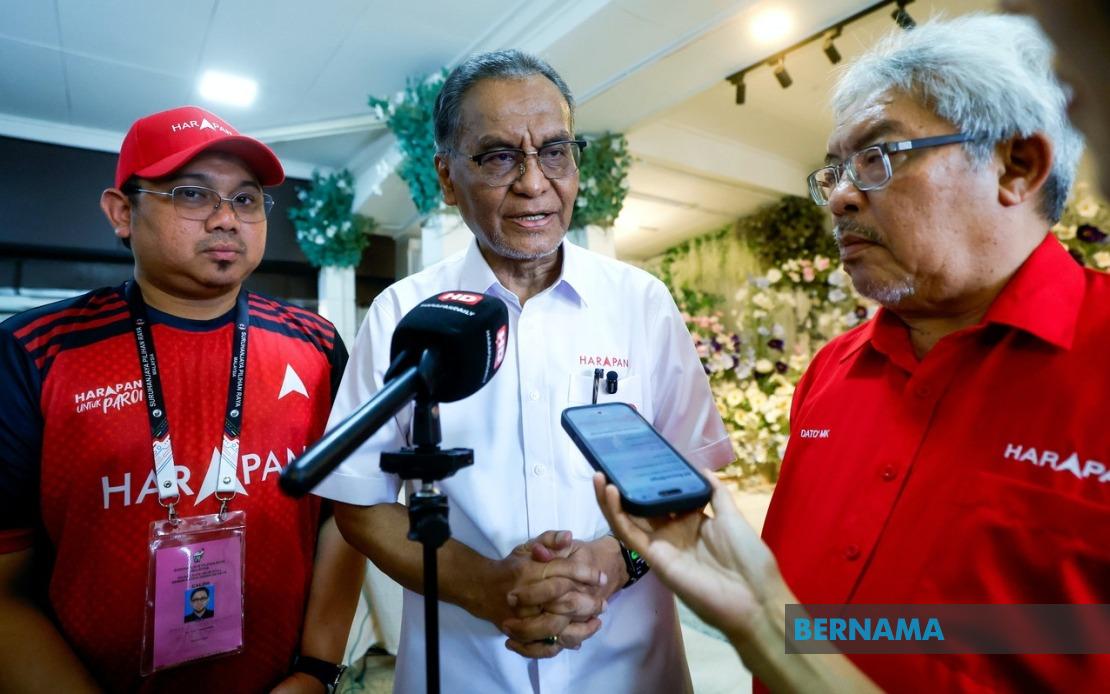
Negeri Sembilan's upcoming state election will see Pakatan Harapan component party Amanah centre its campaign narrative on the tangible results delivered by the coalition government, moving away from rhetoric-heavy approaches toward evidence-based political messaging. The strategy reflects a broader shift in Malaysian politics, where voters increasingly demand substance over sloganeering, particularly in state-level contests where governance impacts daily life directly.
Amanah vice-president Datuk Seri Dr Dzulkefly Ahmad articulated this philosophy clearly, emphasizing that the party's nine candidates—representing one-quarter of Pakatan Harapan's 36-seat slate—would campaign on their individual track records and the collective administrative performance of the state government. This allocation reflects the coalition's pre-election seat-sharing agreement, with Parti Keadilan Rakyat contesting 16 seats and the Democratic Action Party 11 seats. The distribution signals confidence in maintaining the status quo while carefully managing party representation to maximize coalition strength.
The campaign methodology extends beyond traditional rallies and speeches. Amanah's approach incorporates granular community engagement through small-group discussions, direct house-to-house canvassing, and strategic use of social media platforms to establish authentic connections with voters. This decentralized approach allows candidates to identify specific local grievances—pothole repairs, licensing delays, inadequate public amenities—and demonstrate responsiveness by coordinating with relevant authorities for tangible resolution. For Malaysian voters fatigued by generic campaign promises, this problem-solving orientation represents a refreshing departure from standard electoral tactics.
The Paroi state constituency exemplifies this strategy in microcosm. With over 65,000 registered voters and approximately 140,000 residents, this densely populated area presents complex governance challenges requiring a representative capable of navigating relationships between constituents, local councils, and state agencies. Ahmad Shahir Mohd Shah, Pakatan Harapan's candidate for Paroi, identified small-trader empowerment as a priority, proposing streamlined licensing procedures and upgraded business infrastructure in collaboration with local authorities. This focus addresses a crucial economic segment often overlooked by larger political movements—the small-to-medium enterprise operators who form the backbone of suburban and semi-urban economies.
Amanah's candidate slate demonstrates institutional continuity mixed with fresh perspectives. The party is defending the Klawang seat with incumbent Datuk Bakri Sawir, providing voters with an established representative's continuation, while simultaneously fielding newer candidates like Zarrina Abu Zarin in Lenggeng and Muhammad Allif Ibrahim in Kota, signalling renewal within the party structure. This balance between experience and emerging talent appeals to different voter demographics—those seeking stability and those demanding generational change.
The political landscape heading into this election reflects significant volatility. In the previous 2023 state election, Pakatan Harapan secured 17 seats, establishing control but without overwhelming dominance. Barisan Nasional captured 14 seats while Perikatan Nasional claimed five, demonstrating that Malaysia's state-level politics remains fiercely competitive. This fragmented environment means each seat carries disproportionate strategic importance, and coalition unity becomes paramount. Amanah's focused campaign on governance effectiveness serves to reinforce cohesion within Pakatan Harapan by demonstrating that the coalition's time in power has produced measurable benefits.
For Malaysian and Southeast Asian observers, Negeri Sembilan elections carry broader significance beyond state boundaries. Negeri Sembilan historically serves as a barometer for broader political trends affecting Malaysia's federal politics. The state's relatively educated, urban-leaning electorate and its proximity to the federal capital make it particularly sensitive to national economic conditions and governance perceptions. How Pakatan Harapan performs here may influence coalition confidence ahead of future federal contests, while poor results could embolden opposition movements.
The emphasis on administrative achievements rather than partisan rhetoric also reflects lessons learned from earlier political cycles. Malaysian voters have demonstrated increasing sophistication in evaluating governance quality based on specific deliverables—infrastructure completion rates, public service responsiveness, transparency metrics—rather than abstract ideological commitments. Amanah's strategy directly addresses this voter evolution by making concrete achievements central to campaign messaging. This represents political maturation within Malaysia's electoral system.
The campaign timeline provides Amanah and broader Pakatan Harapan two weeks of intensive engagement before early voting commences on July 28, with general polling scheduled for August 1. This compressed schedule rewards the intensive grassroots approach Amanah advocates, as organized house-to-house operations and micro-targeted social media campaigns can reach significant portions of the electorate more efficiently than traditional mass rallies. The logistics of reaching 65,000-plus voters in constituencies like Paroi demands precisely this kind of systematic, data-informed approach.
Amanah's positioning within Pakatan Harapan reflects the party's specific political niche. As an Islamic-oriented, reform-minded component party, Amanah appeals to Muslim-majority constituencies seeking governance competence alongside Islamic values recognition. By emphasizing service delivery and community problem-solving—rather than sectarian appeals—Amanah projects an inclusive political identity that transcends religious identity alone. This inclusive approach proves particularly valuable in diverse constituencies where non-Muslim voters constitute significant portions of the electorate.
The broader implications for Southeast Asian politics merit consideration. Malaysia's competitive state elections continue to demonstrate that even in dominant party systems, opposition coalitions can achieve and maintain power through effective administration and voter engagement. Negeri Sembilan's upcoming election will test whether Pakatan Harapan can sustain its coalition discipline and governance focus while navigating factional pressures and competing ambitions within component parties. Success would validate the coalition model; failure might accelerate toward bipolar opposition-government dynamics that characterize other regional democracies.

