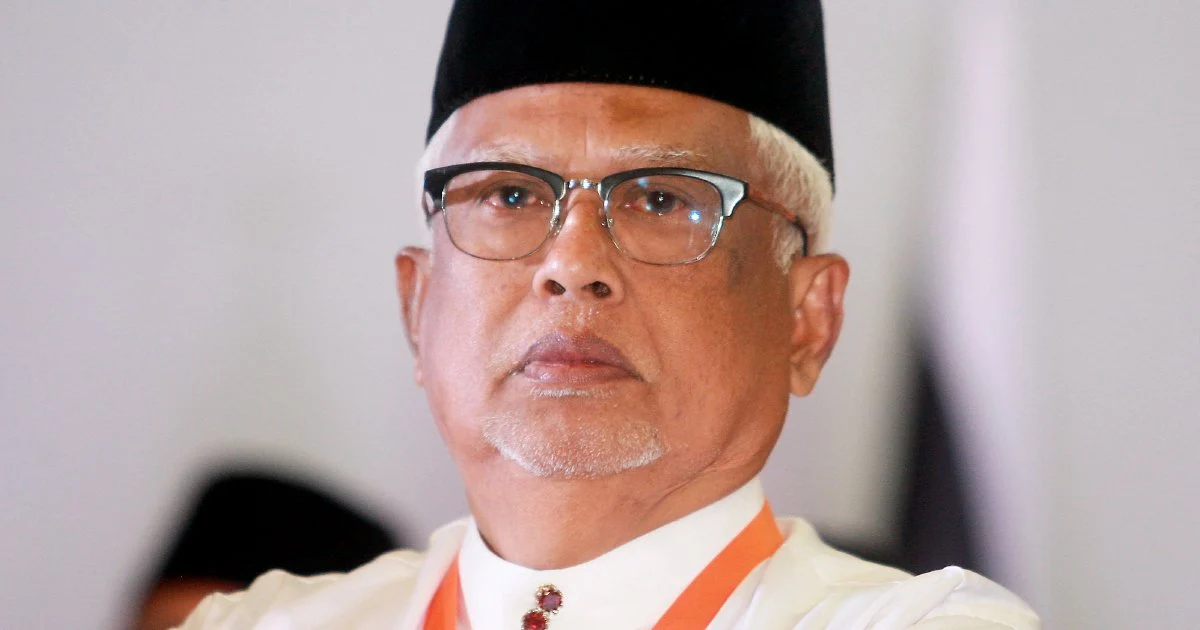
The political landscape in Johor has become increasingly fractious as senior Amanah leadership publicly challenged PAS to reconcile its electoral strategy with the serious allegations it has previously levelled against Bersatu, its partner in the Perikatan Nasional coalition. The question, raised in Kuala Lumpur, cuts to the heart of an uncomfortable tension within Malaysia's Islamist-nationalist alliance, forcing uncomfortable conversations about consistency and accountability among coalition members heading into critical state elections.
Mahfuz Omar, a prominent figure within Amanah, highlighted what he portrayed as a glaring contradiction in PAS's approach to Johor's forthcoming electoral contest. By continuing to field joint candidacies and provide electoral support to Bersatu representatives despite the party's own documented concerns about the latter's conduct and integrity, PAS appeared to be compartmentalising its political judgement in ways that demand explanation, Mahfuz suggested. The assertion underscores mounting pressure on the Islamist party to publicly address why partnership with Bersatu remains desirable if the allegations previously voiced carry genuine weight.
The Perikatan Nasional framework has long operated as an uneasy alliance between PAS, which controls much of Malaysia's conservative Islamic political apparatus, and Bersatu, the party founded by former Prime Minister Mahathir Mohamad and later led by Muhyiddin Yassin. Both parties have sought to position themselves as alternatives to the ruling Pakatan Harapan coalition, but internal strains have periodically surfaced. PAS's willingness to contest joint slates with Bersatu despite reservations about the latter's direction suggests that electoral calculus has temporarily overridden principled objections, a dynamic that critics like Mahfuz find intellectually indefensible.
For opposition parties and independent observers, the apparent disconnect raises questions about the credibility of either party's stated concerns regarding governance standards and ethical conduct. If PAS genuinely harbours serious reservations about Bersatu's practices or reputation, its decision to jointly field candidates sends a confused signal to voters about which issues truly matter and which grievances are merely tactical opportunism. This murkiness in coalition politics has become a recurring frustration for Malaysian voters attempting to distinguish between substantive policy differences and opportunistic positioning.
The timing of Amanah's public challenge is strategically significant. Johor represents one of Malaysia's most politically competitive states, with multiple coalitions vying for dominance. The state election provides a barometer for national sentiment and an opportunity for parties to demonstrate organisational strength and electoral appeal. Within this high-stakes environment, internal coalition coherence becomes crucial. When one partner questions another's logical consistency, it creates openings for rival blocs—including Pakatan Harapan—to exploit divisions and appeal to persuadable voters concerned about the integrity of their chosen representatives.
PAS has long cultivated an image as a guardian of Islamic principles and Malaysian values, with particular emphasis on moral leadership and principled governance. This positioning becomes problematic if the party is perceived as compromising those principles for electoral advantage through partnerships it has publicly criticised. The credibility gap between stated values and electoral behaviour can substantially erode a party's standing among its core constituencies, particularly among voters who view religious commitment and political ethics as inseparable.
Bersatu, meanwhile, has faced various controversies and allegations of its own since its formation, ranging from questions about funding sources to internal governance disputes. The party's relatively modest electoral performance in recent contests has made it increasingly dependent on coalition arrangements to remain politically relevant. This dependency potentially shapes why PAS continues its partnership despite reservations. However, the arrangement places both parties in a position where they must continually justify contradictions between rhetoric and practice.
The broader implications for Malaysian politics are worth considering. Coalition politics inherently requires compromise and pragmatism, but there exist limits beyond which electoral alliances lose their legitimacy and become perceived as purely transactional arrangements devoid of principle. Malaysian voters have demonstrated increasing sophistication in recognising and penalising such perceived hypocrisy. When major parties are caught between stated objections to partners' conduct and continued electoral cooperation with those same partners, voter trust in their judgment and commitment to stated principles inevitably suffers.
Amanah itself represents the centrist Islamic political space, positioned between PAS's more rigid fundamentalism and secular-leaning parties within Pakatan Harapan. The party's willingness to publicly highlight inconsistencies in PAS's approach reflects both genuine philosophical differences and competitive positioning. By framing the question as one of transparency and logical consistency rather than partisan attack, Amanah places PAS in a position where avoiding substantive response becomes increasingly difficult.
Looking forward, PAS faces a genuine challenge in articulating how its continued partnership with Bersatu aligns with any serious concerns about that party's practices or reputation. Whether the Islamist party chooses to clarify its position, defend its partnership, or dismiss the criticisms will significantly influence both the trajectory of the Johor election and the broader sustainability of the Perikatan Nasional coalition heading into future electoral contests.

