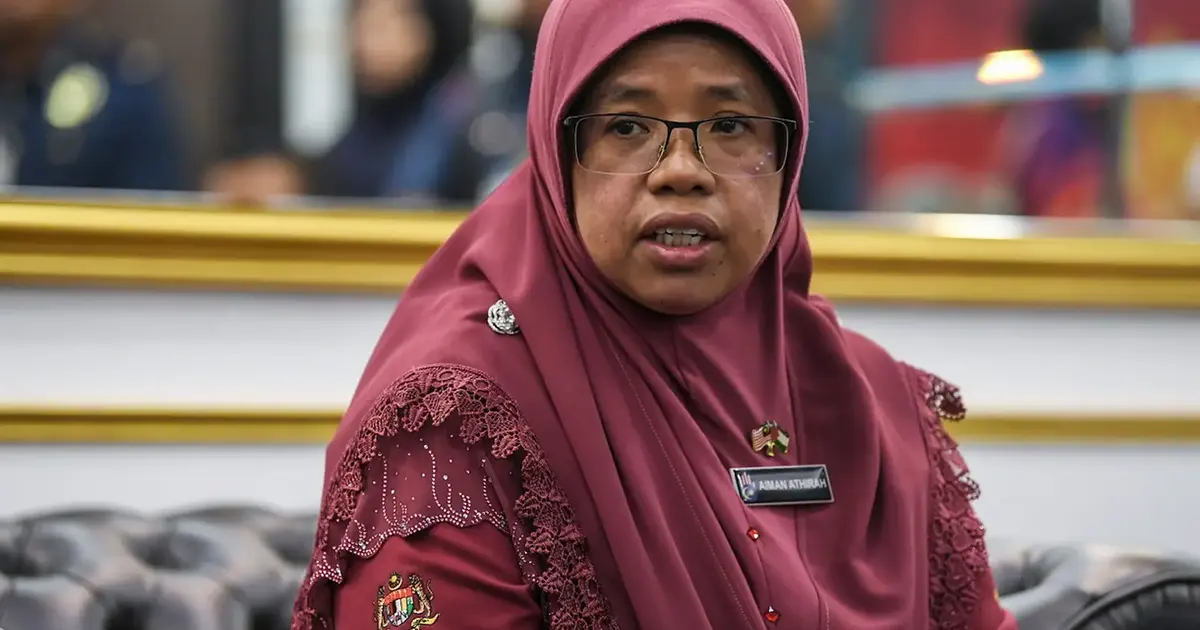
Amanah's deputy president Aiman Athirah Sabu has thrown down a public gauntlet to PAS president Hadi Awang, demanding he either produce tangible proof of his allegations or resort to the courts to address claims that the Democratic Action Party opposes Islam. The challenge represents an escalation in the simmering tensions between the coalition partners and reflects deepening ideological rifts within Malaysia's opposition bloc.
Aiman Athirah's intervention introduces a crucial dimension to the ongoing political dispute—the distinction between rhetorical accusations and substantive evidence. By explicitly calling on Hadi to take concrete action, whether through documentary proof or judicial proceedings, she has effectively placed the onus on the PAS leader to either withdraw his claims or defend them under oath. This tactical move exposes what Amanah views as baseless rhetoric designed to undermine DAP's credibility without factual foundation.
The confrontation underscores the fragility of Malaysia's opposition coalition, which has struggled to maintain unity despite shared electoral interests. Amanah, which broke away from PAS in 2015 to chart a more moderate and inclusive Islamic path, has consistently positioned itself as a bridge between DAP's secular-liberal base and PAS's Islamist constituency. This latest intervention suggests that tolerance for inflammatory accusations within the coalition is wearing thin.
PAS's repeated attacks on DAP have become a recurring feature of Malaysian political discourse, particularly since the 2022 general election. These assertions, often made without detailed substantiation, have served multiple strategic purposes: they energise PAS's core voter base, deflect criticism from PAS's own governance record, and create space for PAS to position itself as Islam's sole credible defender in Malaysian politics. However, Aiman Athirah's challenge indicates that other opposition figures are increasingly willing to question whether such claims withstand scrutiny.
The legal dimension that Aiman Athirah invokes carries significant weight. Malaysian courts have consistently held that accusations of opposing Islam or being anti-Islamic must be grounded in specific, demonstrable conduct or statements. By suggesting that Hadi pursue this matter through the judiciary, Aiman Athirah is implicitly highlighting that mere political disagreement or policy differences do not constitute opposition to Islam itself. This distinction is critical in a nation where Islam holds constitutional status and religious sensitivities run deep.
DAP's actual record on Islamic matters presents a more nuanced picture than PAS's characterisation suggests. While DAP advocates for secular governance and opposes religious interference in state affairs, the party has refrained from attacking Islam as a faith or Muslims as a community. Its policy positions reflect a democratic pluralism rather than anti-Islamic sentiment. The distinction between criticising religious authority's political involvement and opposing the religion itself remains poorly understood in public discourse, a gap that Aiman Athirah appears determined to highlight.
From a regional perspective, Malaysia's internal opposition dynamics carry implications for Southeast Asian democratic development. Coalition arrangements between ideologically distinct parties are common across the region, yet few examples demonstrate sustained cooperation between Islamist and secular-liberal partners. The strain between PAS and DAP therefore offers instructive lessons about the preconditions for multi-ideological political alliances. Trust and good-faith engagement become essential currencies when partners hold fundamentally different worldviews.
Aiman Athirah's intervention also reflects Amanah's own political positioning and electoral calculations. As a party sandwiched between PAS and DAP, Amanah depends on maintaining reasonable relationships with both partners while presenting itself as a moderate alternative to PAS's hardline Islamism. By publicly challenging Hadi, Aiman Athirah signals to both DAP supporters and moderate Muslim voters that Amanah will not tolerate unfounded attacks on coalition partners, thereby reinforcing its brand as a responsible political actor.
The broader context involves the 2022 general election outcome, which fractured Malaysia's political landscape and created new coalition arrangements. Both the ruling Perikatan Nasional government and the opposition Pakatan Harapan coalition have faced cohesion challenges, but the opposition's difficulties are particularly acute given the policy gulf between its Islamic and secular components. These tensions inevitably surface through such public confrontations.
Aiman Athirah's demand for evidence also taps into growing public fatigue with unsubstantiated political accusations. Malaysian voters, particularly younger and more educated cohorts, increasingly expect politicians to justify claims with facts rather than rely on emotional appeals. By raising the evidentiary bar, Amanah's deputy president is appealing to this constituency while simultaneously pressuring Hadi to either validate his accusations or cease making them.
Looking ahead, the trajectory of this dispute will reveal much about PAS's strategic direction and the opposition's viability as a governing alternative. Should Hadi escalate by providing detailed evidence or pursuing legal action, the dispute could intensify significantly. Conversely, if PAS retreats from its accusations, it would signal recognition that such claims lack empirical foundation. Either outcome will reshape the opposition's internal dynamics and potentially influence voter behaviour in future elections.
Ultimately, Aiman Athirah's challenge represents more than a tit-for-tat exchange between rival politicians. It crystallises the fundamental question confronting Malaysia's opposition: whether ideologically diverse parties can collaborate effectively despite deep philosophical differences, or whether such coalitions are inherently unstable. The answer that emerges from this dispute may determine whether Pakatan Harapan can present a credible alternative government to Malaysian voters.

